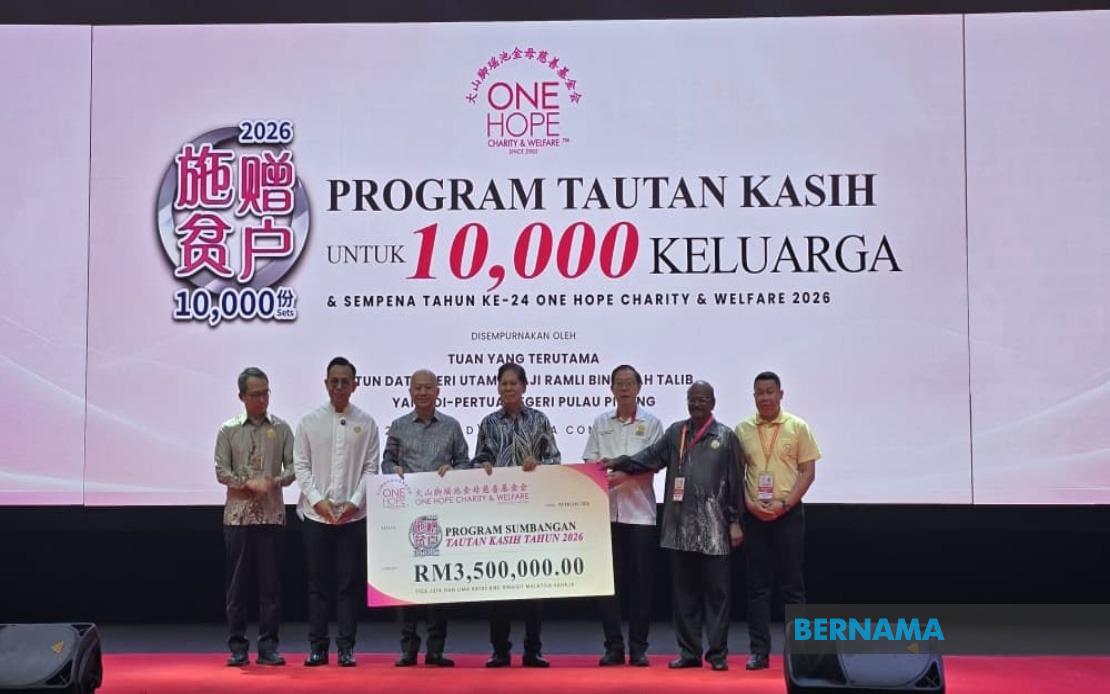
Malaysia's welfare systems require continuous strengthening to ensure vulnerable populations receive adequate support during periods of hardship, Minister of Entrepreneur Development and Cooperatives Steven Sim Chee Keong said at an event in Butterworth this week. Speaking at a charity function attended by Penang Governor Tun Ramli Ngah Talib and his wife Toh Puan Raja Noora Ashikin Raja Abdullah, Sim underscored that a state's economic progress cannot be divorced from its responsibility to protect citizens' wellbeing. The minister's remarks come against a backdrop of persistent inequality across Malaysia, where income disparities and unequal access to basic services remain significant policy challenges.
Sim articulated a vision of social development that acknowledges life's inherent unpredictability and the varying circumstances faced by different segments of the population. He framed welfare not merely as a safety net but as a fundamental expression of state responsibility and social cohesion. When Penang residents encounter financial strain, unemployment, illness, or other misfortunes, Sim argued, comprehensive welfare architecture becomes essential to maintain dignity and prevent deeper social deterioration. This perspective aligns with broader international discourse on inclusive development, where welfare systems serve as stabilisers during economic fluctuations and personal crises.
Beyond economic necessity, Sim highlighted the role of welfare initiatives in fostering social harmony in Malaysia's multicultural context. He contended that well-designed welfare programmes contribute meaningfully to building compassionate communities and strengthening unity among Malaysians of diverse racial and religious backgrounds. In a nation where communal tensions occasionally surface, universal welfare frameworks that assist citizens irrespective of ethnicity or faith can serve as practical demonstrations of shared national values and mutual responsibility. This approach reflects the constitutional promise of equal protection and benefits for all Malaysian citizens.
One Hope Charity emerged as a case study in Sim's broader argument. The organisation, which began modestly in Bukit Mertajam, has evolved into one of Peninsular Malaysia's most substantial private welfare entities, distributing a minimum of RM20 million annually to communities across the state and beyond. This scale of operation demonstrates market-driven charitable capacity while raising important questions about the adequacy of government welfare expenditure and the role private philanthropy must play in filling welfare gaps. The existence of such large charities, while commendable, arguably indicates areas where public provision may be insufficient.
One Hope Charity founder and chairman Datuk Chua Sui Hau revealed that the organisation provided assistance to more than 10,000 families this year alone, with each household receiving support packages valued at approximately RM320. These packages combined essential household goods and daily necessities with RM200 in unrestricted cash grants, allowing beneficiaries autonomy in addressing their specific needs. This mixed approach—combining in-kind aid with cash transfers—reflects contemporary best practices in welfare delivery, recognising that recipients understand their circumstances better than administrators and benefit from choice in spending decisions.
The breadth of One Hope Charity's activities extends considerably beyond emergency relief. Between 2021 and 2025, the organisation channelled more than RM100 million toward medical assistance programmes, hospital infrastructure support, medical equipment provision, and diverse welfare schemes. This diversified portfolio addresses multiple dimensions of vulnerability—health-related financial stress remains a primary cause of impoverishment across Southeast Asia, making medical assistance particularly valuable. By supporting government hospitals and medical equipment procurement, One Hope also addresses systemic healthcare capacity constraints, effectively supplementing public health infrastructure.
Looking ahead, One Hope Charity announced plans to scale operations further in connection with its upcoming 25th anniversary. The organisation intends to mobilise approximately RM30 million for expanded welfare initiatives, with particular emphasis on expanding the Medical Assistance Programme. This expansion reflects recognition that healthcare-related poverty remains inadequately addressed despite Malaysia's relatively advanced health system. The planned intensification of medical welfare support suggests ongoing gaps in coverage, insurance accessibility, or affordability despite public provision of healthcare services.
The mobilisation of business networks and private donors remains central to One Hope's operational model. The organisation's capacity to coordinate contributions across the business community demonstrates latent charitable resources within Malaysia's private sector. However, this reliance on voluntary corporate participation also highlights the contingent nature of private welfare—funding depends on economic conditions, corporate profitability, and philanthropic inclination rather than guaranteed entitlements or predictable government budgeting. This raises important governance questions about the sustainability and equity of welfare systems heavily dependent on private charity.
Sim's call for strengthened welfare policies resonates amid evolving labour market dynamics, climate vulnerabilities, and inflationary pressures affecting Malaysian households. The cost of living increases in recent years have compressed household budgets across income brackets, elevating welfare needs even among previously stable segments. Traditional vulnerabilities—unemployment, disability, old age—intersect with newer sources of economic insecurity, suggesting welfare systems require periodic recalibration to address emerging needs. Government policy responses must balance fiscal constraints with genuine demand for expanded support.
The distinction One Hope Charity emphasises—assistance regardless of race, religion, or political affiliation—carries particular weight in Malaysia's political context. Welfare perceived as selective or patronage-based undermines social cohesion and breeds resentment. Universalised, transparent welfare systems that serve all citizens according to need rather than political connection strengthen institutional legitimacy and social trust. This principle applies equally to government and private welfare provision, suggesting both sectors must maintain rigorous nondiscriminatory standards.
The event in Butterworth underscored Penang's distinctive welfare landscape, where state-level initiatives complement federal provision. Federal welfare frameworks establish minimum standards, but state governments can innovate and supplement through additional programmes. Penang's relatively advanced private welfare sector and active philanthropic community suggest state contexts significantly influence welfare adequacy. Regional variations in welfare outcomes reflect these compound effects of federal policy, state implementation, and local civil society capacity.
Moving forward, Malaysia faces fundamental choices about welfare provision's architecture. Should expansion rely primarily on private philanthropy and corporate social responsibility, or should public resources and guaranteed entitlements form the foundation? How can systems balance universal coverage with targeted support for greatest need? These questions demand sustained policy attention beyond rhetorical endorsement of stronger welfare systems. Minister Sim's remarks articulate necessary principles, but translating them into robust, sustainable, and equitable welfare frameworks requires comprehensive institutional commitment and resource allocation decisions at federal and state levels.

