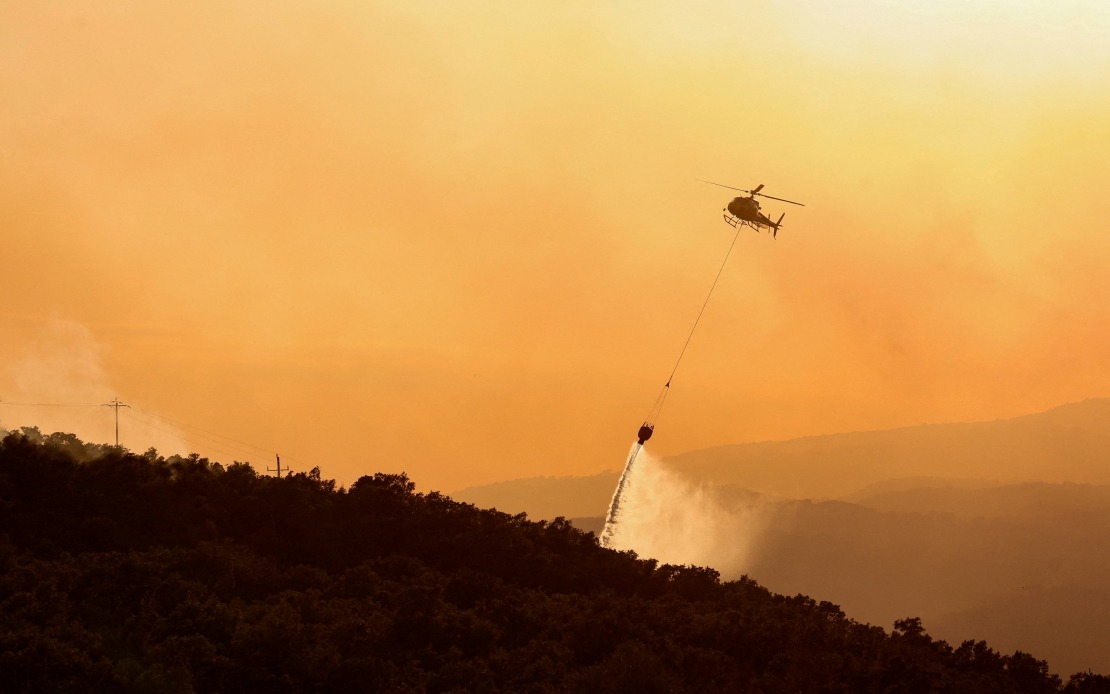
The western United States confronted an unprecedented crisis this Fourth of July as communities from Colorado to Utah made the difficult decision to cancel or severely restrict fireworks displays. The cancellations came as the nation attempted to celebrate its 250th founding anniversary, creating a stark juxtaposition between patriotic tradition and the stark realities of climate-driven environmental disaster. A national incident report released on Friday documented 41 uncontained large fires burning across the country, with the nation operating at its second-highest wildfire preparedness alert level—a sobering indicator of the scale of the crisis.
Utah emerged as perhaps the most severely affected state, where conditions have become what officials describe as historically unprecedented. Governor Spencer Cox issued a temporary statewide restriction on fireworks, permitting local governments to designate limited zones where fireworks could still be used, but only through July 5. The underlying data painted a desperate picture: 94 per cent of Utah existed in severe or extreme drought. Utah State Forester Jamie Barnes characterised the wildfire situation as something "unlike anything we've seen in recent memory," noting that fires were spreading with alarming velocity far exceeding historical patterns. The scale of destruction had already become extraordinary by early July, with the state burning more acreage in the first months of 2024 than during the entire previous four-year period combined.
Colorado presented an equally troubling scenario, particularly in major population centres. The state's Division of Fire Prevention and Control confirmed more than a dozen active wildfires burning simultaneously, prompting communities including Durango, Vail, and Pueblo to eliminate their Fourth of July celebrations. Colorado Springs, the state's second-largest city, took the additional step of cancelling all scheduled fireworks displays, with fire department officials emphasising the extreme danger posed by current atmospheric conditions. City authorities drew a sobering parallel to the 2012 Waldo Canyon fire, which destroyed over 300 homes, suggesting that contemporary fire danger mirrored those catastrophic conditions. Mayor Yemi Mobolade acknowledged the disappointment while underscoring the necessity of the precaution, noting the particular significance of the cancellation during the nation's 250th anniversary year.
Vail's cancellation represented a recurring phenomenon in that community, marking the sixth time since 1998 that the city had foregone its traditional display due to hazardous conditions, with the most recent previous cancellation occurring just three years earlier in 2021. This pattern demonstrates how climate variability and intensifying fire seasons have begun to disrupt long-established civic celebrations with increasing frequency. Beyond Colorado and Utah, Wyoming, Nebraska, and New Mexico similarly implemented restrictions on fireworks use, each citing either drought severity or wildfire danger as justification. Professional and commercial fireworks displays, typically managed with stricter safety protocols and conducted in more controlled environments, were generally permitted to proceed, creating a distinction between public and professional pyrotechnics operations.
Weather forecasts amplified these safety concerns considerably. The national incident report warned that strong winds combined with critically low humidity levels would significantly elevate fire danger across the southwestern region during the Fourth of July weekend. Beyond the immediate west, much of the eastern and central United States experienced dangerously elevated heat, with the National Weather Service documenting heat index values exceeding 46 degrees Celsius in numerous locations. These heat conditions created compounding risks, as elevated temperatures reduce vegetation moisture content and accelerate the spread of any ignitions that might occur.
Scientific research has increasingly documented the connection between fireworks and wildfire ignition. Philip Higuera, a fire ecology professor at the University of Montana, explained to the Durango Herald that Fourth of July fireworks contribute demonstrably to increased wildfire incidence annually. "There are a lot of ignitions added to the landscape on that single day," he observed, highlighting how concentrated pyrotechnic activity creates multiple fire-starting opportunities across geographically dispersed areas. Historical data support this concern with considerable force: between 1992 and 2020, approximately 15,000 wildfires were recorded on July 4 alone across the United States, suggesting that the holiday consistently serves as a major ignition vector.
Broader research has established the relationship between heat waves and catastrophic fire seasons. Wake Forest University associate professor Lauren Lowman has documented that nearly half of all land burned in the western United States since 2001 occurred during or immediately following heat wave events. The same researcher compiled data revealing that fireworks caused an estimated 32,000 fires nationwide in 2023 alone, underscoring the magnitude of risk posed by celebratory pyrotechnics during high-risk fire seasons. This statistical foundation provided state and local officials with scientific justification for their precautionary stance, transforming Fourth of July cancellations from mere inconvenience into evidence-based emergency management decisions.
For regional observers in Southeast Asia, these events offer instructive lessons about the escalating impacts of climate-driven environmental degradation on civic infrastructure and cultural practices. Malaysia, with its own seasonal fire challenges particularly in Peninsular Malaysia and East Malaysia during dry periods, might consider how climate intensification could similarly disrupt traditional celebrations and necessitate adaptive public safety measures. The western US experience demonstrates that even wealthy, developed nations face increasing constraints on conventional activities as environmental conditions shift, suggesting that proactive adaptation planning may become essential across all regions experiencing comparable climate trends.
The cancellations also reflected a broader societal shift in risk assessment, where environmental protection and public safety now take precedence over traditional celebrations. While the 250th anniversary warranted special commemoration, state and local officials determined that allowing fireworks to proceed would create unacceptable wildfire risks. This decision-making hierarchy—prioritising environmental and physical safety over cultural tradition—may represent an emerging governance standard as climate impacts intensify globally. Communities across the western US demonstrated that institutional flexibility and evidence-based decision-making, while certainly disappointing in the moment, ultimately serve long-term community interests more effectively than rigid adherence to tradition during crisis conditions.

