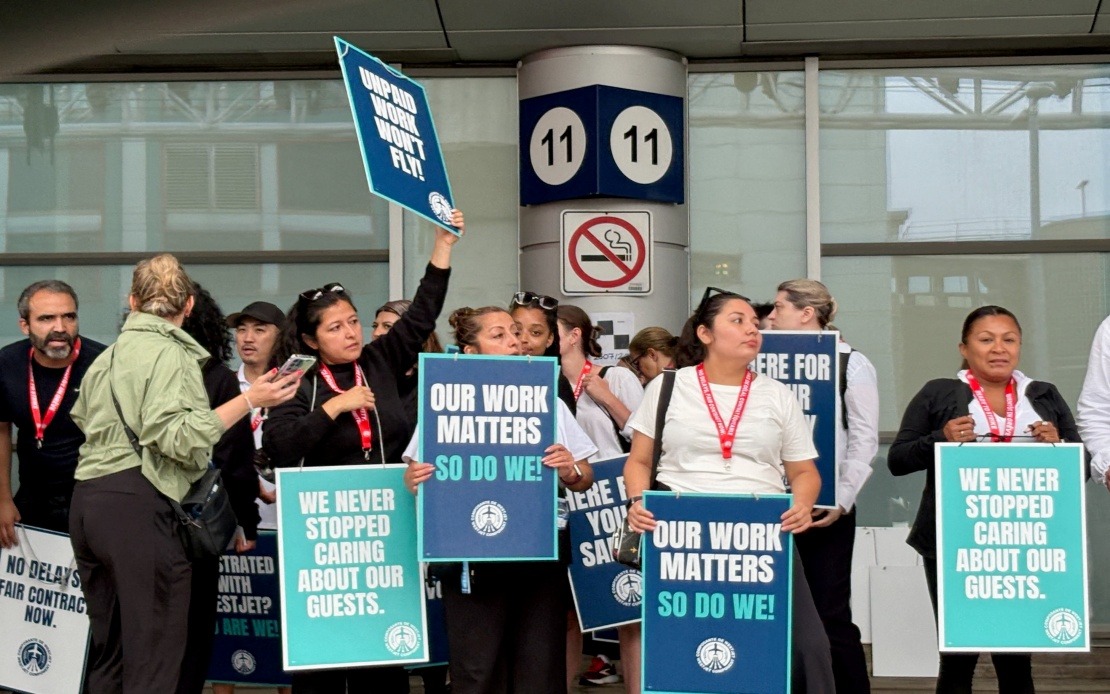
A strike by over 4,000 flight attendants has brought operations at WestJet, Canada's second-largest airline, to a standstill, with cascading effects on approximately 250,000 passengers whose travel plans now hang in limbo. The labour action commenced on Sunday and has already eliminated around 600 daily flights from the carrier's schedule, creating severe disruption during one of North America's peak travel periods. The timing compounds the impact, as Monday marks a civic holiday in Canada, transforming the weekend into one of the year's busiest travel windows when families and leisure travellers typically dominate airport terminals.
Compensation for ground-based work sits at the heart of this industrial dispute, a labour issue that has increasingly become central to aviation sector negotiations across North America. The flight attendants are demanding payment for duties performed before and after each flight—work that historically has gone uncompensated despite being integral to passenger safety and airline operations. This represents a significant shift in how the airline industry is beginning to calculate and remunerate employee contributions, moving beyond the traditional credit-hour model that has long dominated crew compensation structures.
The financial stakes for WestJet appear substantial, with industry observers anticipating losses mounting into the millions of dollars as operations remain suspended. Beyond direct revenue impact, the airline faces potential reputational damage and the administrative burden of processing refunds for affected passengers. The economic ripple effects extend beyond the airline itself, touching tourism operators, ground services, hotels, and other hospitality businesses that depend on smooth flight operations during peak seasons.
The compensation gap between WestJet's current structure and what competitors now offer reveals the airline's disadvantageous negotiating position. Flight attendants at WestJet presently earn between $28.88 and $53.61 per credit hour, figures that do not account for non-flying work time. By contrast, Air Canada has already introduced provisions guaranteeing flight attendants compensation up to 70 per cent of their hourly rate for the hour immediately preceding departure, setting a new industry benchmark that WestJet has apparently been unwilling to match.
The precedent for such payments dates back to 2022, when Delta Air Lines first introduced ground work compensation into its crew contracts. This American initiative subsequently influenced Canadian labour negotiations, with Air Canada signing a new agreement in February that incorporated similar provisions. For WestJet, remaining outside this evolving standard places the airline at a recruitment disadvantage when attracting and retaining experienced flight crew in a competitive labour market.
The Canadian Union of Public Employees, which represents the striking flight attendants, has articulated frustration over what it characterises as the airline's inflexibility during nearly eleven months of contract negotiations. Union representative Alia Hussain framed the strike as an inevitable consequence of WestJet's failure to engage seriously with worker concerns, suggesting that protracted negotiations without substantive movement on core demands ultimately forced the union's hand. This narrative mirrors labour disputes globally, where unions argue that industrial action becomes necessary only when management demonstrates unwillingness to address legitimate grievances through conventional bargaining.
Federal Jobs Minister Patty Hajdu publicly expressed disappointment at the failure of both parties to reach agreement, signalling government concern about the economic and social disruption. Such federal interventions typically precede efforts to encourage negotiated settlements, though formal government mediation has not yet been publicly announced. The minister's statement reflects broader Canadian policy considerations around labour stability and the ripple effects of transportation sector strikes on the broader economy.
WestJet's response has concentrated on operational mitigation and passenger care. Chief Executive Officer Alexis von Hoensbroech characterised the strike as disappointing and acknowledged its direct impact on passengers, employees, and the communities and businesses dependent on the airline's services. The airline has committed to providing refunds for affected passengers, a measure that will temporarily alleviate individual inconvenience but does not address the underlying labour dispute.
The distinction between WestJet and Air Canada's negotiating outcomes underscores how labour dynamics in aviation reflect broader competitive pressures within the industry. Air Canada's willingness to accept ground work compensation may partly stem from its larger operational scale and greater access to capital, advantages that allow it to absorb higher labour costs more readily. WestJet, operating as Canada's second-largest carrier, potentially faces tighter profit margins that make similar concessions seem less feasible from a financial perspective, though this calculation may prove shortsighted if labour shortages and reputational damage accumulate.
For Malaysia and other Southeast Asian nations monitoring aviation labour developments, this Canadian case study offers instructive lessons about emerging workplace expectations in the global airline industry. As carriers expand operations and compete for talent in increasingly tight labour markets, compensation models historically considered standard may face challenge. Regional airlines operating in high-growth markets may anticipate similar demands from crew members, particularly when international standards evolve. The WestJet dispute thus carries broader implications for aviation employment patterns across Asia-Pacific routes where many carriers operate on more constrained margins than their North American counterparts.
The strike's resolution will likely shape negotiations across North American aviation for months ahead, potentially establishing whether ground work compensation becomes universal industry practice or remains contested. Airlines that resist such changes may face extended labour disputes, while those that embrace new compensation models may gain stability and competitive advantage in crew recruitment. The extended bargaining period—nearly eleven months with minimal movement—suggests both sides remain far apart, potentially necessitating third-party intervention or a shift in negotiating approach before meaningful progress occurs.

