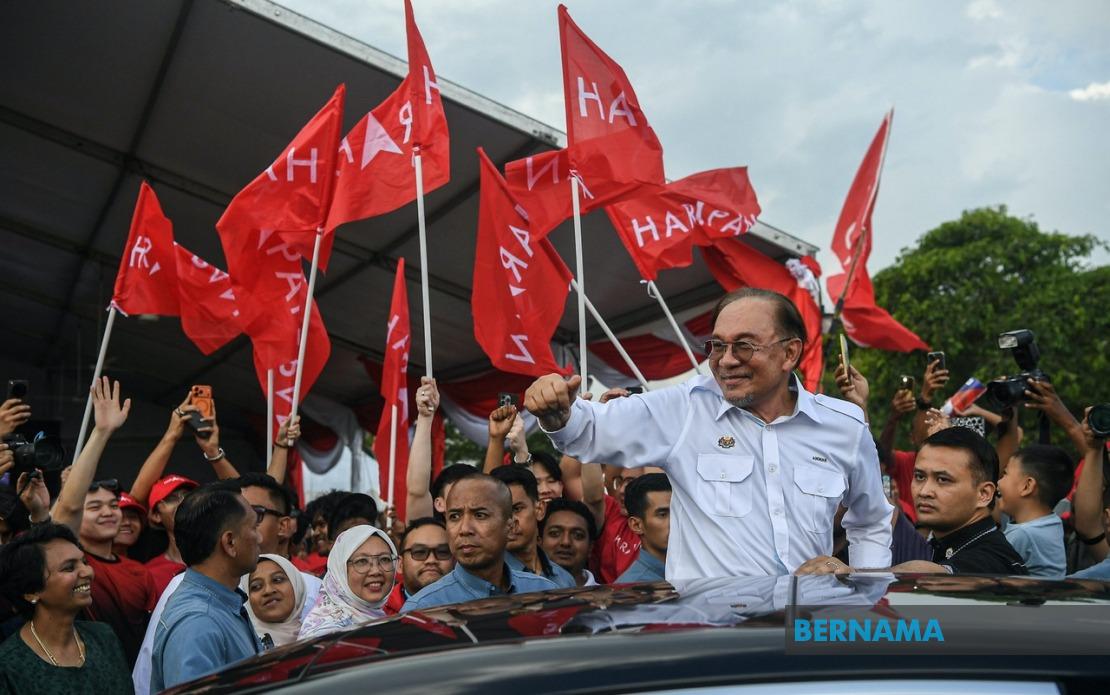
The 16th Johor State Election is shaping up as a digital battleground, with political parties wielding sophisticated social media strategies and crafting viral content across TikTok and Facebook. Yet beneath this veneer of technological sophistication lies a persistent truth: for many of Johor's older voters, nothing quite substitutes for standing across from a candidate and looking them directly in the eye. A Bernama survey examining voting preferences across the state has uncovered a nuanced picture of how age, digital literacy, and personal circumstances shape campaign engagement, revealing that the supposed generational divide between online and offline politics is far more complex than prevailing narratives suggest.
The human dimension of electoral campaigning remains surprisingly powerful among senior voters in constituencies like Perling and Sedeli. Retired teacher A. Chandra, 70, captures the emotional and practical appeal of physical rally attendance with straightforward honesty: the energy of a crowd gathered to hear candidates speak, the ability to observe not just words but body language and composure, and the chance to network with fellow community members create an experience that livestreamed content cannot replicate. For Chandra and voters like him, this physical presence serves as a proxy for sincerity. In an age where political messaging can be carefully scripted, edited, and algorithmically optimized, the willingness of a candidate to show up in person, answer unscripted questions, and endure the unpredictability of live interaction suggests a genuine commitment to constituents.
Housewife Maimunah Ismail, 73, articulates a different but equally valid perspective: she values campaign rallies as controlled environments where candidates deliberately articulate their platforms and policy intentions. This structured presentation allows her to absorb and process information methodically, without the distractions and fragmentation that social media introduces. Notably, Maimunah does not reject digital channels entirely. Rather, she has integrated them into her political information diet, following campaign developments on her mobile phone while managing household duties. This pattern challenges stereotypes about older Malaysians and technology adoption. The issue is not capability but context—digital platforms serve specific convenience functions for those juggling multiple daily responsibilities, yet they do not necessarily displace the deeper engagement that deliberate attendance at campaign events provides.
For voters with mobility challenges, however, digital campaigning delivers genuine democratic value. M. Sivathramani, 73, a retired civil servant whose physical injuries limit his ability to navigate crowded campaign venues, has found that TikTok and similar platforms enable meaningful political participation that would otherwise be curtailed. His willingness to attend events in person if mobility permitted indicates that his digital engagement reflects circumstance rather than preference, a distinction that matters for understanding how technology functions within electoral systems. As Malaysia's population ages and mobility issues become increasingly common, the practical accessibility of digital campaigns becomes not merely convenient but essential to ensuring equitable political participation across demographic groups.
The effectiveness of digital campaigning, as younger voter Fairuz Saif observes, hinges critically on how political parties structure and communicate their messaging. Simple language, concise content, and visual clarity benefit voters across all age groups and educational backgrounds. Yet Saif also emphasizes a crucial limitation: online formats inherently constrain the interactive dimension that makes campaigning persuasive. Digital media excels at one-way information transmission but struggles to recreate the give-and-take of direct questioning, the moment when a candidate must think on his feet and respond authentically to constituent concerns. Grocery shop owner Lee Lian Chen, 58, demonstrates how voters synthesize these different information sources, using social media for preliminary screening of candidates' manifestos and plans while reserving final judgment for direct observation. This hybrid approach reflects mature political decision-making that recognizes both the efficiency of digital research and the irreplaceable value of personal assessment.
Dr. Nazreena Mohammed Yasin, a senior lecturer at Universiti Tun Hussein Onn Malaysia's Department of Social Sciences, provides important scholarly perspective on what appears to be a fundamental shift in Malaysian electoral behavior. Rather than viewing physical and digital campaigning as competing paradigms, she characterizes them as complementary mechanisms serving distinct but overlapping functions. Physical campaigns offer sensory immersion and emotional resonance—the atmosphere, the crowd energy, the visual spectacle of democracy in action. Digital platforms provide accessibility, convenience, and the ability to consume political information asynchronously, fitting engagement around work schedules, health constraints, and personal preferences.
Generational variation in information-seeking behavior remains significant, but not in simplistic ways. Some older voters continue relying on newspapers and television broadcasts, traditional media through which political information has flowed for decades. Others have embraced Facebook, WhatsApp, and TikTok, valuing their immediacy and the ability to access content repeatedly. Many voters do not fit neatly into either category but instead operate across multiple channels simultaneously. Working-age adults particularly benefit from digital flexibility—they can watch campaign live streams during lunch breaks, share political content with friends via WhatsApp, and follow candidate statements through Facebook without sacrificing professional responsibilities.
The most significant insight from recent campaign behavior concerns the emergence of genuinely hybrid voting publics. Rather than generational replacement, where older voters gradually exit the electorate and younger voters bring entirely different preferences, Malaysian voters increasingly adopt sophisticated combinations of old and new media consumption. A voter might read a newspaper editorial about a candidate's economic platform, discuss the implications with neighbors at a coffee shop, watch a TikTok video explaining the candidate's stance on housing, attend a rally to assess the candidate's presence and communication skills, and finally consult WhatsApp messages from trusted community leaders before casting a ballot. This multiplicity reflects not confusion or inconsistency but rather a mature adaptation to an information environment where no single source provides complete understanding.
With 2.7 million voters preparing to cast ballots across 56 state constituencies in the 16th Johor State Election, political parties face a strategic imperative: campaign architecture must accommodate this heterogeneous electorate. Heavy investment in digital content without corresponding ground presence risks alienating voters who rightfully see personal candidate engagement as meaningful political expression. Conversely, neglecting digital channels abandons efficiency gains and accessibility advantages that technology legitimately offers. The most effective campaigns appear to be those that maintain substantial physical presence while simultaneously leveraging digital reach—ensuring that candidates remain visible in communities while enabling information access for those unable to attend rallies.
This evolution also carries implications for Malaysian democracy more broadly. If political participation becomes stratified by digital literacy and internet access, certain communities risk marginalization from campaign messaging and candidate interaction. Younger, urban, educated, employed voters naturally gravitate toward digital information channels, while older, rural, less-educated, and retired voters may depend more heavily on physical events. Smart political parties recognize these patterns not as challenges to overcome through ideological commitment to digital-first strategies, but as design problems requiring thoughtful solutions. Community radio broadcasts, local newspaper advertising, and consistent physical presence in smaller towns and villages remain essential complements to viral TikTok content and targeted Facebook advertising.
The Johor election offers Malaysian political strategists a live laboratory for testing different campaign approaches and observing their actual effectiveness among diverse voter populations. Early evidence suggests that the dichotomy between digital natives and analog dinosaurs vastly oversimplifies how real voters make political decisions. Older citizens prove more digitally engaged than stereotypes suggest, while younger voters still value direct candidate observation and community gathering. As Malaysia progresses toward increasingly sophisticated information ecosystems, campaigns that abandon either digital innovation or grassroots presence do so at their electoral peril. The future belongs not to parties that make binary choices between old and new, but those demonstrating agility in reaching voters across multiple registers simultaneously.

