The discovery of alleged Israeli participation at the Network School in Forest City, Johor Bahru has sparked considerable online debate among Malaysians questioning how such individuals could have entered the country given Malaysia's well-known opposition to Israeli entry. Social media users have expressed frustration, suggesting authorities have failed in their duties. However, the underlying issue reveals a far more complex enforcement challenge rooted in the widespread prevalence of dual citizenship among Israeli nationals—a reality that many Malaysians remain unfamiliar with and one that fundamentally complicates any border control strategy.
Israel officially permits dual citizenship under multiple circumstances, though the Tel Aviv government does not maintain or publicly release comprehensive records of how many of its citizens simultaneously hold other nationalities. While precise figures remain elusive, credible estimates suggest approximately 10 percent of Israel's population—roughly one million people based on current demographics—carry a second passport. This is a significant proportion that has profound implications for border enforcement across jurisdictions seeking to restrict Israeli entry, including Malaysia.
The breadth of second nationalities held by Israelis spans multiple continents and reflects diverse migration patterns accumulated over decades. Academic research by Yossi Harpaz, drawing on 2019 data, identified approximately 344,000 Israelis holding European Union citizenship alone, though this figure does not capture the complete picture of dual nationals. Among Western nations, the United States represents the single largest source of dual Israeli-American citizens, with estimates exceeding 200,000 individuals—a figure that likely excludes American-born Jews who later moved to Israel or descendants of earlier US emigration waves.
Beyond the United States, Israeli dual citizens draw passports from France, reflecting sustained immigration dating back generations, and from Russia, owing to substantial population movements from the former Soviet Union beginning in the 1990s. The United Kingdom also features prominently through both immigration and descent claims. Poland, Romania, Hungary, Portugal, Argentina, South Africa, Australia, and Ethiopia round out the diverse roster of nations issuing second passports to Israeli nationals, each connection tracing back to specific family histories and migration trajectories that underscore the complexity of Israeli diaspora relations.
Military data cited in reporting further illustrates the pervasiveness of dual citizenship among Israel's security establishment. According to figures attributed to Israeli military records, more than 50,000 active-duty personnel carry foreign passports, predominantly from the United States, Russia, France, the United Kingdom, and Ukraine. This military dimension adds weight to the enforcement dilemma, as individuals with security or government backgrounds may possess sophisticated understanding of border procedures and documentation protocols.
The Network School itself, described as an international co-living and co-working technology commune designed for digital nomads and developers, sits within Forest City development in Johor Bahru. Founded and operated by Silicon Valley investor Balaji Srinivasan, the venture markets itself as a "startup society" catering to the global tech talent pool. Following the crackdown and allegations regarding Israeli participation, Srinivasan indicated that his company's planned RM500 million expansion throughout Malaysia would be suspended, signalling potential economic consequences from the controversy.
The controversy specifically centred on the presence of Israeli content creator Nusier Yassin, professionally known as Nas Daily, whose involvement drew criticism from activist group Malaysia Protest 4 Palestine. Media reports revealed that Nas Daily had previously circumvented Malaysia's entry restrictions in 2022 by utilising a Saint Kitts and Nevis passport while entering Johor Bahru through Singapore—a concrete example demonstrating how alternative citizenship documents can render traditional entry bans ineffective. Such cases underscore the practical limitations of enforcement mechanisms when individuals possess legitimate travel documents from recognised nations.
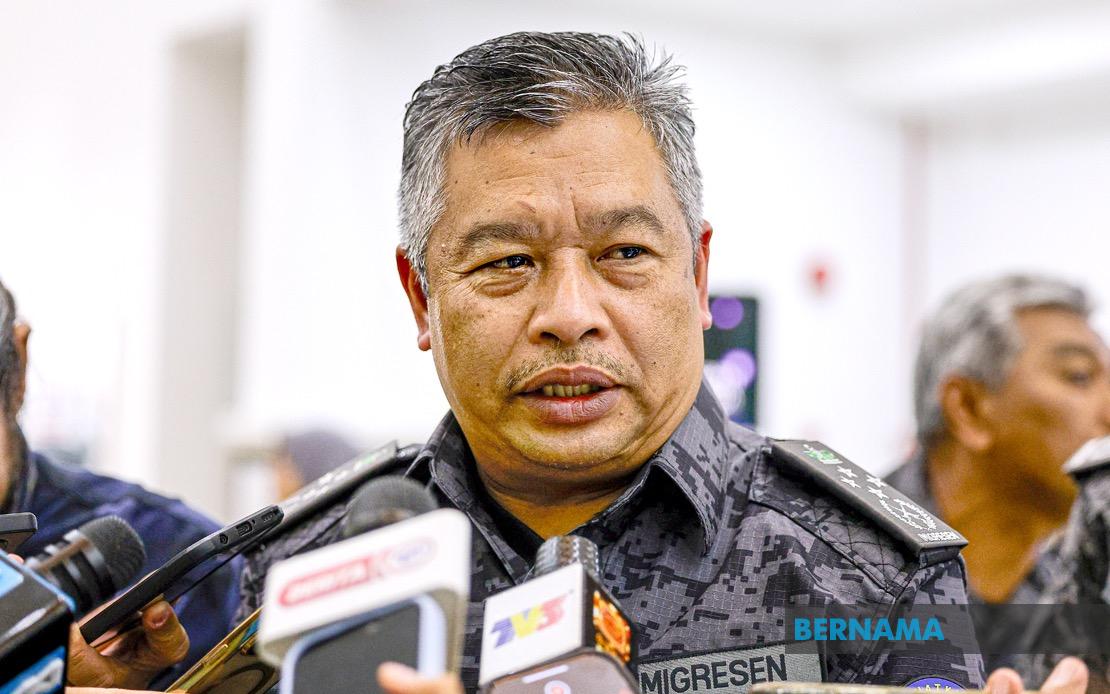
Malaysia's Immigration Department has conducted preliminary investigations into the Network School matter. Immigration Director-General Datuk Zakaria Shaaban reported that 256 foreigners from 40 countries holding social visit passes had been inspected in connection with the facility, along with an additional 10 individuals authorised under the professional nomad visa category. These ten nomad visa holders comprised four US citizens, three Russians, two Australians, and one Indian national. Significantly, Zakaria stated that his department had found no concrete evidence establishing that Israeli nationals were present at the location, though investigations would continue with findings shared among relevant agencies.
Detecting Israeli presence proves exceptionally difficult under existing frameworks because no official public registry exists identifying Israeli citizens who simultaneously hold US or other Western passports. For many public figures and professionals, citizenship status remains private information not voluntarily disclosed. This opacity presents a genuine administrative challenge: Malaysian immigration officers at border checkpoints process documents presented to them without access to comprehensive cross-referencing databases that would confirm whether a US passport holder might simultaneously possess Israeli nationality.
The practical reality extends beyond theory. Malaysian pilgrims—both Muslim and Christian—who have visited Jerusalem with appropriate government approvals have encountered numerous Israelis who communicate fluently in English with American accents and freely acknowledge holding US citizenship. Jerusalem itself provides visual reinforcement of these transnational identities through prominent billboards proclaiming "JerUSAlem," celebrating the city's American connections. These everyday observations underscore that Israelis with American or Western European passports blend seamlessly within international traveller populations.
This enforcement challenge reflects broader tensions in Malaysia's approach to investment, talent acquisition, and geopolitical positioning. Malaysia actively welcomes foreign investment and international expertise essential for economic development and technological advancement. Simultaneously, the nation maintains a principled stance firmly opposing Israeli policies and supporting Palestinian rights—a position that enjoys broad domestic consensus and represents a cornerstone of Malaysia's foreign policy identity. Balancing these imperatives requires sophisticated approaches that acknowledge practical limitations while upholding national values and international commitments.
The dual citizenship phenomenon ultimately exposes the limitations of entry bans as unilateral enforcement mechanisms in an increasingly connected world where individuals routinely hold multiple national allegiances. Rather than reflecting administrative failure, the difficulty in identifying Israeli nationals through alternative documentation reveals structural constraints inherent to modern border control. Addressing this requires not heavy-handed approaches but rather nuanced strategies coordinating among agencies, engaging with private sector actors operating within Malaysia, and potentially developing new verification frameworks—an approach that maintains Malaysia's principled stance while acknowledging the complex realities of contemporary international mobility.

