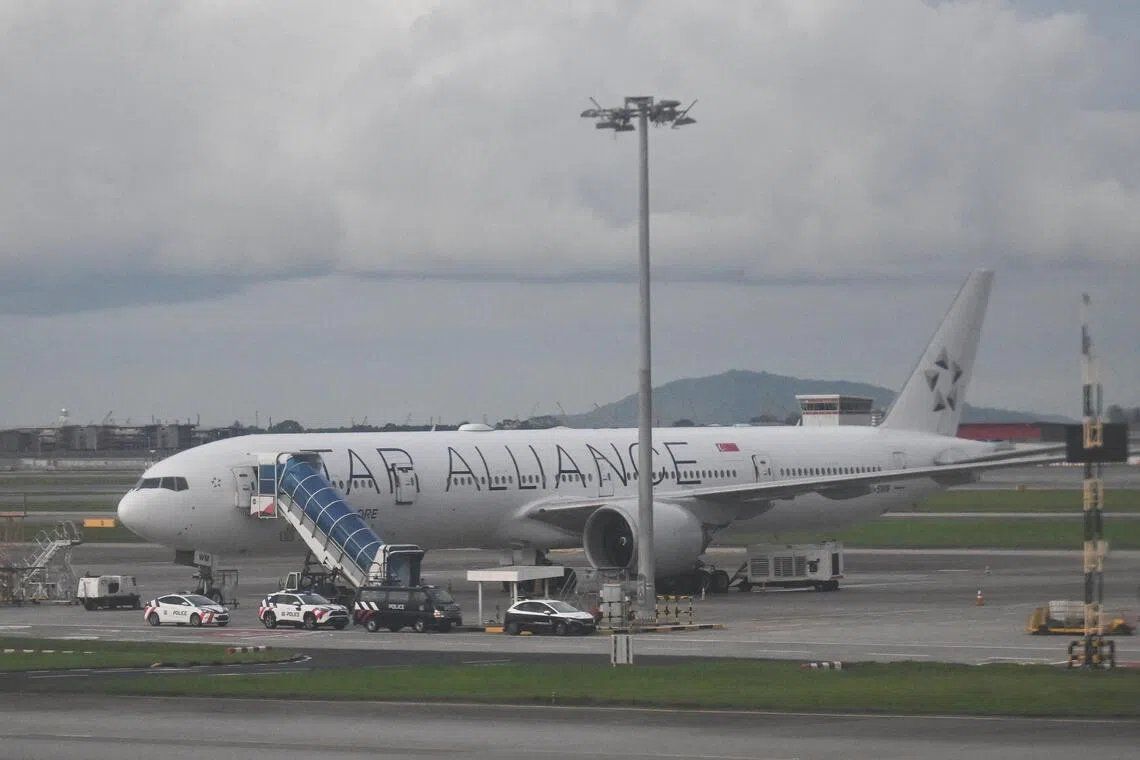
Linda Kitchen, a 74-year-old widow, has commenced legal action against Singapore Airlines in Britain's High Court following the death of her husband during one of the airline's most traumatic incidents. The case stems from the dramatic events of May 21, 2024, when Flight SQ321 experienced sudden and severe turbulence while flying over Myanmar en route from London to Singapore. The incident claimed one life and left dozens injured, including Kitchen herself, who sustained critical spinal injuries that have fundamentally altered her daily existence and require ongoing specialist medical intervention.
The catastrophic nature of the incident became apparent within seconds. The aircraft plunged more than 54 metres in a span of five seconds, an abrupt descent that transformed an ordinary breakfast service into chaos. Passengers and crew were thrown violently through the cabin as the aircraft lost altitude at a devastating rate. Geoffrey Kitchen, a 70-year-old theatre director and his wife's partner of 52 years, fell directly onto Linda during the turbulent episode, pinning her against the armrest and causing compression injuries to her spine. The impact proved fatal for Geoffrey, who suffered a heart attack during or immediately following the plunge, whilst Linda endured trauma that would require months of recovery and ongoing medical support.
The scale of casualties aboard the aircraft underscored the severity of the meteorological encounter. Flight SQ321 carried 211 passengers and 18 crew members when the turbulence struck. Of these, 79 people sustained injuries ranging from minor to severe. A physician travelling on the flight immediately initiated cardiopulmonary resuscitation on Geoffrey Kitchen, but these efforts ultimately proved unsuccessful. The pilot made the critical decision to divert the aircraft to Suvarnabhumi Airport in Bangkok, Thailand, where emergency medical personnel and facilities awaited the stricken aircraft.
Linda Kitchen's recovery journey extended across continents and months. She spent ten days in hospital following the emergency landing before being airlifted back to the United Kingdom. Upon discharge from her initial hospitalisation, she discovered her husband had passed away two days after the turbulence incident. "When I got separated from Geoff, I knew he was in a bad way, but nothing prepared me for hearing he had died. It was absolutely devastating," she recalled in statements to British media outlets. Back in Britain, she required approximately one week of additional hospitalisation and faced significant mobility challenges after discharge, necessitating substantial assistance with basic daily activities.
The legal proceedings represent not merely a financial claim but also a demand for accountability and understanding. Anthe Korelidou, the aviation specialist lawyer representing Kitchen, emphasised that the family harbours fundamental questions about the disaster's causes and whether preventive measures could have mitigated the injuries and death. "While it's more than two years since Geoff's death, Linda and the rest of her family continue to have a number of questions and concerns about what happened and if more could have been done to prevent their injuries," Korelidou stated, noting that thorough investigations remain essential to providing answers the family deserves.
Other passengers have similarly pursued legal remedies. British court filings reveal that at least seven additional individuals or family representatives—Bradley Richards, Jack Jenkins, Hannah Fullerton, Andrew Dawood, Bryan Matthews, and the couple Pauline and Michael Rainey—have launched separate legal actions against Singapore Airlines. The multiplicity of cases suggests widespread dissatisfaction with the airline's initial response and a collective demand for greater accountability regarding the incident's circumstances.
Singapore Airlines responded to the disaster with both financial compensation and apologies, though litigation continues despite these gestures. The airline offered US$10,000 to passengers who experienced minor injuries and US$25,000 advance payments to those with serious injuries requiring long-term medical care. All passengers received full airfare refunds. The airline released a statement acknowledging the trauma: "We sincerely apologise to all passengers and crew members on board Flight SQ321 for their traumatic experience. The safety and well-being of SIA's passengers and staff are our top priority." However, these measures have not precluded legal action, suggesting that compensation alone cannot address the underlying concerns about causation and prevention.
A formal investigation into the incident by Singapore's Transport Safety Investigation Bureau (TSIB) identified a critical vulnerability in flight operations. The storm clouds responsible for the severe turbulence apparently evaded detection by the aircraft's onboard weather radar system, thereby surprising the flight captain who had no advance warning of the impending dangerous conditions. This failure of meteorological detection raises profound questions about aviation safety protocols and technological reliability in modern commercial aviation. The TSIB noted, however, that it remains inconclusive whether the weather radar system itself functioned defectively or whether atmospheric conditions simply exceeded the radar's detection capabilities—a distinction that carries significant implications for both SIA and the broader aviation industry.
For Malaysian and Southeast Asian aviation stakeholders, this case illuminates ongoing vulnerabilities in long-haul flight operations across the region. The incident demonstrated that even airlines with strong safety records and modern equipment can encounter situations where technological systems fail to provide adequate warning of hazardous conditions. As regional carriers continue to expand their international operations, particularly on busy routes connecting Asia to Europe, the incident serves as a sobering reminder that investment in weather detection technology, pilot training, and passenger safety protocols requires continuous advancement. The Kitchen case will likely influence how airlines throughout Asia approach turbulence management and emergency response procedures.
The legal proceedings initiated by Linda Kitchen and her co-claimants represent a threshold moment for aviation accountability in the region. Their pursuit of justice extends beyond compensation to encompass systemic examination of how airlines operate, communicate hazards, and prioritise passenger safety. As these cases progress through Britain's courts, they will establish precedents that may influence how other regional carriers respond to similar incidents and how they invest in preventive technologies and procedures. The outcome could reshape safety standards and liability frameworks affecting airlines throughout Southeast Asia for years to come.

