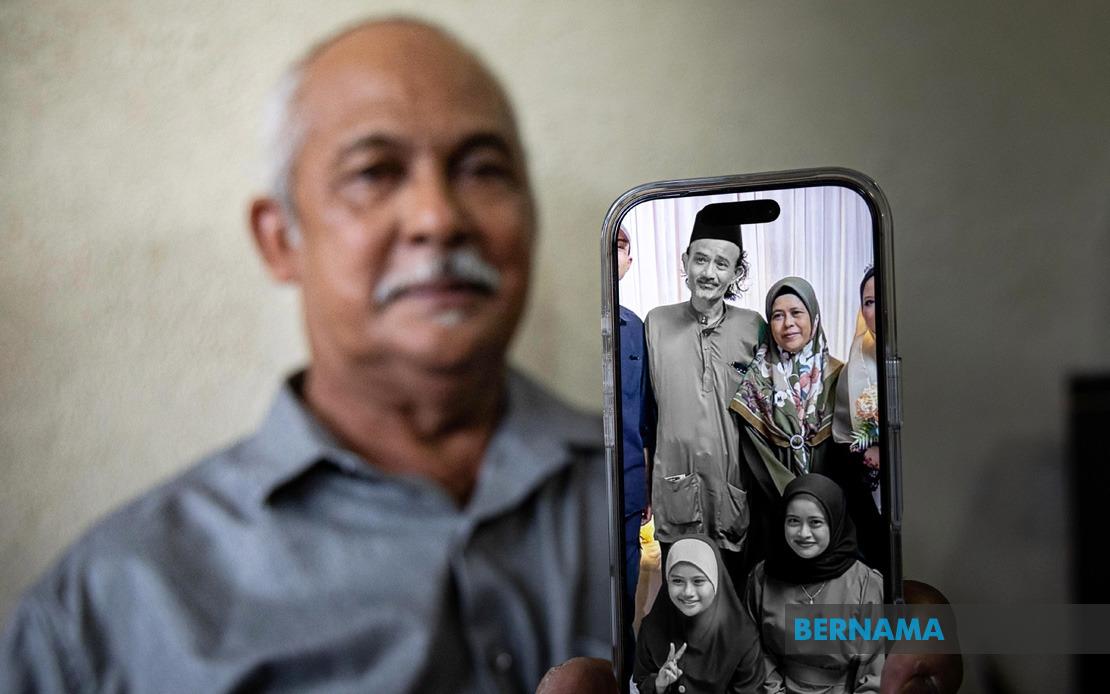
Norhayati Razali remains in a state of cognitive confusion following a catastrophic traffic accident that claimed the lives of her husband and two children when a Malaysian Immigration Department truck collided with multiple vehicles at an intersection in Jalan Sultan Ismail, Kuala Lumpur. The 55-year-old has since been transferred from the Intensive Care Unit at Kuala Lumpur Hospital to a regular ward, where medical staff have noted encouraging signs of physical recovery, including her ability to consume food and liquids independently without nasogastric tube support.
Her brother, Mohd Nadzri Razali, has disclosed that Norhayati's medical condition involves significant neurological complications stemming from traumatic head injuries sustained during the impact. Beyond the cognitive difficulties, she has sustained injuries across multiple body regions, affecting her hands, torso, knees, and lower limbs, necessitating continued hospitalisation and professional medical care. The combination of physical trauma and neurological damage has created a complex recovery pathway that remains uncertain in scope and duration.
The psychological toll of the accident has compounded her medical challenges in profound ways. Family members made the difficult decision to bring Norhayati to view the bodies of her deceased relatives once she regained initial consciousness, attempting to help her comprehend the tragedy. During that distressing encounter, she responded with silence and passive acknowledgement rather than emotional expression. However, this apparent understanding proved fragmentary and unreliable; the following day, she began asking family members about the whereabouts of her husband and children, suggesting either incomplete retention of information or the neurological disruption of recently formed memories.
Mohd Nadzri expressed considerable uncertainty about his sister's actual awareness of events, emphasising that medical personnel have not provided definitive answers regarding the permanence or severity of her memory impairment. This ambiguity has created an emotionally exhausting situation for the family, who must repeatedly confront the question of whether Norhayati genuinely comprehends her loss or whether she remains, in some sense, unaware of the magnitude of tragedy that has befallen her. Such neurological complications are not uncommon following severe head trauma, though individualised prognosis remains difficult for medical teams.
Regarding hospitalisation prospects, Mohd Nadzri indicated that attending physicians have not yet determined whether Norhayati can safely be transferred to a medical facility closer to her home in Perak, such as hospitals in Ipoh or Teluk Intan. The decision to retain her in Kuala Lumpur reflects the complexity of her injuries and the potential need for specialist neurological and intensive care services. The financial and logistical burden of maintaining her treatment in the federal capital has weighed heavily on her family, many of whom lack reliable transportation to visit her regularly.
The practical difficulties facing the family underscore the human cost of such accidents beyond the immediate loss of life. Mohd Nadzri revealed that he has been unable to visit his sister because he lacks convenient transport to Kuala Lumpur and is unfamiliar with the city's road network. He expressed hope of travelling to see Norhayati during the weekend, contingent upon securing assistance from someone familiar with the route. These logistical barriers to family visitation during a critical period of physical and psychological recovery highlight the broader challenges that disaster survivors and their relatives face beyond the medical realm.
The collision itself occurred on August 19 when an Immigration Department Black Maria truck was en route to Chow Kit for enforcement operations targeting undocumented migrants. The vehicle was operating with its emergency beacon and siren activated whilst proceeding through an intersection on Jalan Sultan Ismail. According to available evidence, the truck proceeded into the intersection whilst the traffic signal displayed red, subsequently colliding with a Proton Saga vehicle that was moving lawfully through the same intersection as the traffic light granted it passage. The impact was sufficiently violent to cause the truck to lose directional control, veer across lanes, and strike additional pedestrians and vehicles, including an Inokom Matrix car.
The immediate aftermath claimed three lives from a single family amongst the pedestrians struck by the truck, whilst a fourth victim sustained serious injuries requiring extended medical intervention. The incident has raised critical questions about vehicle operation protocols, particularly concerning the exercise of emergency driving privileges by government duty vehicles. Official vehicles operating under blue light exemptions carry heightened responsibility to ensure public safety, and this accident has illustrated the potential consequences when such vehicles operate contrary to traffic signal compliance requirements.
The family of Norhayati has articulated a compelling appeal for investigative transparency, with Mohd Nadzri emphasising the importance of establishing objective truth through available evidence. He specifically referenced surveillance camera footage potentially available from traffic light installations at the intersection, advocating for such recordings to be examined systematically as part of the official investigation. This appeal reflects not merely a desire for accountability but a fundamental commitment to ensuring that the investigation produces findings grounded in objective evidence rather than institutional convenience.
The incident occurs within a broader context of concerns surrounding vehicle operation standards, emergency protocol compliance, and road safety enforcement amongst government agencies. For Malaysian motorists and the general public, the accident underscores the vulnerability of pedestrians and civilian drivers at intersections where large government vehicles may prioritise operational urgency over traffic law observance. The investigation's findings could have significant implications for departmental training protocols, vehicle operation guidelines, and the conditions under which emergency driving privileges are exercised.
As Norhayati confronts an uncertain recovery pathway marked by both physical injury and neurological complications, her family faces the accumulated burden of grief, logistical challenge, and the pursuit of institutional accountability. The broader implications of this incident extend beyond one family's tragedy to encompass systemic questions about public safety, traffic law enforcement equity, and the appropriate exercise of governmental authority. The coming weeks will determine not only the trajectory of Norhayati's medical recovery but also whether the investigation fulfils the family's hope for transparent, evidence-based findings that honour the memory of those lost.

