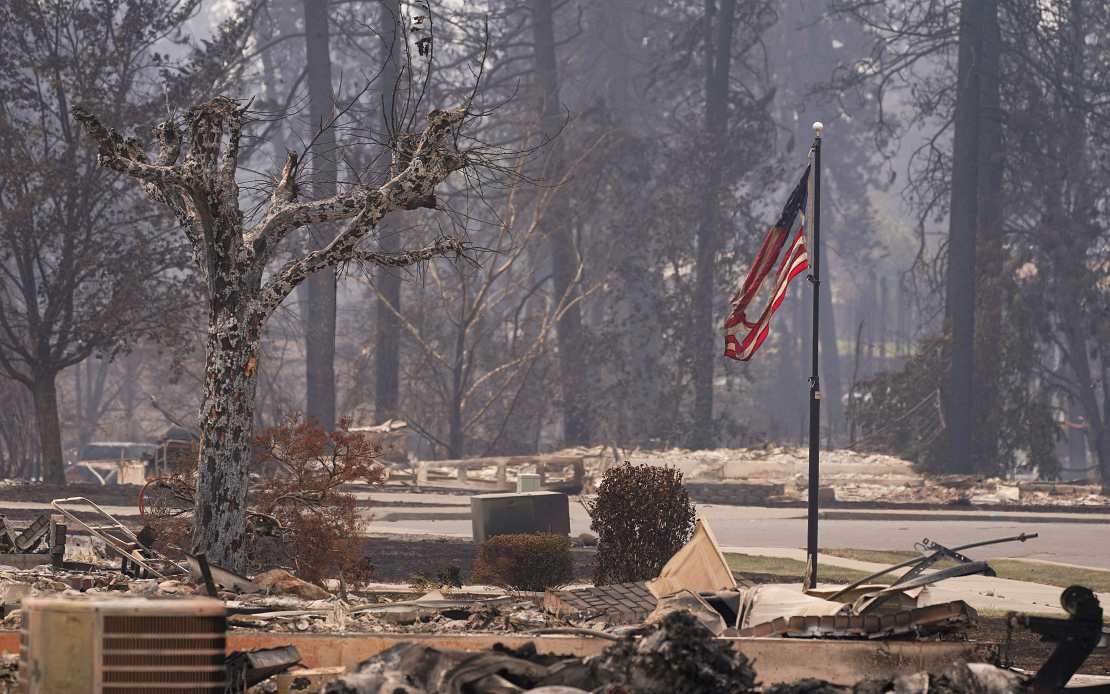
Wildfires across Washington state have forced the evacuation of more than 65,000 residents as several uncontrolled blazes continue to spread across the Pacific Northwest region. The American Red Cross confirmed the scale of the displacement on Monday, noting that preliminary damage assessments reveal the fires have already destroyed over 700 homes, with the heaviest concentration of losses centred in Spokane County. The rapid escalation of these incidents underscores the intensifying wildfire season affecting the western United States and highlights the vulnerability of communities in fire-prone regions to sudden mass displacement.
Authorities have made progress in identifying a suspect connected to at least one of the major fires. Spokane County Sheriff John Nowels announced that a 37-year-old man, Aaron F. Farinacci, was taken into custody on Monday afternoon and charged with first-degree arson. Farinacci remains in custody on a $1 million bond and is believed to be linked to the Old Trails Fire, one of several active blazes threatening the region. The arrest suggests that human activity, rather than natural causes alone, may have contributed to the fire outbreak, a pattern increasingly documented in major wildfire events across North America.
The fire situation in Spokane and Stevens counties has created a landscape of unprecedented destruction in recent days. Data from InciWeb, the interagency fire information system, indicates that fires in these counties have consumed 8,026 acres (3,248 hectares) since Saturday, with containment efforts remaining at zero percent. Despite challenging conditions, the Spokane Complex Fire Incident Management Team reported that improving weather patterns are beginning to allow firefighting crews to advance along the fire perimeter and establish more effective defensive positions. However, the lack of containment demonstrates the difficulty authorities face in controlling fast-moving blazes under variable environmental conditions.
The challenges extend well beyond Spokane County. The Sinlahekin fire, ignited by lightning on July 26, has grown to a catastrophic 85,000 acres (34,398 hectares) and remains completely uncontained despite the efforts of more than 820 personnel deployed to combat the blaze. Further northwest near Leavenworth, the Little Giant Fire has burned through 51,298 acres (20,759 hectares) of the Okanogan-Wenatchee National Forest, adding to the cumulative resource strain facing state and federal agencies. The scale of these fires—measured in tens of thousands of acres—illustrates the magnitude of the crisis and suggests that recovery and rebuilding efforts will extend across years rather than months.
Governor Bob Ferguson has indicated that while authorities have made contact with the vast majority of residents who sought help, officials are still attempting to reach approximately 14 individuals to confirm their safety. The governor clarified that these individuals are not classified as missing, but rather authorities wish to establish direct contact to verify their wellbeing. As of the time of Ferguson's statement, no confirmed deaths had been reported, a positive development given the scale of the evacuations and the property damage sustained across the affected counties. However, the ongoing search for contact with these 14 residents suggests that communication challenges persist in areas affected by the fires.
The wildfire crisis in Washington reflects broader climate and environmental patterns affecting the western United States. Extended drought conditions, elevated temperatures, and reduced moisture levels have created ideal conditions for rapid fire spread and intensification. The combination of natural weather factors with terrain that includes dense forest vegetation creates a particularly volatile situation. The rapid pace at which these fires have grown—from initial ignition to evacuation orders affecting tens of thousands—demonstrates how quickly conditions can deteriorate during peak fire season.
For regional observers in Southeast Asia, the Washington fires serve as a reminder of the interconnected nature of climate systems and the potential for extreme weather events to displace large populations with minimal warning. While Southeast Asian countries face different fire risks related to peatland and agricultural burning, the capacity to mobilise emergency response systems and coordinate mass evacuation operations demonstrates capabilities that developing nations in the region might study and adapt. The coordination between local law enforcement, fire management agencies, and humanitarian organisations like the American Red Cross illustrates institutional approaches to crisis response.
The economic implications of the Washington fires extend beyond immediate property losses. Destroyed homes represent not only personal loss but also disruption to local economies, labour markets, and community infrastructure. Rebuilding efforts will place significant demands on construction resources, insurance systems, and government support mechanisms. For areas already facing economic pressures, such large-scale destruction can accelerate longer-term demographic shifts as residents relocate rather than rebuild in fire-prone areas. The question of whether affected communities will recover their pre-fire populations and economic vitality remains uncertain.
The investigation into Aaron F. Farinacci's alleged role in the Old Trails Fire will likely inform broader discussions about fire prevention and public safety in Washington state. Whether additional charges will be brought or whether evidence connects the suspect to other fires remains to be determined. The criminal investigation provides a focal point for public attention but may also obscure the reality that multiple fires with different origins—lightning strikes, equipment use, and human activity—are simultaneously challenging firefighting resources across the region.
Looking ahead, the priority for Washington authorities will be balancing continued evacuation management with fire suppression efforts and investigation activities. The improving weather conditions noted by incident management officials may provide temporary relief, but forecasts and seasonal patterns suggest that fire danger will remain elevated throughout the remainder of the summer months. Preparedness efforts for future fire seasons will likely emphasise community education, early detection systems, and resource pre-positioning to accelerate response times. The lessons from this event will inform policy discussions about land management, development in fire-prone areas, and the adequacy of state and federal response capacity for large-scale disasters.

