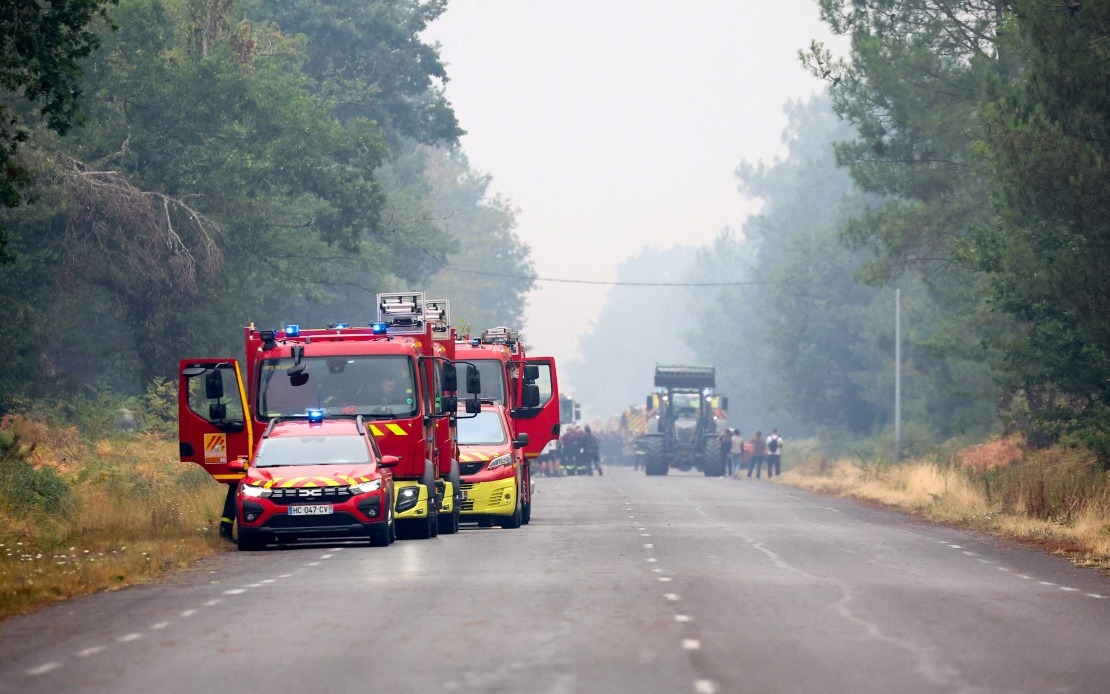
The intense wildfire situation gripping southwestern France and Spain showed tentative signs of improvement this week, as emergency crews managed to stabilize several major blazes that had consumed vast tracts of forestland and displaced tens of thousands of residents. Yet this temporary respite comes with a troubling caveat: meteorologists are tracking an incoming heatwave that could reignite dangerous conditions and complicate ongoing suppression efforts across the fire-scarred regions.
In the Gironde department of southwestern France, which has borne the brunt of the conflagration, authorities reported that the primary wildfire remained stabilized through Wednesday morning despite sporadic flare-ups that erupted overnight. More than 2,000 firefighters remained actively deployed across the fire perimeter, working methodically to extinguish remaining hotspots and prevent the blaze from reigniting. The human toll of the firefighting campaign has been significant, with 126 firefighters sustaining injuries since the fire first broke out in this region. The relative calm that prevailed overnight offered hope that the worst might be passing, though officials remained cautious about declaring victory given the volatile nature of the weather conditions forecast ahead.
Other major fires across France have reached more definitive containment milestones. The blaze consuming the southeastern Var department was successfully contained on Tuesday after burning approximately 4,800 hectares of forest and agricultural land. In the southwestern Landes department, firefighting teams reduced the active fire zone after it had scorched 3,600 hectares, though they kept 350 firefighters stationed in the area to monitor for any resurgence. These controlled outcomes underscore the extraordinary resource commitment and coordination required to manage multiple simultaneous wildfires across a wide geographical area.
The French meteorological service has cast a shadow over these incremental successes by issuing orange-level fire risk alerts across 65 departments for Wednesday, with an additional 16 departments receiving similar warnings due to the expected heatwave. Such alerts represent the second-highest level in France's fire danger classification system, signalling that conditions could rapidly deteriorate if temperatures spike and humidity drops. For communities still recovering from recent evacuations and property damage, the prospect of renewed fire danger compounds anxiety and uncertainty about when normal life might resume.
Across the border in Spain, the wildfire situation reveals both progress and persistent challenges. The forest fire burning in Madrid's Sierra Oeste region remained stable overnight without the destructive flare-ups that had characterized earlier phases of the emergency. However, active suppression operations continued across multiple provinces including Madrid, Avila, Toledo, Castellon, and Almeria, indicating that the Spanish fire emergency remained far from resolved despite initial containment successes. The country was simultaneously bracing for its own incoming heatwave, amplifying concerns that firefighting gains could swiftly evaporate.
Evacuation orders have gradually been lifted for residents across several Spanish regions as fires moved toward containment, providing some relief to displaced populations. Late Tuesday saw residents from 15 municipalities in Madrid and Avila returning to their homes, followed by 9,000 residents in Castellon and 6,000 residents from 11 municipalities in Toledo. This gradual restoration of normalcy represents a critical milestone in the emergency response, though it also reflects the protracted nature of the crisis and the weeks of disruption endured by affected communities.
The Vall d'Uixo wildfire in Castellon province exemplifies the scale and ferocity of blazes still threatening the region. This particular fire, which ignited on Saturday, has charred approximately 10,000 hectares and forced the evacuation of 10,000 residents. Despite some progress in recent days, the fire remains substantially uncontrolled, demonstrating that even as some blazes stabilize, others continue to rage with dangerous intensity. The presence of such an active megafire underscores why the incoming heatwave represents such a serious threat to the entire firefighting operation.
Road closures across the affected regions further illustrate the widespread disruption caused by the wildfires. Thirty roads remain closed spanning Avila, Castellon, Madrid, Toledo, and Leon provinces, restricting movement of both emergency vehicles and civilian traffic. These transportation challenges hamper supply chains, limit access to affected areas, and complicate the logistics of maintaining firefighting operations across dispersed fire fronts. The cascading economic and logistical impacts ripple far beyond the immediate burn zones.
The convergence of stabilizing fire conditions with an approaching heatwave presents a paradox that encapsulates the climate-driven challenges facing southern Europe. While current firefighting efforts have achieved measurable success in containing several major blazes, the underlying meteorological patterns that fuelled these disasters remain in place. The expected heatwave will bring the exact conditions—high temperatures, low humidity, and elevated winds—that transform controlled situations back into critical emergencies within hours. This cyclical pattern of danger-relief-danger reflects the new reality of wildfire management in an era of climate volatility.
For Malaysia and other Southeast Asian nations watching these events, the European crisis offers sobering lessons about wildfire preparedness and climate adaptation. While Southeast Asia faces different fire ecology than Mediterranean Europe, the underlying drivers of increased fire intensity and frequency—shifting climate patterns and extended drought cycles—apply globally. The sheer scale of resources, personnel, and coordination required to manage these disasters in a developed nation with advanced infrastructure suggests that emerging challenges across the tropics and subtropics demand similarly comprehensive planning and investment before crises arrive.

