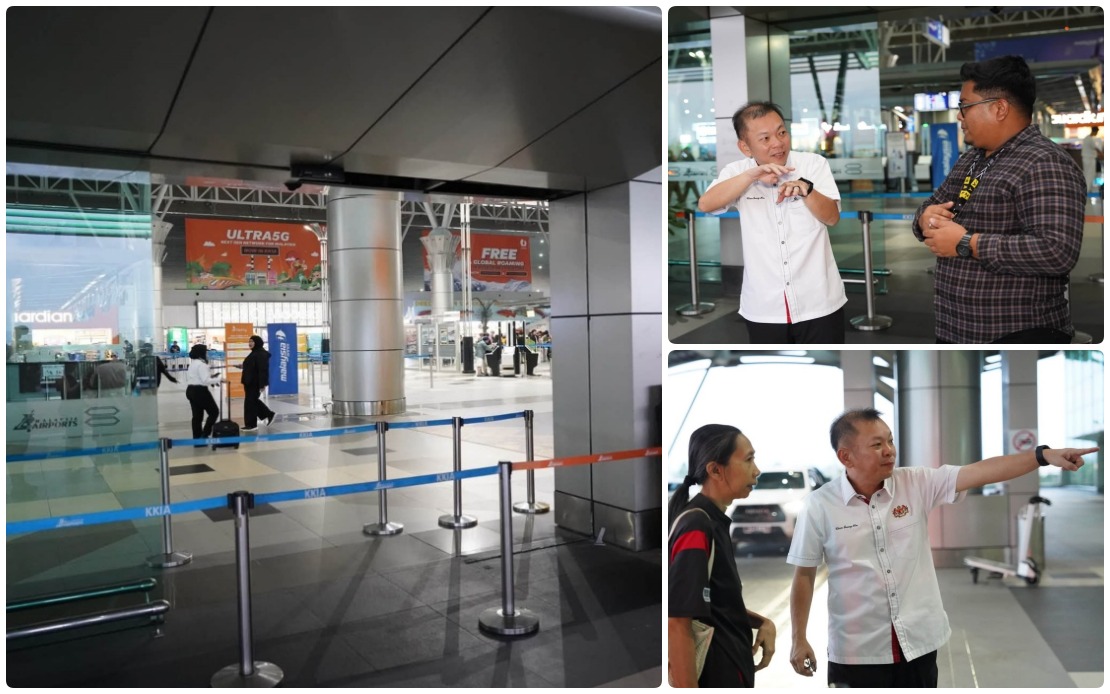
A woman driver sustained minor injuries on Wednesday afternoon when the sport utility vehicle she was operating veered out of control and struck the glass entrance structures at Kota Kinabalu International Airport's departure hall on Level 3. The collision occurred at approximately 4:20 pm at the kerbside of Terminal 1, shattering the automatic door panels and inflicting substantial damage to the vehicle's front end. Emergency responders transported the injured driver to a nearby medical facility for treatment of her minor injuries, while no other airport users or staff members were harmed in the incident.
According to Kota Kinabalu District Police Chief ACP Shahrudin Mat Husain, investigators are actively examining the circumstances that led to the vehicle's loss of control. The police authority confirmed the timing and location of the accident, pledging to determine the precise cause through ongoing inquiries. Whether mechanical failure, driver error, or external factors contributed to the crash remains under examination by law enforcement officials.
Malaysia Airports, the operator of the terminal facility, moved swiftly to restore normal conditions following the collision. Aviation Security personnel and Customer Service staff responded within minutes of the 4:19 pm incident, immediately coordinating medical assistance for the injured driver. The company's statement emphasised that the removal of the damaged vehicle and surrounding debris was completed by 6:00 pm, enabling the airport to resume full functionality. Repair crews subsequently began restoration work on the damaged entrance doors, though the exact timeline for completion was not disclosed.
The incident highlights the importance of rapid incident management at major transportation hubs, where swift action can prevent broader disruptions to thousands of daily passengers. The airport operator's ability to clear the affected area within two hours of the accident ensured that travellers experienced minimal inconvenience, with alternative automatic door access remaining fully operational throughout the emergency response period. This operational resilience prevented cascading delays that could have affected flight schedules and passenger movements during what was likely an afternoon peak travel period.
Deputy Minister of Agriculture and Food Security Datuk Chan Foong Hin, who coincidentally arrived at the airport during or shortly after the incident, commended the airport management's efficiency. Through social media commentary, he acknowledged the decisive response demonstrated by KKIA personnel, expressing appreciation for their ability to maintain passenger flow despite the emergency circumstances. His remarks underscored the significance of having well-trained, responsive teams capable of managing unexpected incidents without compromising the facility's core functions.
The damaged entrance doors at KKIA represent a critical access point for departing passengers, making the repair work a priority to maintain the airport's operational capacity. While the specific nature and extent of the structural damage was not detailed in official statements, the shattered glass panels would require complete replacement rather than simple repairs. The incident serves as a reminder of the importance of robust design standards for airport infrastructure, particularly in high-traffic areas where millions of passengers pass annually.
The case has been referred to the Royal Malaysia Police for formal investigation, with Malaysia Airports pledging complete cooperation with law enforcement authorities. This procedural step ensures that the incident is documented within official records and that any safety recommendations arising from the investigation can be implemented across airport operations. The police investigation will likely examine factors including the vehicle's mechanical condition, weather conditions, driver health, and whether any violations of airport traffic regulations contributed to the loss of control.
Airport safety incidents, though relatively infrequent given the high volume of vehicle movements in departure and arrival areas, warrant thorough examination to prevent recurrence. Each accident provides valuable data for identifying systemic vulnerabilities or behavioural patterns that could be addressed through additional safety measures, staff training, or infrastructure modifications. The investigation's findings may influence future policies regarding vehicle access, traffic flow management, and protective barriers in similar high-risk areas across Malaysian airports.
The incident occurred without major cascading consequences, reflecting the maturity of KKIA's emergency response protocols. The airport successfully avoided the kind of extended operational disruption that could have resulted from poor incident management, demonstrating that the facility maintains adequate staffing and training to handle unexpected emergencies. For travellers and airport users, the rapid restoration of normal operations provided reassurance regarding the facility's reliability and resilience in managing unexpected crises.
Looking forward, the completed investigation may yield recommendations for additional safety features or procedural enhancements at KKIA and potentially across the broader Malaysia Airports network. Whether focusing on improved barriers, clearer traffic markings, or modified access protocols, the findings could contribute to evolving best practices in airport terminal design and operations. The incident underscores the dynamic nature of airport management, where personnel must balance accessibility for legitimate traffic with security measures that protect both visitors and infrastructure.

