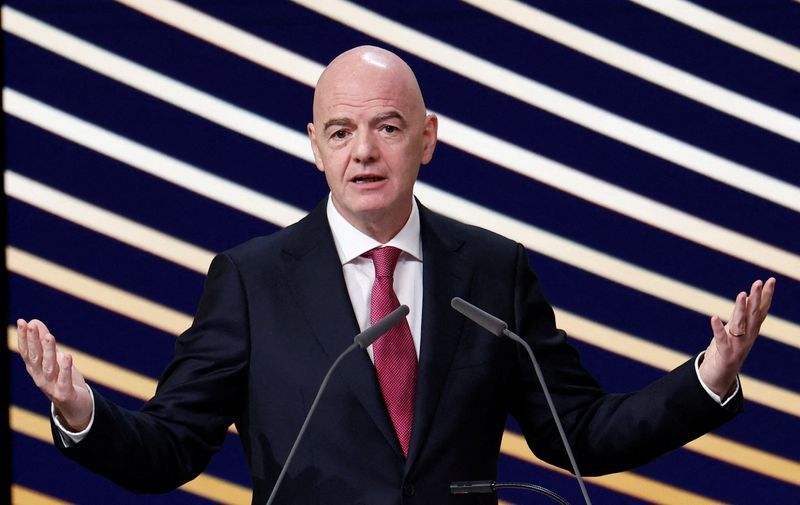
The most significant challenge to FIFA President Gianni Infantino's decade-long tenure has found its most vocal champions in two women football administrators. Laura McAllister of Wales and Lise Klaveness of Norway, serving as the only female members of UEFA's executive committee, have positioned themselves at the forefront of a growing rebellion against Infantino's controversial push for FIFA Football Enterprises, a private equity-backed venture that collapsed under mounting pressure from governing bodies across the sport.
The uprising has catalysed wider conversation about football's readiness to place a woman at the helm of its global governing structure. McAllister, speaking in her capacity as UEFA vice-president, acknowledged the symbolic importance while tempering expectations about timing. "It would be wonderful to see a woman elected as president of FIFA," she reflected, yet she was candid about the systemic barriers that persist. The fundamental challenge, she explained, lies not merely in identifying qualified female candidates but in acknowledging that football's male-dominated administrative hierarchy remains structurally resistant to change. McAllister's assessment suggests that while aspiration exists, the sport lags measurably behind contemporary standards of institutional diversity.
The impetus for this conversation gained particular momentum when Sepp Blatter, Infantino's predecessor, publicly endorsed the notion of female FIFA leadership this week, declaring it time for a woman to lead the sport. Yet this endorsement, rather than settling the question, highlighted the complexities that McAllister and others recognise. The former FIFA leader's intervention underscored that even those with experience navigating football's political corridors acknowledge the need for change—a remarkable admission in a sector historically reluctant to cede power.
McAllister's caution about meritocracy reveals the hardest truth confronting female advancement in football governance. She stressed that qualifications alone cannot overcome entrenched structural disadvantage. Geography matters enormously; any credible presidential candidate would need backing not merely from Europe but from football associations across Africa, Asia, and the Americas—regions where women's representation in football leadership remains even more limited than in wealthy European federations. McAllister's measured approach advocates for patience and methodical progress rather than confrontational reform.
The crisis precipitating this debate originated with Infantino's attempt to advance the FIFA Football Enterprises proposal, which would have introduced private capital into football's commercial operations. The plan's failure represents more than a simple policy defeat; it reflects deteriorating confidence in his leadership across multiple continents. Wales became the first national association to withdraw support for Infantino's re-election, triggering a cascade of withdrawals and public criticism that forced Infantino to convene emergency meetings, including one scheduled in Morocco to address the situation.
McAllister herself had proposed a boycott of FIFA events at UEFA's emergency assembly, a motion that achieved unanimous backing—a remarkable display of solidarity across European football's diverse membership. Her characterisation of the current state as a governance crisis reaching a critical juncture carries weight precisely because she comes from within football's establishment. She identifies patterns of troubling decisions that compound the immediate concern about private equity: FIFA's entanglement with the failed European Super League project, governance failures surrounding World Cup host selections and their attendant political complications, and the extraordinary decision to rescind a red card to American player Folarin Balogun after intervention by Donald Trump.
What distinguishes McAllister and Klaveness from other critics is their grounding in women's professional football. Both were international players for their respective countries before transitioning into governance roles. McAllister brings credentials as a political scientist; Klaveness operates as a trained lawyer. This combination of insider experience within football and external professional expertise appears to strengthen their credibility when challenging Infantino's vision. They articulate concerns from perspectives that transcend narrow football business interests, positioning their resistance around fundamental principles about what football should represent.
Their values-centred approach emphasises football as a universal public good rather than a commercial asset to be exploited. McAllister contends that female leaders in football governance, perhaps because they have not navigated the sport's traditional male-dominated business networks as extensively, remain more attuned to football's foundational purpose. She argues for a global game accessible to grassroots participants in impoverished countries and wealthy nations alike, resistant to capture by private capital or political manipulation. This framework suggests that expanding female leadership could reorient football's governance around collective wellbeing rather than maximising financial returns.
The broader statistical context underscores how far football's leadership structures lag behind aspirations. Of FIFA's 211 member associations, merely ten are headed by women presidents—a figure that illustrates the profound institutional imbalance. Even Norway, frequently cited as a model for gender equity, has only recently placed Klaveness at the helm of its football federation. This disparity extends to administrative and executive positions throughout world football, creating what amounts to a pipeline problem extending from youth development through to elite governance levels.
Comparisons with other global sports organisations prove instructive. Michael Payne, formerly an IOC marketing executive, highlighted the International Olympic Committee's substantial progress on gender representation in leadership and competition. The Olympics now feature equal participation between men and women athletes, and the organisation is led by a woman, Kirsty Coventry. Football, by contrast, remains far from parity; the men's World Cup attracts vastly greater resources and attention than women's competitions, a disparity that reflects and reinforces governance imbalances.
McAllister advocates for a gradual, strategic approach to expanding female leadership in football rather than attempting to force rapid change. Her "softly softly" methodology reflects pragmatic recognition that revolution in football's governance structures faces entrenched resistance from geographically dispersed power centres with conflicting interests. Building sustained momentum for female leadership requires cultivating support across confederations with varying levels of institutional development and gender awareness. This long-term perspective acknowledges that lasting institutional transformation requires patient coalition-building.
The current crisis presents an opportunity that female football leaders are determined not to squander. By anchoring their criticism of Infantino to broader governance failures and institutional drift, McAllister and Klaveness transcend narrow identity politics. They construct arguments about football's proper purpose and leadership quality that encompass but extend beyond questions of gender representation. Whether this approach ultimately advances female leadership in football governance remains uncertain, yet it has already shifted the conversation in ways that seemed unlikely a year ago.
For Malaysian and Southeast Asian observers, the governance upheaval at FIFA carries implications beyond Europe's football borders. As FIFA determines its future direction, the regional confederations' federation will navigate questions about how global football's resources are distributed and how developing football nations maintain meaningful influence. The outcome of debates about FIFA's values and governance structures will shape whether football in Malaysia and across Asia receives equitable investment and development support or remains peripheral to global football's commercial interests.

