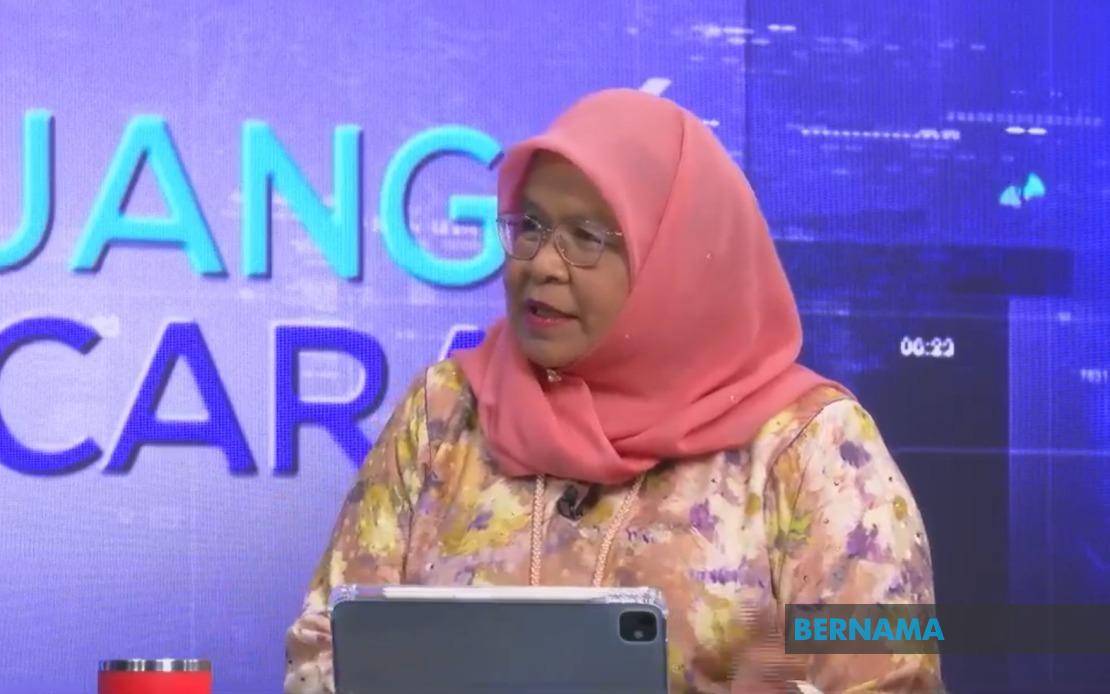
The advancement of women into positions of genuine influence across Malaysia's institutions demands far more than symbolic gestures or token appointments. Instead, experts warn that sustainable progress requires comprehensive ecosystems of support, targeted development, and a fundamental cultural shift that values women's capabilities as essential rather than supplementary to organisational success.
Datuk Seri Dr Maimunah Mohd Sharif, the Government's Sustainable Urban Development advisor and former mayor of Kuala Lumpur, emphasised this point during recent remarks on women's empowerment. Her argument centres on a practical observation: women's participation in higher-level decision-making directly influences whether policies address the lived experiences and needs of female citizens. Without women's voices shaping governance from positions of authority, institutional blind spots remain unchecked and opportunities for evidence-based policy refinement are lost. This perspective reframes women's advancement not as a matter of fairness alone, but as a governance imperative that strengthens institutional effectiveness.
The gap between educational achievement and leadership representation reveals how opportunity alone falls short. Current data paints a telling picture of this disconnect. Women comprise 56.4 per cent of total participation in higher education according to 2025 figures, yet hold just 27 per cent of management positions across sectors. In Parliament, women represent only 13.5 per cent of members, while the Cabinet contains 16.1 per cent female ministers. These disparities cannot be attributed to educational capacity or qualification deficits, but rather point toward systemic barriers in career progression, selection processes, and institutional cultures that fail to translate women's qualifications into equivalent advancement opportunities.
Dr Maimunah's call for women to actively seize opportunities when offered acknowledges individual agency whilst simultaneously highlighting the incompleteness of this exhortation without structural change. Her statement—that women should "seek knowledge" when given chances—underscores how responsibility has traditionally been placed upon individuals to overcome barriers rather than upon institutions to dismantle them. Yet she implicitly recognises that this individual effort remains insufficient without corresponding institutional reform and genuine trust in women's decision-making capabilities.
The financial services sector offers instructive examples of how meritocratic frameworks can erode gender-based advancement barriers, though even here progress remains incomplete. Datuk Mona Suraya Kamarudin, non-executive independent director at Nomura Asset Management, notes that finance operates under a pragmatic logic: capability drives selection regardless of gender. When technical skill directly determines organisational outcomes—as in financial management—gender becomes theoretically irrelevant. Yet even in this theoretically meritocratic environment, women remain concentrated in mid-level roles rather than ascending to executive leadership at comparable rates to male counterparts. This suggests that meritocratic selection mechanisms alone cannot overcome ingrained patterns of advancement and succession planning that favour established networks historically dominated by men.
The disconnect between technical competence and leadership opportunity reflects deeper structural challenges that Malaysian organisations must address. Women entering professional sectors often possess comparable or superior technical capabilities to male colleagues, yet face additional barriers when seeking senior appointments. These obstacles include reduced access to informal mentoring networks, assumptions about commitment and availability, limited visibility within decision-making circles, and unconscious biases embedded in promotion criteria. Organisations that wish to elevate women into leadership positions must therefore implement deliberate countermeasures: structured mentoring programmes, transparent advancement criteria, intentional visibility strategies, and regular assessment of promotion patterns for gender disparities.
Training and leadership development emerge as critical interventions that move beyond opportunity provision toward capability building. When women transition into decision-making roles without accompanying development support, they face elevated pressure to prove competence whilst navigating organisational cultures not designed with their advancement in mind. Comprehensive leadership development programmes, tailored to address specific challenges women encounter in particular sectors, provide essential scaffolding. These programmes should encompass technical skill advancement, strategic thinking development, executive presence coaching, and networking facilitation—investments that accelerate women's integration into senior leadership whilst reducing the time required to reach full effectiveness.
Family support and workplace flexibility represent another dimension often overlooked in women's advancement conversations. Suraya Kamarudin's observation regarding the importance of family backing reflects a reality that women disproportionately navigate: professional ambition coupled with socially-ingrained expectations around domestic and caregiving responsibilities. Organisations that genuinely commit to women's advancement must therefore examine their policies on parental leave, flexible working arrangements, childcare support, and caregiving responsibilities. These structural changes remove practical obstacles that force many capable women to choose between career progression and family commitments—a calculus rarely imposed upon male professionals to equivalent degrees.
Malaysia's experience mirrors broader Southeast Asian patterns where women's educational participation now exceeds men's in many sectors, yet institutional leadership remains disproportionately male. This generation gap suggests that demographic change alone will not automatically translate into leadership transformation. Instead, intentional institutional reform must accompany demographic shifts. Organisations must examine succession planning, actively recruit women into high-potential pipelines, establish mentoring relationships between senior and emerging female leaders, and create accountability mechanisms for advancement targets.
The call for trust in women's capabilities represents perhaps the most fundamental requirement for meaningful change. When women enter leadership positions, they often encounter subtle and overt questions about their suitability that male colleagues rarely face. This persistent credibility challenge—whether expressed as surprise at women's competence or unsolicited scrutiny of their decisions—creates psychological burden that erodes effectiveness. Institutional trust in women's decision-making capability must be established as baseline rather than earned through exceptional performance. This shift requires cultural change at multiple levels: from recruitment practices that assume women's interest in traditionally male-dominated fields, through workplace norms that validate women's authority, to succession planning that positions women as credible candidates for top positions.
The path forward requires simultaneous action across multiple dimensions. Organisations must expand opportunity provision, yes, but couple this with comprehensive training, deliberate mentoring, flexible working arrangements, and—crucially—a genuine shift in institutional attitudes regarding women's capabilities. Malaysia's ambition to develop its human capital fully cannot be achieved whilst systematically underutilising women's potential across government and private sectors. The evidence suggests that women possess the qualifications and competence required; what remains missing is institutional commitment to removing barriers and creating environments where women's advancement becomes the natural consequence of their demonstrated capability rather than an exceptional achievement meriting celebration.

