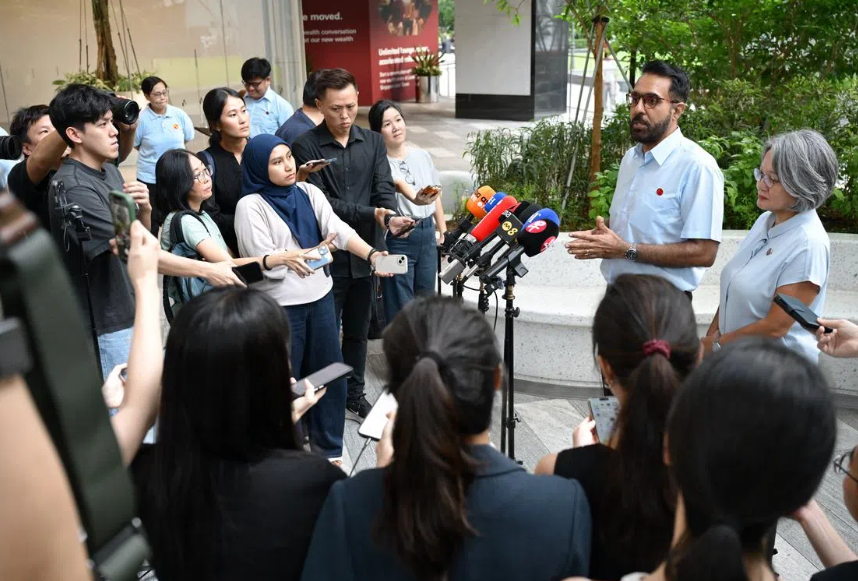
Singapore's Workers Party has firmly consolidated behind its leader Pritam Singh after cadres voted overwhelmingly to keep him in position, despite the unprecedented challenge posed by his conviction for lying to Parliament. The June 28 meetings, which saw Singh face his most serious test since assuming the secretary-general role in 2018, concluded with both a successful no-confidence vote and an unopposed re-election, signalling that the party has chosen unity over the potential fracture that could have emerged from the Raeesah Khan scandal.
The numerical outcome left little room for ambiguity. Out of 106 cadre members present, 82 voted to retain Singh as the party's leader, translating to a supermajority that reflected overwhelming support despite months of simmering discontent among a minority faction. Those who had initiated the special cadre conference, seeking to hold Singh accountable for his parliamentary lie, had hoped to orchestrate a more contentious process. Instead, questioning during the lengthy six-hour session revealed a more complex picture than anticipated, with some cadres speaking supportively of Singh even as others pressed him on his conduct.
The resolution marks the culmination of turmoil that began in 2021 when former Sengkang GRC MP Raeesah Khan admitted to fabricating an account of police mistreatment of a sexual assault victim during a parliamentary speech. Singh's role in the unravelling of this matter—specifically his involvement in Khan's decision to prolong rather than immediately correct the falsehood—ultimately led to his conviction in court. When Singapore's High Court upheld the guilty verdict in December 2025, it triggered a parliamentary motion that deemed Singh unsuitable to remain as Leader of the Opposition, a position subsequently rescinded by Prime Minister Lawrence Wong.
Yet the party's institutional response to Singh's legal jeopardy has been notable for its protective posture. Despite opportunities to nominate an alternative Member of Parliament to the Leader of the Opposition role, the Workers Party declined to do so, a decision that itself demonstrated leadership cohesion. The party's disciplinary panel, while finding that Singh had contravened the party's Constitution, resulted in only a formal letter of reprimand from the top leadership body—a measure that observers characterised as a relatively lenient sanction given the gravity of the underlying conduct.
The symbolic significance of the cadre vote cannot be overstated in the context of Singapore's opposition politics, where internal divisions have historically proven corrosive to party performance. Several opposition formations have suffered from public infighting and periodic leadership upheavals that damaged their electoral standing and public credibility. The Workers Party's demonstration of disciplinary coherence, therefore, eliminates a potential vulnerability that the governing People's Action Party might have exploited in future electoral contests. By closing ranks, the party has prevented the narrative from shifting toward questions of institutional dysfunction.
Former party chief Low Thia Khiang's public endorsement of Singh carried particular weight in this regard. As the architect of the modern Workers Party, Low's continued support signalled that the party's elder statesmen viewed Singh's leadership as legitimate and worth preserving despite the legal setback. This continuity of backing from the previous generation of leadership provided both internal validation and a form of institutional historical grounding that helped legitimise the cadres' decision to retain Singh.
Party chair Sylvia Lim has now turned attention to leadership renewal, acknowledging during post-election remarks that her 23-year tenure in the role suggests the need for succession planning. This pivot signals that the party intends to move beyond the Khan episode and build toward a future leadership configuration that could eventually transition beyond Singh himself. The emphasis on renewal also reflects awareness that opposition parties must continually develop fresh talent to sustain long-term viability and electoral competitiveness against an entrenched ruling party.
However, the overwhelming vote to retain Singh also underscores a structural reality within the Workers Party: no credible internal challenger possesses the parliamentary experience, public profile, or organisational standing necessary to mount a serious challenge to his leadership. This absence of alternative candidates was evident in the failed attempt by Singh's critics to recruit a rival to contest the election. The lack of such internal competition, while ensuring Singh's victory, also raises questions about leadership depth and whether the party has adequately cultivated a second tier of proven parliamentary performers.
The party's gambit appears partially vindicated by the May 2025 general election results, which demonstrated voter willingness to support the Workers Party even after Singh's initial conviction in the lower court. Not only did the party retain its existing constituencies, but it expanded its footprint by securing two Non-Constituency MP seats, suggesting that electoral momentum persists despite the legal controversy. For many Workers Party supporters, Singh's conviction may indeed be compartmentalised as a legal matter distinct from his parliamentary effectiveness or policy positions.
Yet a critical challenge remains: can the Workers Party translate its internal solidarity and marginal electoral gains into genuine appeal among middle-ground voters who may harbour reservations about a leader with a conviction for parliamentary dishonesty? Voters who are ideologically flexible and not already committed to opposition politics may view Singh's conduct as a disqualifying breach of the trust essential to legislative leadership. The party's current advantage of facing less voter scrutiny than it would as a governing force provides some cover, but this protection is inherently temporary.
The Workers Party's solidarity also raises uncomfortable questions about whether institutional preservation has superseded principled governance. When asked to address criticism that the party is being led by a "convicted liar," Singh directed questioners to his website rather than engaging substantively with the concern. This response, while legally defensible, sidesteps rather than confronts the underlying legitimacy question that middle-ground voters may harbour about parliamentary integrity. For the opposition party to broaden its appeal beyond its current base, it may ultimately need to address rather than deflect such concerns.
Looking forward, the Workers Party has successfully navigated an internal crisis that could have fractured its unity. By demonstrating coherence and backing Singh decisively, the cadres have prevented the kind of public disarray that damages opposition movements in competitive democracies. However, the party now faces the more difficult challenge of expanding its electoral coalition among voters who are neither committed opposition supporters nor yet convinced that the Workers Party, under Singh's leadership, merits their trust with power. The margin by which the party can expand will ultimately depend less on internal party management than on its ability to address the legitimacy deficit that Singh's conviction created among less committed voters.

