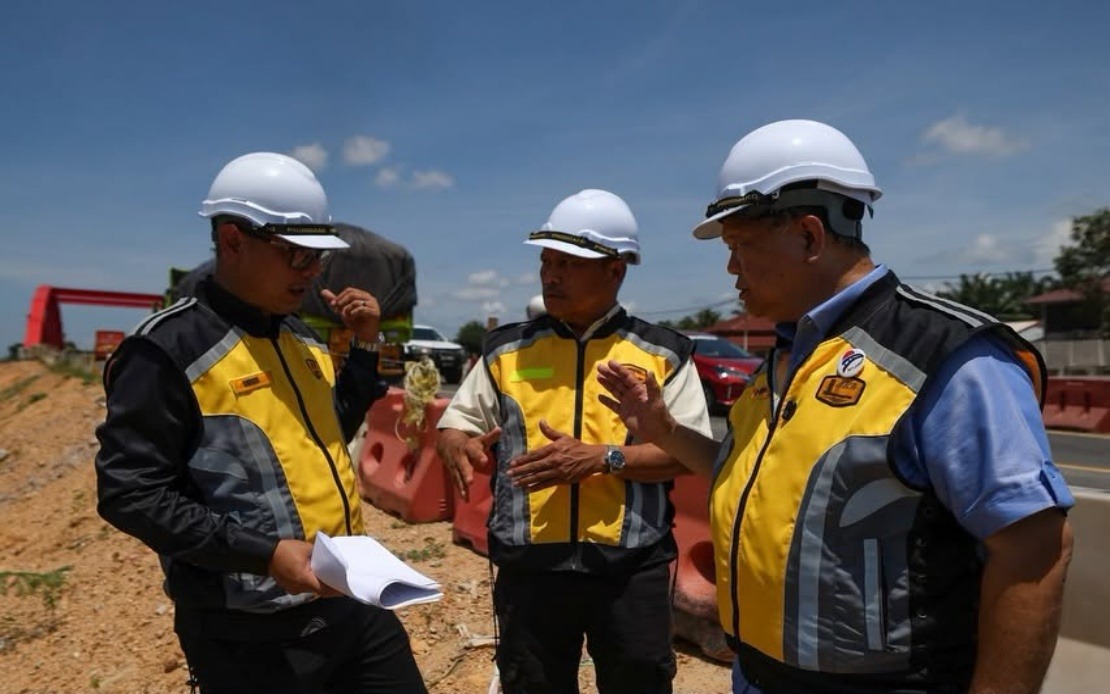
Malaysia's Works Minister Datuk Seri Alexander Nanta Linggi has issued a firm directive to the contractor handling the Sungai Durian Bridge Replacement Project in Kuala Krai, demanding an acceleration of construction timelines after the scheme fell behind schedule for the seventh time. The minister made the announcement following an unannounced inspection of the project site on July 17, where he assessed conditions firsthand and conveyed his expectations to those responsible for delivery.
The bridge replacement initiative has become a fixture of disappointment for residents of Kuala Krai, having been granted six extensions to its original completion deadline. Rather than accept another postponement, Nanta made clear through his visit and subsequent statement that the ministry intends to take a more assertive stance on project oversight and accountability. His willingness to conduct a surprise site inspection signals a shift towards hands-on ministerial intervention in infrastructure delivery, a measure sometimes necessary when standard monitoring mechanisms prove inadequate.
Technical complications have contributed substantially to the timeline difficulties. The borepile installation process, a critical foundation element for the replacement structure, encountered unforeseen obstacles when existing utility pipelines interfered with planned construction sequences. Such discoveries are common in Malaysian infrastructure projects, where ageing utility networks frequently occupy spaces that newer developments must navigate around. Additionally, the temporary support structures required for installing the steel bridge components presented their own engineering challenges, further complicating what should have been straightforward construction logistics.
Nanta's response reflects growing impatience within government circles regarding infrastructure implementation standards. Rather than accepting contractor explanations about external factors and technical difficulties, he emphasised that delays cannot become habitual excuses for underperformance. His statement, published through his official Facebook channel, carried unmistakable language about zero tolerance for further postponements. This direct communication approach bypasses traditional bureaucratic channels and sends a public message about ministerial commitment, effectively putting both the contractor and supervising agencies on notice.
The directive issued during the ministerial visit specifically demands three immediate actions: deployment of additional workforce and equipment to accelerate physical progress, a concerted effort to resolve outstanding technical matters, and enhanced coordination between the contractor and the Public Works Department. By stipulating these requirements publicly, Nanta has created accountability mechanisms that extend beyond standard contractual obligations. The contractor now faces reputational pressure alongside contractual penalties if further delays materialise.
From a broader Malaysian infrastructure perspective, the Sungai Durian project exemplifies persistent challenges that plague developmental schemes across the country. Utility relocation, inadequate preliminary investigations, and design complications regularly emerge during construction phases, yet many projects continue to suffer recurrent delays that cumulative extensions merely postpone rather than resolve. This particular case demonstrates that even relatively straightforward bridge replacement work can encounter cascading difficulties that compromise timelines.
The implications for Kuala Krai residents extend beyond mere inconvenience. The area's connectivity, economic mobility, and emergency response capabilities all depend on reliable bridge infrastructure. Communities living on either side of Sungai Durian have endured prolonged uncertainties about when normal transportation will resume, affecting everything from daily commutes to business operations and healthcare access. Public patience reaches its limits when infrastructure projects stretch across multiple years without apparent resolution.
Nanta's personal involvement and stern messaging also reflect broader political considerations. Infrastructure delivery performance directly influences public perception of government effectiveness. In Kelantan, where the project is situated, demonstrating tangible progress on long-stalled development schemes carries electoral significance. The ministerial intervention signals that senior government figures are paying attention to regional concerns and willing to exert pressure when necessary to ensure completion of promised infrastructure.
The coordination requirement between the contractor and the Public Works Department represents an implicit acknowledgement that project failures often stem from communication gaps and insufficient inter-agency cooperation. By explicitly mandating collaborative problem-solving, Nanta attempts to break down silos that sometimes obstruct rapid issue resolution. This structural approach, combined with demands for additional resources, represents a comprehensive attempt to overcome the particular obstacles that have repeatedly derailed the project.
Moving forward, the project will face heightened scrutiny from ministerial level, making further delays increasingly untenable for all parties involved. The contractor must now deliver according to the revised schedule or face direct accountability to senior government leadership. For Malaysian infrastructure observers, this case study illustrates both the persistent implementation challenges plaguing development projects and the occasional effectiveness of high-level political pressure in accelerating completion when standard mechanisms prove insufficient to drive progress.

