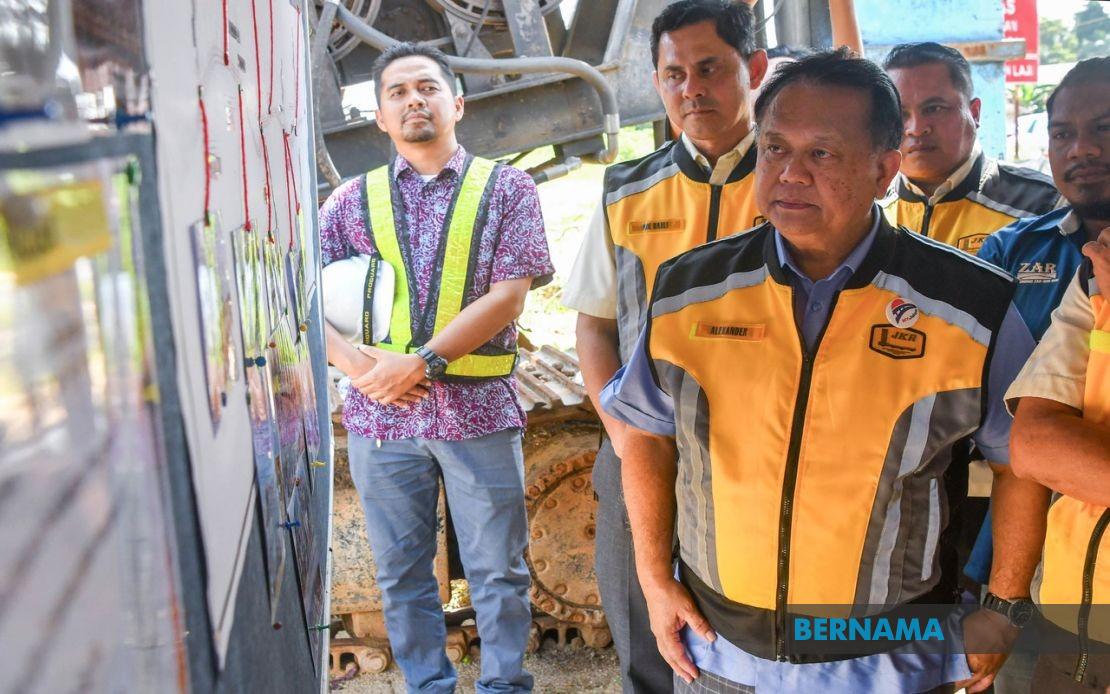
Malaysia's Works Ministry is intensifying oversight of 50 problematic projects scattered across the country, with the aim of steering them back towards their original completion targets. Works Minister Datuk Seri Alexander Nanta Linggi disclosed this during a visit to Kota Bharu on July 16, emphasizing the ministry's commitment to ensuring infrastructure delivery remains efficient and accountable. The revelation comes as the ministry grapples with performance challenges within a sprawling portfolio of 865 projects, where identifying and addressing bottlenecks has become a priority under his stewardship.
The 50 flagged projects represent roughly six percent of the ministry's overall undertakings, a proportion that underscores both the scale of the infrastructure agenda and the complexity of managing large-scale construction across the nation. In Kelantan alone, where Nanta conducted his inspection, only seven of the state's 104 Works Ministry projects have been classified as problematic. This suggests that while challenges exist, many initiatives remain on course, though the concentration of delays in certain regions warrants particular attention and resource allocation.
The root causes of these project delays are multifaceted and reflect common challenges within Malaysia's construction sector. Contractors facing liquidity pressures or operational mismanagement frequently struggle to maintain momentum, while land acquisition processes—often protracted by compensation negotiations and administrative procedures—routinely push timelines beyond initial estimates. Additionally, utility relocation, a necessary but time-consuming prerequisite for many infrastructure works, compounds scheduling difficulties. Equally significant are unexpected subsurface conditions discovered during construction, such as underground obstructions that were not identified during the planning phase, forcing design modifications and work stoppages.
Nanta outlined a measured approach to remedying the situation, acknowledging that not all delays warrant immediate contract termination. For projects nearing completion with only ten to fifteen percent of work remaining, the ministry is prepared to grant extensions of time rather than rescind contracts and recruit replacement contractors. This pragmatic stance recognizes that terminating agreements partway through creates additional costs and bureaucratic friction, potentially delaying completion further while new tenders are processed and new teams mobilized. The calculus reflects an understanding that sometimes patience and incremental progress prove more cost-effective than starting from scratch.
Conversely, projects that persistently underperform face more assertive intervention. The minister has established a weekly review process conducted immediately following Cabinet meetings, creating a structured cadence for assessing project status and determining remedial measures. His deputy has been assigned responsibility for overseeing this monitoring apparatus nationwide, ensuring that follow-through occurs consistently across diverse sites and contractors. For initiatives that continue to disappoint despite such oversight, the ministry reserves the right to remove underperforming contractors or terminate contracts entirely, though such decisions are made judiciously to avoid legal complications and disputes.
The governance framework underpinning these interventions reflects an effort to balance accountability with legal prudence. While the ministry signals zero tolerance for persistent under-delivery, it also acknowledges that hasty contract terminations can trigger litigation and counter-claims that further derail projects. This tension between enforcement and caution has long characterized infrastructure governance in Malaysia, where balance-sheet pressures on contractors and the complexity of large works create situations where neither swift action nor inaction yields entirely satisfactory outcomes. The weekly review cycle represents an attempt to navigate this middle ground through continuous assessment and proportional response.
During his Kelantan visit, Nanta spotlighted the FT209 and FT131 road upgrading initiative from Pasir Hor interchange to Panchor as a case study of ongoing infrastructure ambition, despite its own implementation challenges. Valued at RM191 million, this six-kilometre project aims to relieve chronic congestion on Federal Road FT131, particularly along the route connecting Kubang Kerian, Sabak, and Pengkalan Chepa. With physical progress standing at 71.61 percent, the project remains broadly on course for completion in September next year, though land acquisition—encompassing 300 land parcels and costing more than RM200 million—illustrates the financial and administrative burden that precedes actual construction.
The project has also surfaced secondary challenges that extend beyond the traditional construction variables. Flooding affecting residents near the development site prompted intervention from Pengkalan Chepa Member of Parliament Datuk Dr Ahmad Marzuk Shaary, who was present during Nanta's inspection. In response, the minister instructed the contractor to immediately erect a temporary forty-meter drainage channel to mitigate flood damage until permanent solutions materialize upon project completion. This responsive approach—addressing community concerns arising from the project itself—reflects the broader responsibility that comes with major infrastructure development, where mitigation of collateral impacts forms part of the implementation obligation.
The ministry's experience with these 50 delayed projects carries implications beyond immediate delivery timelines. Each postponement or contractor replacement ripples through supply chains, labor deployment, and local economies dependent on infrastructure completion. For Kelantan, where only seven of 104 Works Ministry projects face delays, the overall momentum suggests progress, yet even this modest proportion warrants attention given the state's development aspirations. The approach of combining patience where justified with firmness where appropriate reflects institutional learning about the realities of large-scale construction in a complex economy.
Looking forward, the weekly monitoring regime and enhanced oversight architecture signal that the Works Ministry recognizes infrastructure delivery as a central measure of governmental effectiveness. In a regional context where competing nations vie to attract investment through superior infrastructure, Malaysia's ability to execute complex projects on schedule influences both domestic economic dynamics and international investor confidence. The 50 problematic projects thus represent not merely bureaucratic challenges but potential impediments to competitiveness and growth. The ministry's commitment to restoring these projects to schedule, while managing legal and financial risks prudently, reflects an understanding that infrastructure excellence requires sustained attention, adaptive management, and the political will to enforce standards without creating chaos through excessive interventionism.

