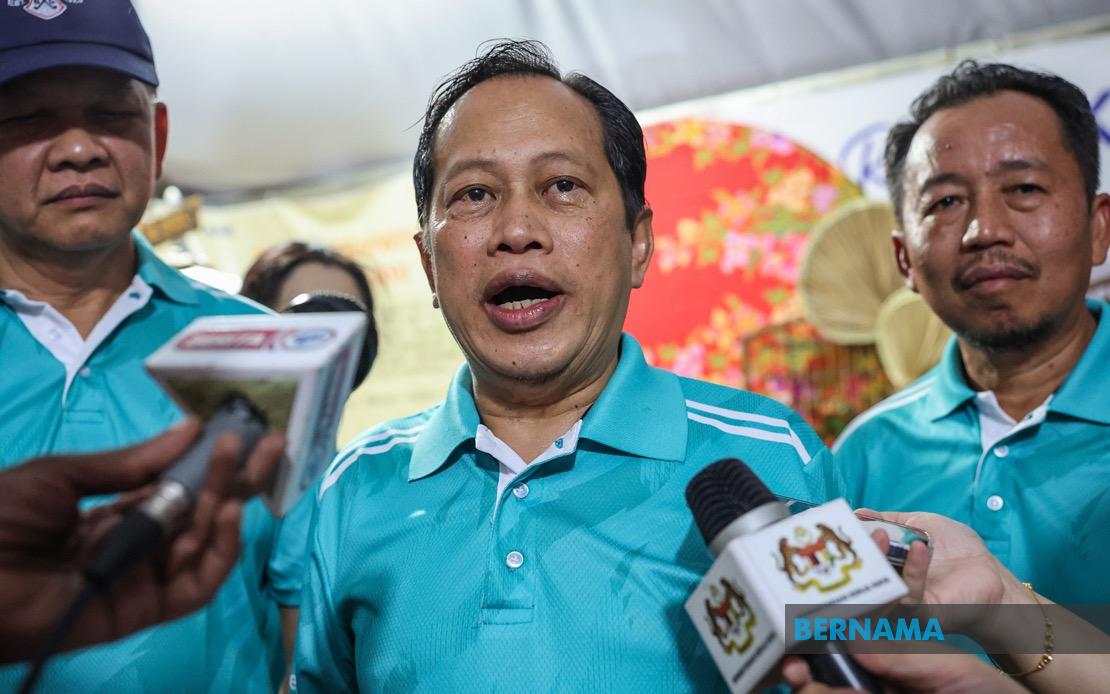
The Works Ministry (KKR) has set its sights on securing the highest development allocation among government ministries in Budget 2027, with Deputy Works Minister Datuk Seri Dr Ahmad Maslan signalling ambitions to expand the scope of nationwide infrastructure and maintenance initiatives. Speaking at the Cultural Night Run in Batu Kawan on August 8, Ahmad explained that the ministry is mobilising its agencies and divisions to compile comprehensive funding requests ahead of formal budget discussions with the Finance Minister II scheduled for August 28.
The financial target reflects KKR's current appetite to grow beyond its recent allocation. In the preceding budget cycle, the ministry received approximately RM10 billion in total funding, of which RM9 billion was channelled toward development projects. This distinction between total allocation and development spending underscores the ministry's desire not merely to maintain current levels but to substantially increase the dedicated development portion available for new and ongoing infrastructure works across Malaysia's diverse regions.
The timing of this budgetary push coincides with accelerating infrastructure modernisation across Southeast Asia, where nations are competing to upgrade transport networks and adopt smart city technologies. For Malaysia specifically, the emphasis on securing robust development funding reflects recognition that ageing highway systems and maintenance backlogs require sustained capital investment. The involvement of multiple agencies—including the Malaysian Highway Authority (LLM), Construction Industry Development Board Malaysia (CIDB), and Public Works Department (JKR)—indicates a coordinated institutional effort to make a compelling case to financial policymakers about infrastructure's centrality to economic competitiveness.
Beyond budgetary advocacy, KKR is simultaneously advancing technological integration across Malaysia's highway network. The ministry has prioritised the development of smart highways incorporating digital infrastructure, artificial intelligence systems, closed-circuit television monitoring, and intelligent lane management. These initiatives reflect a broader global trend toward digitally-enabled transport networks that enhance safety, efficiency, and user experience. Ahmad highlighted LLM's creation of TuJu, a navigation application designed specifically for Malaysian highway users, positioning it as the nation's third major navigation platform alongside established competitors Waze and Google Maps.
TuJu distinguishes itself through highway-centric functionality rather than attempting to replicate existing applications. The platform integrates live CCTV feeds from monitoring stations across Malaysia's 34 highways, displays real-time toll information, identifies rest and recreation facilities, provides emergency assistance coordination, and offers traffic updates synchronised with LLM's centralised Traffic Control Centre. This specialised approach addresses a particular gap in existing navigation services—comprehensive, highway-specific intelligence that generic mapping applications cannot efficiently deliver. The integration with complementary government applications such as KKR and MYJalan further extends the ecosystem, enabling drivers to report road hazards and maintenance issues directly to relevant authorities.
The Traffic Control Centre itself represents substantial existing infrastructure investment, monitoring hundreds of cameras across the entire 34-highway network, including both Penang bridge crossings. This monitoring capability underpins both immediate traffic management and the real-time data feeds powering TuJu's functionality. For Malaysian highway users, the implication is access to institutional-grade traffic intelligence previously unavailable through consumer applications. Ahmad's encouragement for drivers to adopt TuJu reflects government efforts to capitalise on existing monitoring infrastructure and build user engagement with domestically-developed technology rather than relying entirely on foreign platforms.
Malaysia's highway network presents a complex operational landscape spanning 2,000 kilometres across 34 distinct routes operated by 28 separate concessionaires. PLUS Malaysia Berhad controls the largest portion, managing over 1,000 kilometres, but the fragmented structure necessitates coordination mechanisms across multiple private operators. This operational complexity influences technology adoption and standardisation, as evidenced by ongoing discussions around Multi Lane Free Flow (MLFF) toll collection systems that eliminate traditional toll plaza stops.
The MLFF implementation strategy reveals pragmatic government approach to infrastructure modernisation within Malaysia's public-private partnership framework. Rather than mandating uniform adoption through government funding, authorities have elected to establish proof-of-concept trials and allow individual concessionaires to select technology partners—either subsidiaries or external vendors—for implementation. PLUS Malaysia has already commenced MLFF trials utilising the JustGo payment system, demonstrating that market mechanisms can drive technological uptake without centralised budgetary burden. This approach distributes implementation costs across operators while allowing innovation and competition in toll collection methodologies.
The Cultural Night Run event itself, attracting 5,000 participants including 114 from 18 countries, served as a platform for articulating the ministry's infrastructure vision while demonstrating government commitment to public engagement and community development. The event's multi-stakeholder organisation—involving KKR, the Entrepreneur Development and Cooperatives Ministry (KUSKOP), Youth and Sports Ministry (KBS), state government, and various corporate partners—illustrates how infrastructure ministry responsibilities increasingly intersect with broader national development objectives encompassing youth engagement, cooperative development, and sports promotion.
For Malaysian economic planning, the Works Ministry's budget positioning reflects structural realities about infrastructure's role in driving competitiveness and regional integration. As Southeast Asian economies intensify competition for investment and talent, transport network quality becomes a differentiating factor. Malaysia's effort to simultaneously seek increased budgetary allocation and deploy smart highway technologies suggests recognition that infrastructure modernisation requires both sustained capital commitment and technological sophistication. The integration of locally-developed solutions like TuJu alongside international standards indicates balanced policy approach seeking to build domestic technological capacity while accessing proven international innovations.
The August 28 Finance Ministry II meeting will ultimately determine whether KKR's budgetary ambitions translate into actual allocation increases. However, the ministry's preparatory work and public articulation of infrastructure priorities signal serious institutional commitment to expanding development scope. For Malaysian stakeholders invested in regional infrastructure development—from construction industry participants to logistics operators to ordinary highway users—the outcome of these budget discussions will substantially shape the trajectory of transport network modernisation over coming years.

