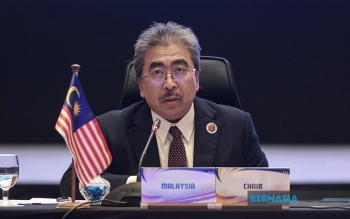
The World Trade Organization faces an existential challenge: adapt to today's geopolitical and economic realities or risk becoming obsolete. This blunt assessment came from Malaysia's Investment, Trade and Industry Minister Datuk Seri Johari Abdul Ghani during the 39th Asia-Pacific Roundtable conference in Kuala Lumpur, where he articulated growing frustrations within developing nations about the WTO's relevance in an era of strategic competition and technological rivalry.
Johari's remarks underscore a fundamental shift in how nations now approach trade and economic policy. When the WTO was established in 1995, the intellectual consensus was clear: lowering tariffs and expanding market access would automatically generate prosperity and stability. That premise has become increasingly contested. Today's policymakers operate under different imperatives, pursuing what Johari termed resilience, technological leadership, strategic autonomy, and supply chain security. These priorities reflect genuine anxieties about dependency on potentially hostile suppliers and the strategic vulnerability exposed by global disruptions from pandemics to geopolitical tensions.
The minister's message carries particular weight for Southeast Asia, a region deeply integrated into global supply chains yet acutely aware of its vulnerability to great-power competition. Malaysia, as a middle-income nation with significant manufacturing capacity and technology ambitions, faces real tensions between maintaining open trade relationships and protecting emerging strategic sectors. Johari's framing acknowledges these tensions publicly, signalling that developing nations can no longer be expected to embrace unconditional liberalisation when advanced economies increasingly erect non-tariff barriers under national security pretexts.
Johari specifically highlighted how the terms of trade debate have inverted. The central question is no longer how to dismantle market barriers but rather which capabilities merit protection. This reorientation reflects the experience of nations that have watched intellectual property systematically transferred, manufacturing capacity relocated, and critical supply chains weaponised. For countries aspiring to technological leadership—a category Malaysia explicitly includes itself in—the old WTO consensus feels dangerously naive about power asymmetries. The organisation's dispute settlement mechanism, designed to enforce rules against protectionism, struggles when rich nations employ financial incentives, foreign investment restrictions, and export controls that sit in grey zones beyond traditional trade law.
The credibility deficit facing the WTO extends beyond developing countries' grievances. The United States, under successive administrations, has challenged the organisation's legitimacy and independence. The appellate body remains paralysed by Washington's blockade of new judge appointments. Meanwhile, China has leveraged the organisation's rules-based framework while simultaneously building alternative trading blocs like the Regional Comprehensive Economic Partnership and bilateral relationships that bypass multilateral mechanisms. For an institution created to enhance certainty and prevent disputes from metastasising into broader conflict, the WTO's declining authority represents a genuine strategic problem.
Yet Johari's call for adaptation should not be misread as a manifesto for protectionism. He explicitly stressed Malaysia's continued commitment to multilateral trading rules and systems. Rather, his argument amounts to institutional realism: the WTO must evolve to incorporate contemporary policy concerns without abandoning its core mission of reducing arbitrary discrimination and managing trade disputes. This might mean creating new disciplines around forced technology transfer, embedding supply chain resilience considerations into trade negotiations, or establishing rules governing industrial policy that acknowledge legitimate national security interests rather than dismissing them as pretexts for protection.
The Asia-Pacific context intensifies these pressures. The region remains the world's most dynamic trade zone, yet it is also the epicentre of strategic rivalry between the United States and China. ASEAN nations have significant stakes in maintaining rules-based frameworks that prevent great powers from simply imposing their preferences through coercive measures. At the same time, regional governments understand that technology, semiconductor manufacturing, and advanced industries will define their prosperity and influence. They cannot accept a trading system that locks them into low-value activities while wealthy nations monopolise high-tech sectors.
Johari's intervention at the Asia-Pacific Roundtable—a forum bringing together policymakers, diplomats, academics and business leaders across the region—served notice that Malaysia and likely other regional partners expect the WTO reform agenda to move beyond rhetoric. The conference's theme of accelerating agency and action suggests impatience with existing institutions that seem paralysed. Southeast Asian nations increasingly feel that their interests are inadequately represented in the architecture of global trade governance, particularly as they attempt to navigate between competing superpowers while pursuing their own development objectives.
The practical implications for Malaysia and the region are substantial. Without WTO reform, trade disputes are likely to proliferate as nations pursue strategic objectives through alternative mechanisms—bilateral agreements, regional blocs, industrial subsidies, and foreign investment controls. This fragmentation would impose costs on countries like Malaysia that depend on predictable, rules-based access to global markets. Conversely, if the WTO can credibly adapt to include modern economic security concerns within its framework, it might help prevent economic tensions from triggering broader geopolitical escalation. For a region surrounded by great-power competition, that distinction carries existential weight. Johari's message ultimately reflects a desperate hope that the international system can evolve gracefully rather than fracture under the weight of unaddressed tensions.

