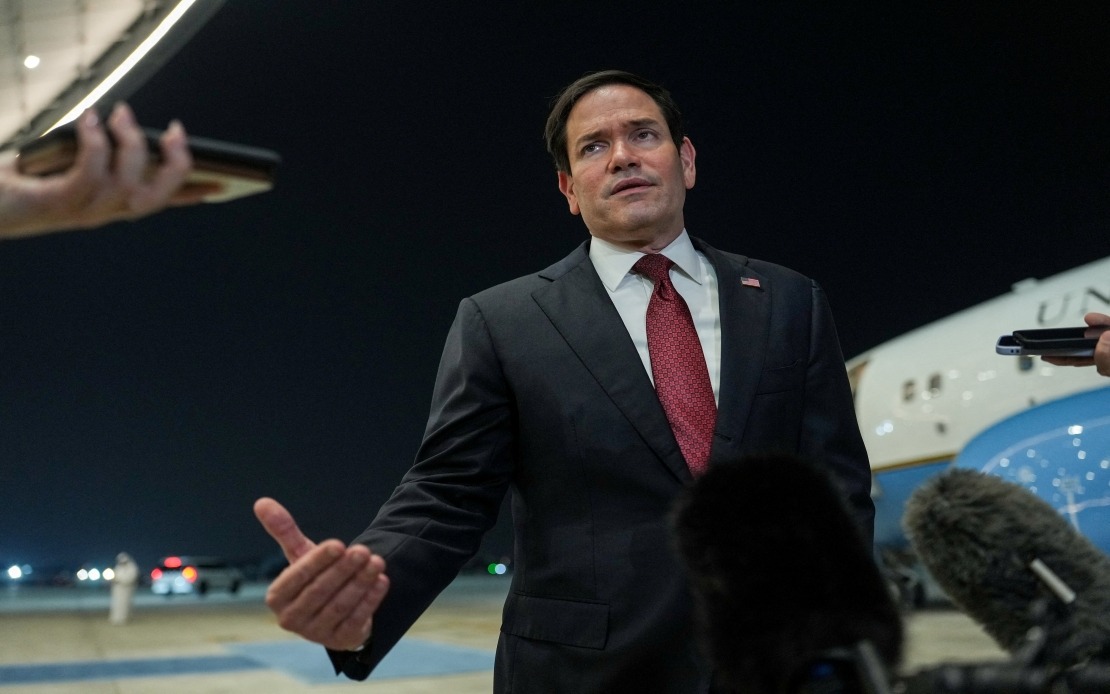
US Secretary of State Marco Rubio has reaffirmed that preparations for a high-level diplomatic visit by Chinese President Xi Jinping to the United States are advancing according to plan, notwithstanding escalating friction between Washington and Beijing in recent weeks. Speaking to reporters on Sunday at Joint Base Andrews before embarking on a journey to meet with Association of Southeast Asian Nations (ASEAN) foreign ministers, Rubio indicated that the Chinese leader's trip is anticipated to take place in September as originally scheduled.
The confirmation comes at a particularly delicate moment in bilateral relations. Just days earlier, US President Donald Trump levelled accusations that China had meddled in the 2020 American presidential election, a vote that resulted in Trump's defeat to Joe Biden. Beijing swiftly rejected these claims, and the exchange underscored the volatile nature of current Sino-American interactions. Despite such provocations, the State Department maintains that the diplomatic calendar continues uninterrupted.
Rubio's remarks reflect an understanding within the Trump administration that maintaining dialogue channels with China remains strategically essential, even when disagreements dominate headlines. The secretary emphasised that he had received no notification from Chinese counterparts suggesting any cancellation or postponement of the visit. Moreover, he noted that delegations from Beijing have been consistently dispatched to the United States to handle logistical and procedural arrangements for the September meeting, signalling that China shares this commitment to proceeding.
The origins of this planned summit trace back to May, when Trump travelled to Beijing and extended an invitation to Xi for a reciprocal visit to the White House. That gesture established the September 24 date as the target for this significant state engagement. For geopolitical observers across the Asia-Pacific region, the visit represents a critical opportunity for the world's two largest economies to address mounting bilateral grievances and reinforce diplomatic mechanisms that prevent miscalculation.
China's Foreign Ministry has publicly confirmed that both nations remain in active communication regarding the mechanics and substance of the forthcoming meeting. This official statement from Beijing provides an additional layer of confirmation beyond Washington's assurances. The continuance of preparatory work by Chinese teams despite the recent election interference controversy suggests that Beijing views the visit as too strategically important to abandon over transient political rhetoric.
For Southeast Asian nations, the maintenance of this high-level engagement carries substantial implications. A successful Xi visit to Washington could stabilise a relationship that has become increasingly contentious over trade policy, technology restrictions, and military presence in the Indo-Pacific. Conversely, any breakdown or postponement would likely intensify regional anxieties about great power competition and its potential spillover effects across the region. Countries like Malaysia, Indonesia, Vietnam, and Thailand have long sought to balance their relationships with both superpowers, and the trajectory of US-China relations directly affects their diplomatic space and economic opportunities.
Rubio's broader commentary acknowledged that disagreements between major powers are inevitable and, in fact, a normal feature of international relations. His key assertion was that despite differing interests and priorities, both the United States and China bear responsibility to maintain constructive dialogue channels. This framing attempts to normalise the existence of tensions while arguing that professional diplomatic engagement remains both possible and necessary. It reflects a realpolitik approach that prioritises stability and communication over ideological confrontation.
The ASEAN foreign ministers' meeting in Manila, scheduled for Tuesday, is expected to provide an early opportunity for representatives of both Washington and Beijing to interact and potentially preview themes that may surface during the Xi visit. Chinese Foreign Minister Wang Yi's confirmed attendance ensures that China's perspective will be comprehensively represented in discussions about regional security, economic cooperation, and the rules-based international order. American diplomats will similarly use the forum to consult with Southeast Asian counterparts about their concerns and priorities.
For Malaysia and other ASEAN members, such multilateral gatherings serve as important venues to influence the bilateral dynamics of their larger neighbours. Southeast Asian nations can collectively articulate positions on issues ranging from the South China Sea to trade corridors and security partnerships. The confirmation that both American and Chinese representatives will participate in Manila suggests that despite headline-grabbing tensions, the practical machinery of diplomacy continues to function.
The September visit, should it proceed as planned, would represent a critical test of whether the Trump administration can compartmentalise disagreements—such as the electoral interference claims—from broader strategic engagement with China. It would also demonstrate whether Beijing considers the benefits of high-level dialogue sufficient to withstand provocative statements from Washington. The success or failure of this diplomatic endeavour could set the tone for US-China relations in the coming months and substantially influence regional stability across the Indo-Pacific and Southeast Asia.

