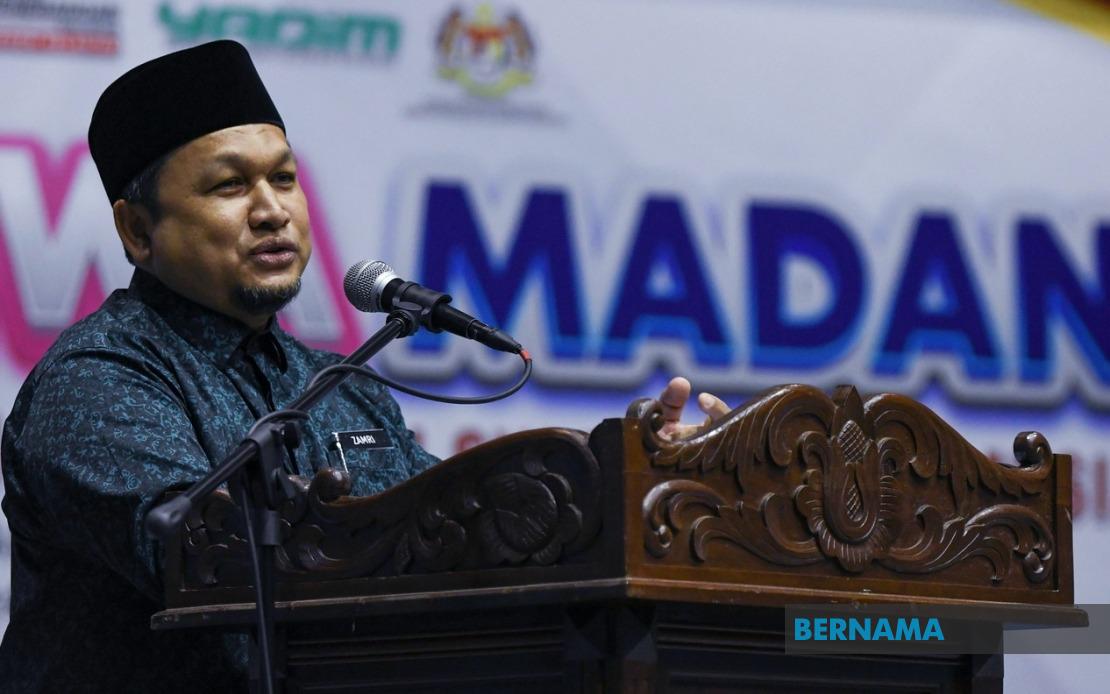
Malaysia's primary Islamic dakwah agency is backing a government initiative to establish formal accreditation requirements for religious teachers and preachers operating across digital platforms. Yayasan Dakwah Islamiah Malaysia (YADIM), speaking through chief executive Zamri Zainal Abidin, welcomed the proposal announced by Minister in the Prime Minister's Department (Religious Affairs) Dr Zulkifli Hasan as a necessary step to protect the credibility of Islamic instruction in the online sphere, where vast audiences increasingly turn for religious guidance.
The push to regulate religious voices on social media reflects growing concerns about the proliferation of unqualified individuals claiming religious authority without formal training or credentials. In the absence of verification mechanisms, anyone can establish themselves as an "ustaz" or preacher on platforms like Facebook, TikTok, and YouTube, potentially reaching hundreds of thousands of followers. This democratisation of religious instruction, while offering unprecedented access to Islamic content, has created significant vulnerability to distortion and manipulation of religious teachings.
Zamri articulated YADIM's position that the accreditation framework addresses a genuine problem rather than constituting overreach. The measure, he stressed, would not aim to suppress legitimate dakwah activities or create bureaucratic obstacles for sincere individuals seeking to share Islamic knowledge. Instead, the framework would establish baseline standards for religious credibility, ensuring that those presenting themselves as authoritative voices on matters of faith possess genuine scholarly grounding in Islamic jurisprudence and doctrine.
The absence of such safeguards has demonstrable consequences for public understanding of religion. Young people, who disproportionately consume religious content through social media rather than traditional mosque settings or formal Islamic education, face heightened exposure to inaccurate theological claims presented with apparent authority. Misinformation about Islamic practices, misinterpretations of Quranic passages, and distorted religious reasoning can spread rapidly through digital networks, reaching audiences before corrections or contextual clarification can be disseminated. This dynamic potentially erodes public confidence in legitimate religious institutions and scholars.
YADIM's endorsement carries particular weight given its formal status as the government's dakwah agency operating under the Prime Minister's Department. The foundation has long maintained internal accreditation standards for its own preachers, with its Daie Muda programme producing trained speakers who receive formal credentials from the Federal Territories Mufti Department. This existing practice positions YADIM as both a credible advocate for the proposed framework and a potential institutional partner in its implementation.
The timing of this initiative reflects broader regional concerns about digital misinformation affecting religious discourse. Southeast Asia has witnessed numerous instances where unverified religious claims—ranging from theological interpretations to guidance on personal matters—have circulated widely through social media, sometimes with significant social consequences. Countries across the region grapple with balancing religious freedom and expression against the need to protect communities from exploitation through false authority or distorted teachings.
The accreditation framework would likely establish criteria assessing candidates' foundational knowledge of Islamic scholarship, their familiarity with established jurisprudential schools, their understanding of contemporary Islamic thought, and their commitment to established religious protocols. Such standards would distinguish between those with genuine scholarly training and those who have acquired religious knowledge primarily through popular media or self-study without institutional validation.
Implementation will require careful calibration to avoid becoming a mechanism for suppressing legitimate diversity of thought within Islamic discourse. Islam in Malaysia encompasses multiple valid jurisprudential approaches and interpretive traditions. An overly restrictive accreditation system could inadvertently silence minority viewpoints or non-mainstream but legitimate Islamic scholarship. YADIM's framing suggests the intention is quality assurance rather than ideological gatekeeping, though the practical execution will determine whether such safeguards prove effective.
The proposal also acknowledges the reality that traditional Islamic education and credentialing systems, developed in pre-digital contexts, do not readily adapt to the decentralised, borderless nature of online communication. A preacher based in Malaysia can reach audiences across ASEAN and beyond through livestreaming, recorded videos, and social media engagement. National accreditation frameworks may struggle with jurisdictional questions about who qualifies as a digital preacher and where responsibility for verification lies.
For Malaysian audiences specifically, the framework addresses concerns about religious literacy in an increasingly complex information environment. As digital natives become the dominant demographic consuming religious content, establishing transparent standards for who holds authority to teach Islam carries implications for social cohesion, interfaith understanding, and the vulnerability of specific communities to exploitation or manipulation through false religious claims.
YADIM's commitment to serve as a strategic partner suggests the accreditation review will likely proceed through existing government channels, building on established protocols rather than creating entirely new bureaucratic structures. This approach may reduce implementation friction while drawing on institutional expertise accumulated through years of preacher training and credential management.

