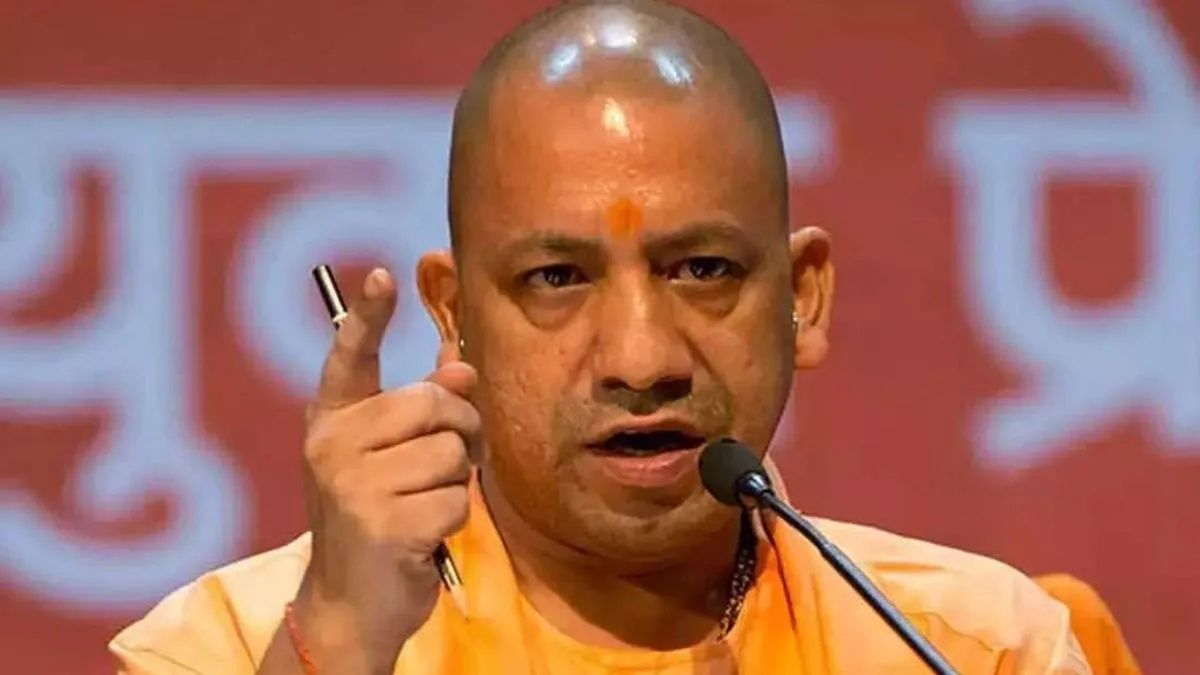
Uttar Pradesh Chief Minister Yogi Adityanath has staked his government's credibility on swift and uncompromising action following the registration of a formal complaint in the Shri Ram Janmabhoomi Teerth Kshetra donation case, signalling that any breach of public trust in religious matters will invite severe consequences. Speaking during development project inaugurations in Deoria on Friday, the Chief Minister declared that once a Special Investigation Team submitted its findings, authorities moved promptly to initiate proceedings, underscoring his administration's commitment to distinguishing fact from fiction.
The donation controversy at Ayodhya's newly consecrated Ram Temple strikes at a sensitive nexus between faith and governance in India. For the Bharatiya Janata Party government in Uttar Pradesh, the temple represents not merely a religious monument but a defining political achievement after decades of legal struggle. Any scandal involving temple finances therefore carries symbolic weight far beyond routine financial irregularities, threatening to undermine the narrative of righteous recovery that has anchored the government's Hindu nationalist political positioning.
Yogi's invocation of "people's faith" as a paramount concern reflects the high political stakes surrounding the institution. He framed the investigation not as a routine financial audit but as a defence of collective religious sentiment, arguing that those questioning the temple's management are engaging in something more sinister than mere accountability—they are, in his telling, attacking the foundations of Hindu civilisation itself. This rhetorical escalation transforms what might otherwise be handled as an internal administrative matter into a broader civilisational struggle.
The Chief Minister's pointed references to the Congress and Samajwadi Party reveal the intensely partisan dimension of the controversy. He accused these opposition parties of historical hostility toward the Ram Temple movement, cataloguing their court challenges and alleged obstruction of construction efforts. By connecting past opposition to current allegations of financial mismanagement, Yogi suggested that criticism of the temple administration flows from the same malevolent intentions that animated earlier resistance to the shrine's very existence. This argument conflates institutional accountability with political opposition in ways that may complicate genuine investigative oversight.
Yogi's catalogue of alleged historical grievances—including firing on Ram chant participants, preventing Krishna Janmotsav celebrations, restricting Kanwar Yatra pilgrimages, and banning Durga Puja processions—establishes a decades-long pattern that he portrayed as systematic religious persecution by opposition governments. References to communal riots, particularly the "Lar riot," situate the current controversy within a broader narrative of religious conflict. For readers across Southeast Asia and South Asia, these invocations underscore how temple management in India remains entangled with communal tensions and political competition in ways that transcend straightforward governance issues.
The Chief Minister's appeal to Ram devotees to exercise patience carries implicit warnings about potential public agitation. By framing opposition allegations as tests of devotee patience, Yogi appeared to anticipate that supporters might demand dramatic action against perceived enemies of the faith. His simultaneous calls for opposition silence during the investigation suggest awareness that politicisation of the SIT process could itself undermine both the investigation's credibility and public trust in institutional impartiality.
The phrase "double engine government"—referring to BJP rule at both state and national levels—positioned the administration as uniquely capable of restoring integrity to institutions allegedly corrupted during previous administrations. This framing, common in Indian political discourse, suggests that development and religious protection are twin projects of a centralised Hindu nationalist state. For Malaysian observers, this represents a starkly different model from Malaysia's own constitutional framework, which maintains institutional separation between religious and state governance.
Yogi's demand that opponents present concrete evidence or cease allegations introduces a procedural challenge to the investigation process itself. While calls for evidence-based criticism are reasonable, his framing suggested that opposition parties seeking accountability are engaging in bad-faith allegations rather than legitimate oversight. This positioning potentially creates pressure on investigators to reach conclusions quickly while simultaneously warning off political scrutiny, a tension that could compromise the investigation's independence.
The Special Investigation Team's role assumes critical importance in this environment of heightened political sensitivity. Investigators must navigate between protecting the temple's reputation and ensuring genuine accountability—a balance complicated by the Chief Minister's signals that incomplete or critical findings might be interpreted as political betrayal. For secular democracies throughout the region, the case illustrates how religious institutions embedded in state structures can struggle with transparency when institutional health becomes conflated with political fortunes.
Yogi's insistence that the government's intentions have been "clear from day one" suggests predetermined conclusions. If the SIT is expected to validate the government's commitment to faith protection rather than investigate neutrally, the investigation's legitimacy—both domestically and internationally—becomes questionable. The challenge of conducting genuine institutional oversight while maintaining political stability represents a recurring problem in South Asian governance, particularly where religious institutions command intense public attachment.
The controversy arrives as the Ram Temple has consolidated itself as a major pilgrimage destination and symbol of Hindu revival across India. Any financial irregularities threaten not only institutional credibility but also the broader narrative of successful Hindu nationalism that the temple embodies. Yet without genuine independence from political pressure, any investigation risks appearing designed to rehabilitate rather than genuinely examine the institution, potentially deepening rather than resolving public concern about whether popular religious sentiment is being leveraged for political purposes.
For the broader Southeast Asian context, the donation case reveals how temples and religious institutions remain deeply embedded in state structures and political competition across Hindu-majority societies. Unlike Malaysia's constitutional arrangements, which deliberately insulate religious institutions from state control, the Indian model allows—perhaps requires—active state engagement with religious institutions, creating precisely the conditions where governance and faith become inextricably entangled, complicating efforts to pursue accountability without appearing to attack faith itself.

