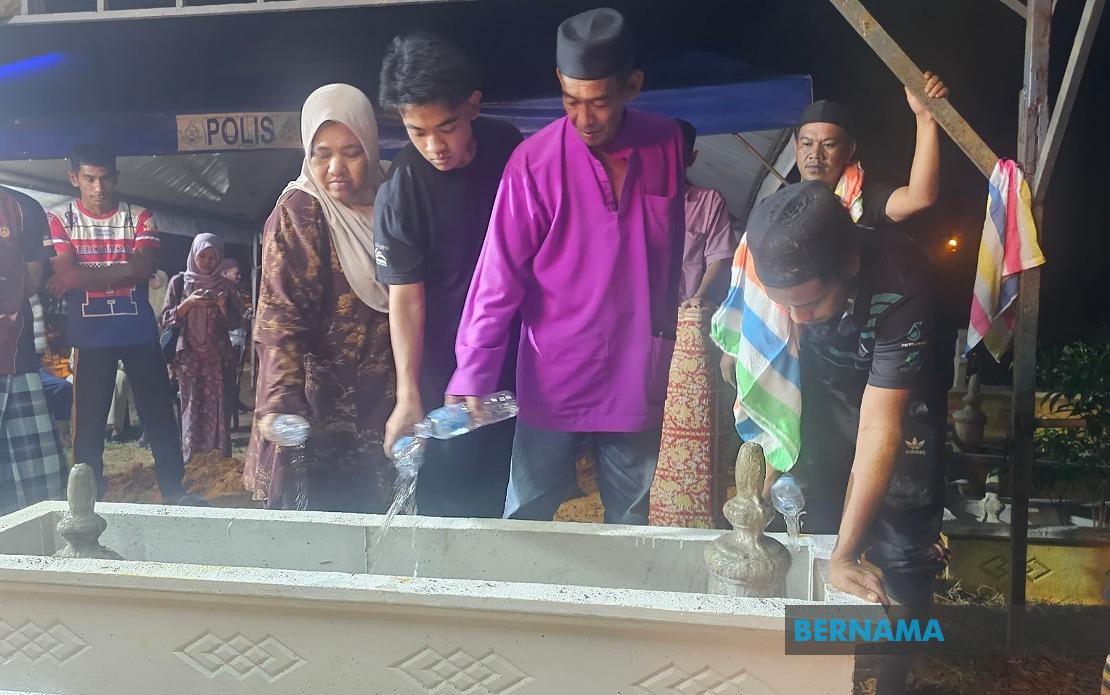
A 24-year-old police constable from Terengganu has been laid to rest at Felda Kerteh 2 Muslim Cemetery in Dungun following his death in a tragic electric shock incident in Sabah. Constable Muhammad Raimi Ismarubee was among three police personnel who died after encountering high-voltage electrical hazards at Jalan Weston in Kampung Weston, Beaufort, on the afternoon of August 7. The burial took place in the early hours of August 8, bringing to a close the first chapter of a tragedy that has shaken the Royal Malaysia Police force across the nation.
The circumstances surrounding the deaths of the three officers point to a serious workplace safety concern that extends beyond a single incident. At 5.50 pm on August 7, Muhammad Raimi and his two colleagues—Corporal Chiu Teck Siong, 40, and Corporal Mohamad Nur Hafiz Ibrahim, 29—encountered what authorities have described as electric shocks while performing their duties in the Weston area. All three were officers stationed at Weston Police Station, a remote posting in the Beaufort district. The incident raises critical questions about electrical safety protocols at public facilities and the training provided to frontline officers who may encounter such hazards during routine patrols or operations.
Muhammad Raimi's journey in the police force had only just begun. He commenced his service at Weston Police Station in September 2024, meaning he had been in the uniform for less than a year when tragedy struck. This underscores the particular loss—a young officer with his entire career ahead of him, having recently transitioned from training into active duty. His family, which includes two siblings, will now grapple with the permanent absence of their second-born son. The constable remained unmarried, a detail that speaks to the many life milestones he would never experience.
The repatriation process for Muhammad Raimi's remains demonstrated the institutional respect afforded to fallen officers. His body was transported from Kota Kinabalu International Airport in Sabah via Royal Malaysian Air Force aircraft to Kuantan Air Base in Pahang, before being conveyed by hearse to his family home in Felda Kerteh 2. This formal military-assisted repatriation reflects both the gravity of his service and the recognition accorded to those who die in the line of duty. The journey across the country underscored the national dimensions of the loss—a tragedy that touched communities from Sabah to Terengganu.
The funeral prayers, conducted in the early morning hours of August 8, were led by Datuk Satiful Bahari Mamat, chairman of the Terengganu State Education, Higher Education, Science, Technology and Human Development Committee. The presence of state-level leadership at the ceremony indicated the significance attributed to the incident and the respect shown to the fallen officer. The attendance extended beyond government officials to encompass the broader police community, with approximately 200 officers and personnel from various units paying their final respects. Family members and friends gathered alongside colleagues, creating a solemn gathering that reflected the deep bonds within the police fraternity.
Dungun District Police Chief Supt Nik Ab Halim Nik Mat led the police contingent's participation in the funeral proceedings. The substantial turnout of police personnel underscores the cohesion within Malaysia's law enforcement community and the solidarity shown toward fallen colleagues. Such collective mourning rituals serve not only to honour the deceased but also to reinforce institutional values and provide emotional support to grieving families and colleagues. The presence of such numbers also highlights the broader impact of the incident on police morale and the urgent need for investigations into the circumstances that led to the deaths.
The electric shock incident in Beaufort raises significant implications for workplace safety across multiple sectors in Malaysia. Police officers, like many frontline workers, often encounter infrastructural hazards without adequate warning systems or protective equipment. The incident at Jalan Weston occurred in what appears to be a public area, suggesting that electrical infrastructure in the region may lack proper maintenance, signage, or safety barriers. Such deficiencies are not unique to Sabah but represent systemic vulnerabilities that could affect officers throughout the country.
The tragedy also prompts reflection on the training and preparedness of police personnel for emergency situations. While officers receive comprehensive training in law enforcement procedures, their exposure to technical hazards like ungrounded electrical equipment or damaged power infrastructure may be inadequate. Developing enhanced safety protocols and education programs for officers working in areas where electrical infrastructure may be compromised could help prevent similar incidents. This would require coordination between the police force, local authorities responsible for utility maintenance, and relevant government agencies overseeing workplace safety standards.
Beyond the immediate investigation into the cause of the electric shocks, the incident carries broader implications for police operations in remote and less-developed areas. Beaufort, while an important district in Sabah, presents unique operational challenges owing to its infrastructure status. The deployment of officers to such areas must be accompanied by commensurate support systems, regular safety briefings, and accessible medical facilities. The distance from advanced medical care in Beaufort relative to major urban centres may also have affected the response time and outcome in this tragedy, a factor that warrants examination by police leadership.
The loss of three experienced and promising officers represents a significant depletion of human capital within the police force. Corporal Chiu Teck Siong's four decades of service embodied institutional memory and experience, while Corporal Mohamad Nur Hafiz Ibrahim and Constable Muhammad Raimi represented the younger generation of officers upon whom the force's future depends. Their collective removal from service due to a preventable hazard underscores the pressing need for comprehensive safety audits and remedial action across all police operational areas. The investigations into this incident will determine whether systemic failures or individual oversights were responsible, but the preventive measures implemented in response will be the truest measure of respect for those lost.
As Muhammad Raimi and his colleagues are remembered, the incidents they encountered should catalyse meaningful change in how Malaysia's police force approaches workplace safety, particularly in remote postings. The bereaved families, colleagues, and the institution itself will seek answers and assurance that such preventable tragedies will not be repeated. The funeral prayers and burial proceedings, while providing closure for some, mark merely the beginning of a longer process of investigation, accountability, and systemic reform that the nation's law enforcement community must now undertake.

