Two starkly different visions for Johor Jaya's future have emerged as candidates prepare for the July 11 state election, with Pakatan Harapan and Barisan Nasional both attempting to address the demographic and economic concerns of one of Johor Bahru's more strategically located constituencies. The contest illustrates broader tensions within Malaysian politics between established networks and institutional expertise on one side, and fresh perspectives rooted in reform aspirations on the other. At stake is representation for a constituency that sits at the intersection of Singapore's economic influence and Johor's domestic development ambitions, making it a microcosm of the state's growth challenges.
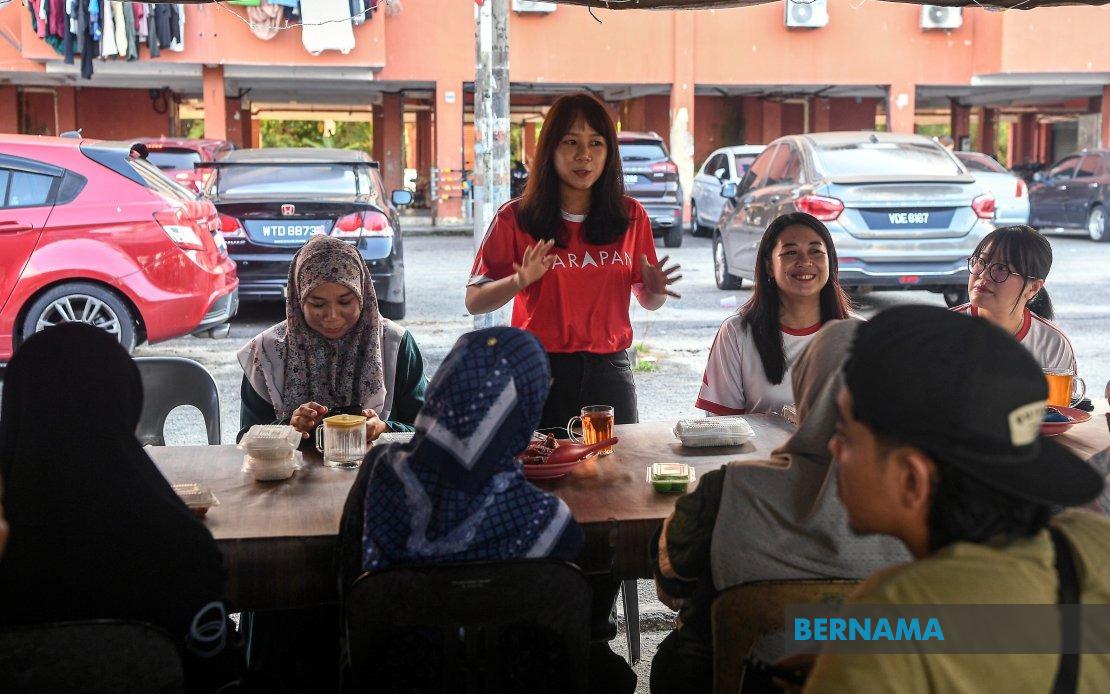
Lee Wern Yiing, the 30-year-old PH candidate and Johor DAP Socialist Youth chief, embodies a particular strand of contemporary Malaysian politics: the reformist returnee. After completing her studies in Singapore in 2018, she deliberately chose to repatriate herself to Malaysia during a period when the country appeared to be undergoing systemic change. Her entry into politics began not through traditional family networks but through frontline service as a special officer to former Johor Jaya assemblyman Liow Cai Tung, a pathway that suggests her advancement within the party has been performance-based rather than hereditary. Her decision to return during the period immediately following the 2018 general election speaks to genuine conviction about Malaysia's reform trajectory, a conviction that now underpins her campaign messaging.
Lee's strategic approach centers on mobilizing young voters, a demographic often written off in Malaysian political analysis as disengaged or apathetic. Rather than accepting this stereotype, she explicitly rejects the notion that youth lack political interest, arguing instead that young people make sophisticated observations and electoral calculations based on tangible evidence. This reframing carries implications for how all parties must communicate policy to younger audiences. She has invested in contemporary outreach mechanisms, leveraging social media platforms while maintaining ground-level community engagement through initiatives such as the Johor Jaya Run, a hybrid approach that acknowledges the digital-physical divide in voter mobilization.
The substantive cornerstone of Lee's campaign rests on three interrelated policy priorities: job creation, housing affordability, and cost-of-living pressures. These align precisely with challenges facing Malaysia's young demographic, who face a compressed window for property ownership amid rising prices and wage stagnation relative to living expenses. Her particular focus on the Johor-Singapore Special Economic Zone reflects an understanding that Johor's economic future depends on leveraging its geographic proximity to Singapore without becoming merely a dormitory or low-wage service economy. She frames the JS-SEZ not simply as a trade mechanism but as a potential engine for attracting Johor-based talent who have migrated to Singapore, suggesting that retention of human capital matters as much as attraction of new investment.
Her vision of Johor Jaya as a place where young people choose to establish families and careers rather than abandon for external opportunities addresses a structural challenge that affects regional stability: the brain drain of talent from secondary cities toward metropolitan centers and across the border. By explicitly positioning her candidacy around making return migration attractive rather than inevitable, Lee offers a counter-narrative to the often-pessimistic assessment of Malaysian youth prospects. Her emphasis on creating employment ecosystems rather than simply subsidizing businesses suggests a more sophisticated understanding of economic development than conventional patronage politics.
In contrast, Chan San San, the Barisan Nasional candidate, presents herself as the embodiment of institutional continuity and tested community competence. Her claim to being an "anak Plentong"—a native daughter—activates kinship and locality-based voter loyalty, a traditional strength of BN's electoral coalition. Her more than ten years of community engagement, formalized through roles as a Johor Bahru City Council member and MCA deputy secretary, position her within established governance structures. Her involvement with the MCA Crisis Relief Squad underscores a particular reading of community service: responsive problem-solving rather than systemic transformation.
Chan's articulation of her campaign platform reveals a subtly different diagnosis of Johor Jaya's challenges. Her emphasis on translating community problems from "numbers on paper" into lived reality suggests a critique of previous administrations as overly technocratic or disconnected from ground conditions. This framing attempts to appropriate the language of grassroots responsiveness while remaining anchored to institutional parties with longer track records. Her four main focuses—strengthening the local economy, transforming Johor Jaya into an eastern Johor Bahru transportation hub, connecting to the Rapid Transit System project, and addressing traffic congestion—reflect more conventional infrastructure-centered development thinking.
The emphasis on transportation infrastructure and the RTS connection represents a particular vision of Johor Jaya's role within the broader Johor Bahru metropolitan region. Rather than positioning the constituency as a destination for young people seeking to build futures, Chan's framing treats it as a transit node within a larger system. This reflects a different assumption about economic geography: that Johor Jaya's value derives partly from its connectivity to other economic zones rather than from its own employment generation capacity. The focus on addressing traffic congestion, while practically important, also implies that existing development patterns require management rather than fundamental reorientation.
The broader context for this contest involves a four-way race that includes Lau Yi Leong from Parti Bersama Malaysia and independent candidate Lim Hun Peaw, suggesting that voter sentiment in Johor Jaya may be fragmented enough to allow for surprise outcomes. The Johor state election as a whole involves 172 candidates competing across 56 seats, indicating both significant contestation and organizational capacity across multiple political formations. The gap between the July 7 early voting period and the July 11 main polling day creates a window during which final voter persuasion efforts will intensify.
The Johor Jaya race ultimately reflects competing theories about how to arrest or reverse the economic stagnation affecting secondary Malaysian cities. Lee's approach emphasizes attraction and retention through quality-of-life factors and employment ecosystems, rooted in a belief that reform-oriented governance creates conditions for voluntary migration reversal. Chan's approach emphasizes incremental improvements through infrastructure and institutional responsiveness, built on faith that established parties possess superior capacity to deliver tangible services. Neither candidate frames Johor Jaya's development as requiring fundamental industrial restructuring or regional reorientation, suggesting both operate within broadly similar economic parameters despite their different political homes.
The contest also illuminates generational divisions within Malaysian politics itself. Lee represents a cohort of reformist activists who entered politics through civil society or grassroots mobilization rather than party structures, while Chan embodies the traditional pathway of party apprenticeship and institutional advancement. The extent to which Johor Jaya voters reward either approach will carry implications beyond this single constituency, signaling whether Malaysian voters—and particularly young voters—have appetite for political renewal beyond partisan sloganeering. The July 11 outcome will indicate whether Johor's voters view development as primarily dependent on political continuity or responsive to pressure for new directions. Both candidates offer genuine commitment to serving their constituency; the distinction lies in whether that service is best delivered through institutional familiarity or reform-oriented innovation.

