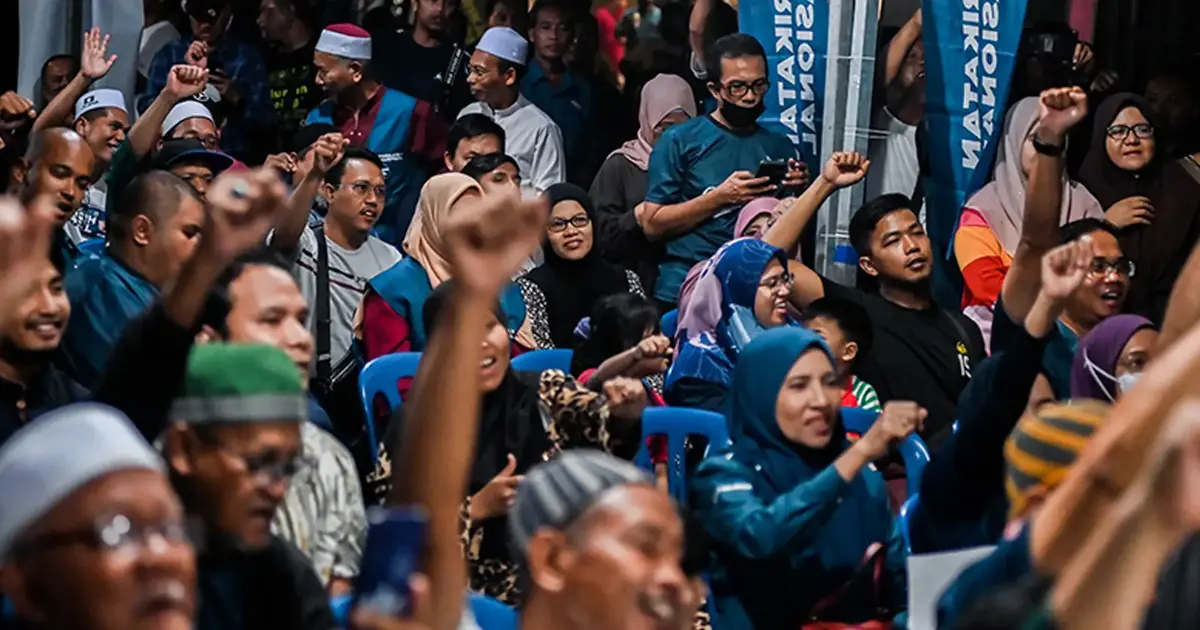
Research by the Ilham Centre has exposed a significant knowledge gap within Perikatan Nasional's younger voter base, revealing that many youthful coalition backers remain largely unaware of the mounting tensions and disagreements that have strained the partnership between PAS and Bersatu. The findings raise questions about the depth of political engagement among Gen Z and millennial voters despite their visible participation in campaign activities and electoral processes across the country.
The think tank's investigation into voting patterns during recent state elections in Johor and Negeri Sembilan uncovered a troubling phenomenon: young PN sympathisers were advocating for coalition candidates in constituencies where the alliance had not even fielded nominees. This fundamental confusion suggests that youthful supporters may be responding to partisan branding or charismatic personalities rather than understanding the coalition's actual electoral strategy or organisational boundaries. Such disconnects can undermine the sustainability of political movements that depend on informed grassroots mobilisation.
The PAS-Bersatu relationship has been fraught with disagreements over religious governance, federalism, and electoral seat allocation since their 2020 partnership. While senior party figures have publicly articulated these differences through policy statements and strategic announcements, the messaging apparently has not permeated downward to younger supporters effectively. This represents a communication challenge that extends beyond mere campaign messaging into the realm of political education and ideological transmission within party structures.
For Malaysian politics, the findings underscore a broader phenomenon affecting multiple coalitions and parties. Younger voters, despite their demographic weight and growing electoral significance, often engage with politics through social media snippets, celebrity endorsements, and emotional appeals rather than comprehensive policy platforms or historical context. This trend creates vulnerabilities when coalitions face internal schisms, as happened with Perikatan Nasional, where nuanced distinctions between partner parties may not translate into youth engagement strategies.
The survey's methodology, targeting respondents in Johor and Negeri Sembilan during recent state polls, provides a regional snapshot that likely reflects patterns in other PN-contested areas. Both states have seen competitive three-cornered contests involving Pakatan Harapan, Barisan Nasional, and Perikatan Nasional, creating complex voting environments where young supporters may prioritise coalition loyalty over understanding its internal composition. The inability to correctly identify where PN was competing suggests campaign infrastructure has not equipped volunteers and grassroots mobilisers with clear, youth-friendly explanations of seat allocations between PAS and Bersatu.
Ilham Centre's observations carry implications for Perikatan Nasional's long-term viability and credibility with younger demographics. Political coalitions depend on members accepting compromises and working within structural constraints; when supporters cannot articulate why certain decisions were made—such as why PAS or Bersatu did not contest particular seats—confidence in leadership erodes. As the coalition seeks to position itself as a serious alternative government, it must develop more sophisticated youth engagement that explains not just what to vote for, but why the coalition's organisational decisions serve broader political objectives.
The research also reflects on Malaysian political culture more broadly. Voter education traditionally has fallen to parties themselves, but the fragmentation of media consumption and the rise of algorithmic social media feeds mean traditional party messaging penetrates unevenly. Young voters in Johor and Negeri Sembilan may receive conflicting information through different digital channels, with some seeing generic PN branding while others encounter PAS-specific or Bersatu-specific content without clear coordination.
For Perikatan Nasional, the findings should prompt urgent strategic reflection. Building sustainable political movements requires more than electoral victories; it demands that supporters across age cohorts understand coalition logic and internal dynamics. The Ilham Centre's discovery that young PN backers lack awareness of the PAS-Bersatu tension suggests that party structures have not adequately translated elite-level political discussions into grassroots narratives that resonate with younger audiences. This gap becomes particularly acute when coalitions face criticism about internal conflicts, as younger supporters lack the contextual knowledge to respond substantively.
Moving forward, political parties across Malaysia's spectrum should consider whether their youth mobilisation strategies adequately address knowledge deficits or simply reinforce emotional attachment to party symbols. The Ilham Centre's work suggests that electoral success, while important, does not guarantee that younger voters have internalised the political reasoning underpinning coalition decisions. As Malaysia's youth demographic continues to shape electoral outcomes, bridging this awareness gap will be essential for all major political formations seeking sustained legitimacy and grassroots resilience.

