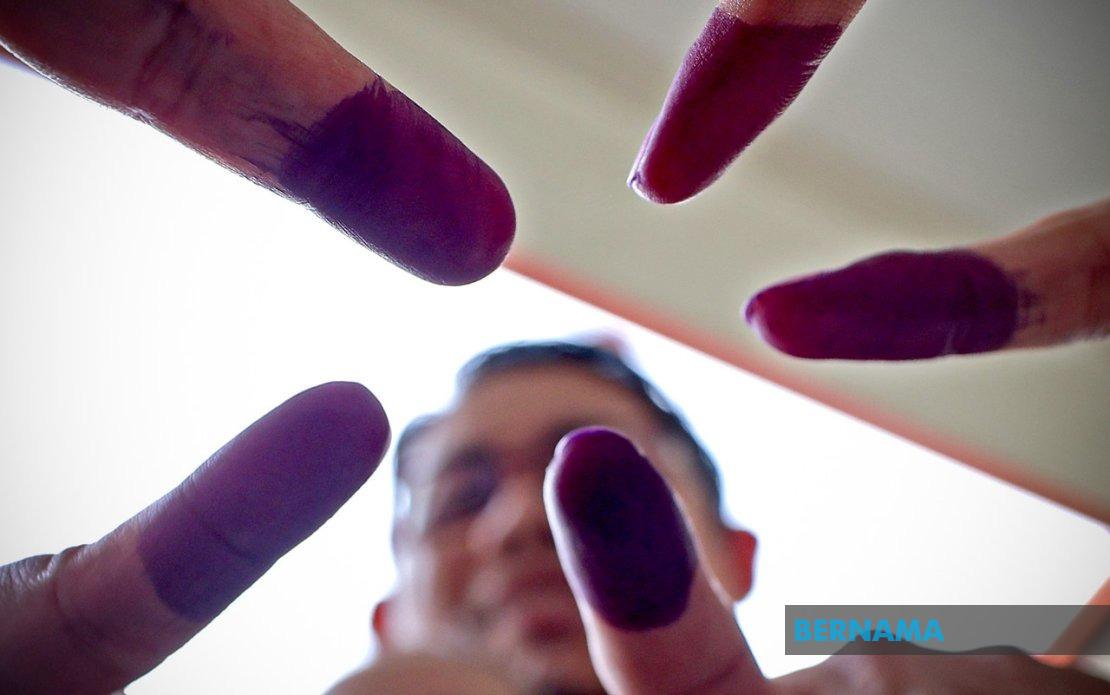
The upcoming 16th Johor state election on July 11 is shaping up to be heavily influenced by a demographic cohort that has previously held less electoral power: young and first-time voters. Political analysts and observers are forecasting that this surge in youthful participation, driven by the implementation of Undi18 and automatic voter registration, will prove decisive in determining winners across numerous marginal constituencies where traditional voting patterns have become more fluid. The potential for younger voters to act as kingmakers reflects a significant structural shift in Malaysian electoral dynamics, particularly in a state like Johor where demographic change is pronounced and political competition remains intense.
The numbers underlying this analysis are substantial. Election Commission data reveals that more than 1.29 million registered voters in Johor are below 40 years of age, encompassing 165,386 voters aged 18 to 20, 544,657 between 21 and 29, and 587,888 between 30 and 39. This represents a meaningful bloc of electors whose cumulative voting preference could easily swing outcomes in constituencies where victory margins have historically been narrow. The significance of these figures becomes clearer when viewed against the overall composition of the electorate and the proliferation of closely contested seats expected in this election cycle.
According to Ilham Centre research chief Associate Prof Dr Mohd Yusri Ibrahim, the distinguishing characteristic of these younger voters is their ideological flexibility. Unlike older cohorts who may have developed entrenched party loyalties over decades, many young and first-time voters remain unattached to established political camps. This detachment from traditional party machinery creates genuine unpredictability in how they will cast their ballots. Mohd Yusri emphasised that in marginal constituencies where victory hinges on capturing mere hundreds or thousands of additional votes, the presence of a large contingent of persuadable voters fundamentally alters the electoral calculus and forces political parties to rethink their conventional strategies.
The implications for campaign methodology are significant. Mohd Yusri argued that political parties must abandon one-size-fits-all approaches and instead segment their messaging according to voter demographics and location. Urban youth require digital-first engagement strategies that leverage social media platforms where they spend considerable time consuming news and information. Simultaneously, rural and older voters cannot be neglected; they continue to respond more effectively to direct face-to-face interaction with candidates and local party organisers. Success in the current environment demands what might be termed a hybrid approach: sophisticated digital marketing combined with sustained ground-level mobilisation.
Dr Mohammad Tawfik Yaakub from Universiti Malaya's Department of Political Science, Public Administration and Development Studies amplified these observations, identifying voters aged 18 to 39 as the election's most influential constituency. Numbering approximately 1.2 million individuals, this cohort exhibits voting behaviour patterns that diverge markedly from older generations. Rather than reflexively supporting their family's traditional party or voting along communal or identity-based lines, younger voters increasingly evaluate candidates through a performance-based lens. They ask whether candidates possess demonstrated competence, whether they have delivered on previous promises, and whether they offer credible solutions to concrete problems. This represents a fundamental reorientation of Malaysian electoral logic away from identity and towards capability.
The geographic divide in voter responsiveness adds another layer of complexity. Urban younger voters, concentrated in cities like Johor Bahru and other developed areas, are extensively exposed to national political narratives circulating through social media, news websites, and digital platforms. This exposure tends to broaden their perspective and make them more receptive to cross-cutting policy arguments that transcend parochial concerns. Conversely, rural younger voters, though growing in digital literacy, continue to be shaped by localised networks, community relationships, and the direct influence of candidates who maintain visible presence in their constituencies. This geographic variation necessitates calibrated campaign strategies rather than uniform national messaging.
A critical insight from Dr Tawfik's analysis concerns the distinction between online momentum and actual electoral conversion. Social media campaigns can generate enthusiasm, create talking points, and influence opinion formation among digitally connected voters. However, translating this online interest into votes requires functioning ground machinery: volunteer networks, local organisers, transport to polling stations, and personal persuasion. Political parties that excel at digital marketing but neglect grassroots organisation frequently discover that social media engagement does not correlate with ballot box performance. The winning formula in this Johor election will likely favour parties demonstrating excellence in both domains simultaneously.
Another noteworthy observation concerns voter receptiveness to new political faces. Johor voters, particularly younger cohorts, show increased willingness to consider candidates and leaders outside the established political old guard. However, this openness has limits. Youth and novelty alone are insufficient to secure electoral victory; new candidates must simultaneously demonstrate credibility through prior experience, evidence of capability, and clear articulation of policy positions. Voters are willing to take chances on fresh faces but not blindly. This creates opportunities for new entrants to political contests whilst demanding they present substantive credentials rather than relying on novelty alone.
The substantive policy priorities of younger and fence-sitting voters deserve particular attention as the election approaches. Multiple analysts pointed to bread-and-butter economic concerns as potentially outweighing identity-based or ideological considerations. Issues including stagnant wages, rising cost of living, housing affordability, and employment prospects directly affect daily life and appear to weigh more heavily in voter calculations than abstract political narratives. Political parties that can convince younger voters they possess credible, implementable solutions to these material concerns will gain significant advantage. Conversely, campaigns relying primarily on identity politics, historical grievances, or sloganeering risk appearing tone-deaf to the preoccupations of a generation grappling with genuine economic pressures.
Voter turnout represents another critical variable. The expansion of eligible voters through Undi18 and automatic registration has enlarged the electorate, but whether younger voters actually cast ballots at comparable rates to older citizens remains uncertain. Higher turnout among younger voters would amplify their electoral impact, while lower turnout would reduce their potential influence regardless of their percentage of the registered electorate. Campaign success will therefore depend partly on parties' capacity to mobilise their younger supporters and ensure they actually appear at polling stations on July 11.
For Malaysian and Southeast Asian observers, the Johor election serves as a testing ground for how demographic change, digital technology, and shifting voter preferences interact in contested electoral contexts. The performance of political parties in engaging younger voters, the actual impact of social media campaigning, and which parties most effectively bridge digital and grassroots strategies will provide valuable lessons extending beyond Johor itself. As digital penetration increases across Southeast Asia and younger cohorts become larger portions of electorates region-wide, the electoral dynamics visible in Johor may presage broader patterns of political contestation and voter behaviour change across the region.

