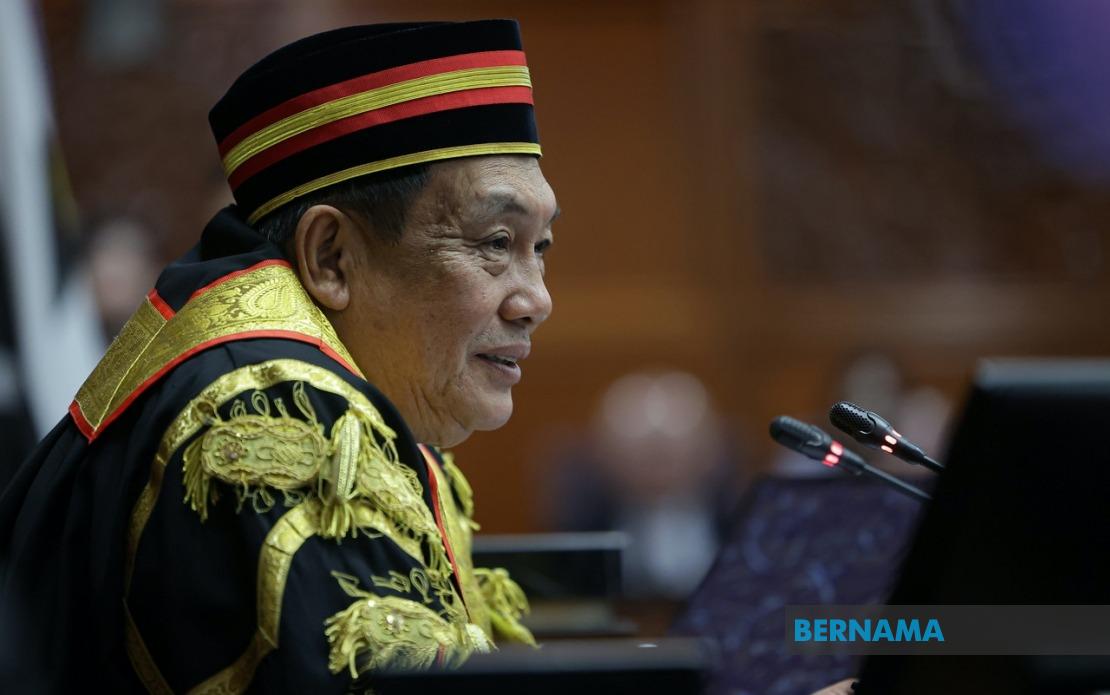
Malaysia's Youth Parliament represents far more than a symbolic gesture toward young engagement—it functions as a comprehensive training ground where the nation's next generation learns the intricate mechanics of democratic governance, according to Dewan Negara President Datuk Awang Bemee Awang Ali Basah. Speaking at Universiti Malaysia Terengganu's "Tranung Mari! From Campus to Parliament: Youth Voices Shaping Malaysia's Future" programme, Awang Bemee positioned the Youth Parliament as a "school of democracy" equipped to impart lessons that extend well beyond textbooks and theoretical instruction.
The Senate President articulated a vision of Youth Parliament that emphasizes experiential learning over passive observation. Through participation in parliamentary-style proceedings, young people encounter the full spectrum of democratic practice: articulating positions, engaging in substantive debate, absorbing constructive criticism, and accepting collective decisions made through democratic processes. This immersion creates a foundation for understanding that leadership inherently demands accountability. The ability to advocate for one's beliefs must be balanced against the equally vital capacity to listen, absorb alternative perspectives, and act in service of others rather than purely from a position of authority.
Awang Bemee's framing reveals an important philosophical shift in how policymakers conceptualize youth political development. Rather than viewing Parliament as the sole arbiter of national direction, he positioned Youth Parliament as a vital counterweight—a mechanism through which younger voices reshape the democratic conversation and offer perspectives that complement, challenge, and ultimately strengthen institutional decision-making. This collaborative vision acknowledges that demographic realities demand intergenerational dialogue; young people constitute Malaysia's present and overwhelming future, making their meaningful inclusion in governance deliberations not merely advisable but essential for institutional legitimacy.
The Senate President identified three foundational pillars as essential scaffolding for youth empowerment in democratic contexts. The first emphasizes creating political and social conditions where young people experience genuine opportunity to express themselves, be heard authentically, and witness their input valued through transparent processes and respectful engagement with dissenting perspectives. Malaysia's complex tapestry of racial, religious, and cultural identities should function as a strength multiplier rather than a source of fragmentation, provided that mutual understanding and respect undergird intergroup interactions. Youth Parliament becomes a laboratory for practicing this higher form of pluralism.
Education constitutes the second pillar, though Awang Bemee consciously recalibrated its definition beyond conventional metrics of examination performance and credential accumulation. Contemporary youth require competencies that examination systems inadequately measure: sophisticated critical analysis, technological fluency that extends to artificial intelligence applications, creative problem-solving approaches, entrepreneurial innovation capacity, articulate communication, and developed civic consciousness. These capacities equip young Malaysians to navigate and shape an economy increasingly influenced by technological transformation while maintaining strong ethical anchors.
The Blue Economy exemplifies this educational imperative. As climate change and resource constraints reshape global economic structures, opportunities in fisheries optimization, aquaculture development, maritime renewable energy, sustainable tourism, and coastal infrastructure demand young people equipped with technical capability married to environmental stewardship consciousness. Without deliberate cultivation of this integrated knowledge base, Malaysia risks losing competitive advantage in sectors anticipated to generate substantial value and employment through this decade.
Awang Bemee's third pillar addresses what constitutes responsible democratic citizenship in digitally saturated environments. Freedom of expression, foundational to democratic systems, does not extend to fabrication, defamation, or deliberate misinformation campaigns. The proliferation of social media platforms has exponentially amplified the speed and reach with which falsehoods propagate, creating contexts where individual posting decisions carry magnified consequences. Young people must internalize that technological capability creates ethical obligations rather than diminishing them. The four-step framework Awang Bemee outlined—verify before sharing, scrutinize before believing, understand before judging, and contemplate consequences before acting—translates abstract principles into concrete behavioral guidance applicable to digital contexts where split-second decisions carry lasting repercussions.
The Youth Parliament roadshow, which included the UMT programme, represents Parliament Malaysia's structural commitment to bridging the widening distance between legislative institutions and campus communities where young people concentrate intellectually and socially. By creating direct channels between parliamentary administration and student populations, the initiative dissolves barriers that traditionally insulate governance from authentic youth input. The forum component, featuring Parliament Malaysia chief administrator Datuk Dr Ahmad Husaini Abdul Rahman engaging students in direct dialogue, transformed conventional information delivery into genuine conversation where student voices shape the discussion rather than receiving predetermined messaging.
Awang Bemee's vision positions young people neither as passive recipients of existing institutional arrangements nor as revolutionary forces requiring containment, but rather as essential participants in continuous democratic evolution. The confidence he expressed that Malaysian youth could become bridge-builders capable of uniting fractured communities, solving entrenched problems, and steering the nation toward improved futures reflects optimism grounded in institutional commitment rather than abstract hopefulness. Youth Parliament becomes the mechanism through which this potential transforms from latent possibility into actualized leadership.
The initiative targets cultivation of leaders possessing integrity as a defining characteristic rather than incidental virtue. In contexts where institutional trust has faced erosion from various quarters, developing young leaders whose decision-making integrates ethical considerations as fundamental rather than optional requirements addresses deeper systemic vulnerabilities. These young people, prepared through their Parliament engagement to understand governance complexities, equipped with contemporary competencies, and habituated to responsible democratic participation, represent Malaysia's most durable investment in institutional renewal and societal cohesion during periods of anticipated demographic and economic transformation.

