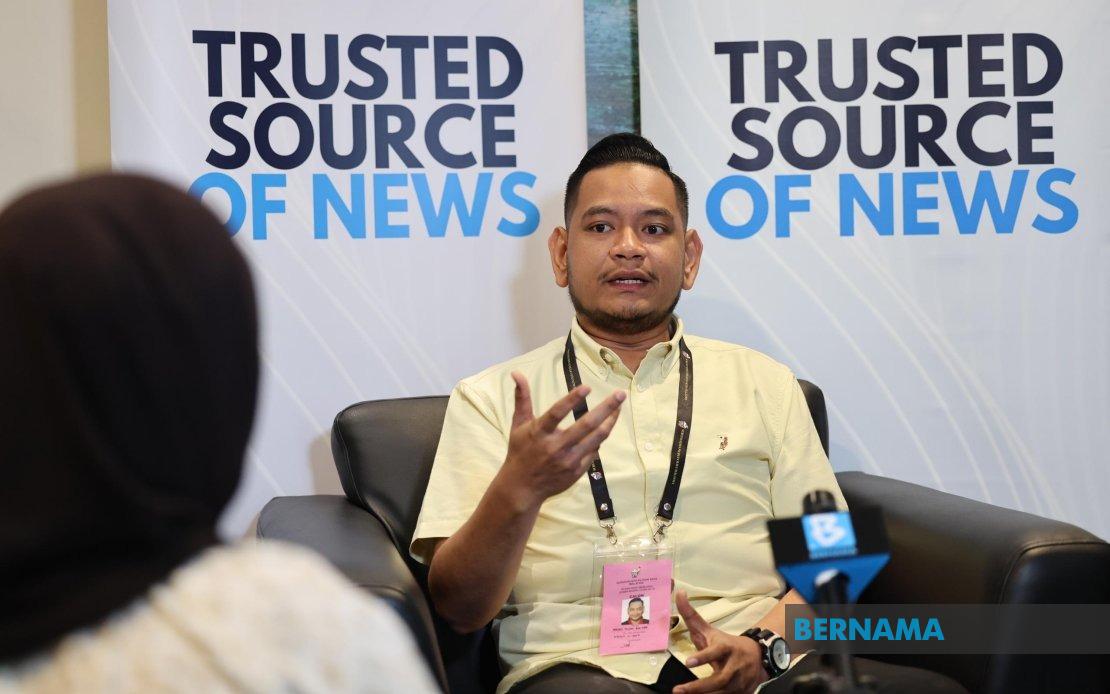
Amirul Huzni Onn, the 29-year-old Pakatan Harapan standard-bearer for the Sedili state constituency, is approaching the upcoming Johor election with calculated optimism despite confronting formidable political opposition. The Amanah Youth chief does not view his relative inexperience as a handicap but rather as a platform from which to articulate a generational shift in Malaysian electoral politics. His candidacy frames a broader narrative about whether voters in traditionally conservative strongholds are prepared to embrace untested figures offering ideological renewal over incumbency and accumulated political capital.
Sedili represents hostile terrain for opposition politics. The constituency has been a Barisan Nasional fiefdom, and Amirul Huzni faces two considerably more seasoned contenders: the sitting BN assemblyman Muszaide Makmor and Rasman Ithnain, the Perikatan Nasional representative who previously represented Sedili for three consecutive terms. This configuration creates a three-way contest where institutional advantages favour his opponents substantially. Yet Amirul Huzni articulates a philosophy suggesting that established political credentials may carry diminishing returns among electorates increasingly receptive to candidates unburdened by legislative records vulnerable to critical scrutiny.
The argument advancing inexperience as electoral asset reflects a calculated repositioning of conventional political discourse. Amirul Huzni contends that younger candidates function as blank canvases—devoid of the accumulated grievances, broken commitments, and administrative failures that typically accumulate across legislative careers. This rhetorical strategy acknowledges forthrightly that traditional metrics of political influence advantage his rivals, yet proposes that electoral outcomes depend ultimately upon delivering victory rather than tallying years of prior service. By recasting generational difference as substantive political advantage, he attempts to transform what might otherwise constitute a structural weakness into a foundation for mobilising youth-oriented and reform-minded constituencies.
The practical dimension of Amirul Huzni's campaign crystallises around a specific, localised infrastructure project: the long-delayed construction of a fuel station within Sedili. This facility has acquired considerable symbolic importance within the community, particularly among fishermen and recreational anglers whose livelihoods and activities demand accessible refuelling infrastructure. The candidate notes that although the project site received identification and land clearance occurred more than a year previously, implementation has stalled perpetually. This concrete failure of governance serves dual purposes within his electoral narrative—demonstrating incumbent underperformance whilst offering a tangible deliverable through which to establish credibility if elected.
Amirul Huzni's manifesto deliberately avoids expansive policy commitments that might prove implementation challenges. Instead, he concentrates upon immediate, community-identified needs requiring direct intervention. This approach acknowledges practical realities confronting first-term representatives in opposition-held positions, where legislative capacity remains circumscribed by parliamentary arithmetic and executive constraints. By constraining his pledges to achievable objectives, he seeks to establish expectations alignment between campaign promises and realistic delivery possibilities—a contrast to the unbounded commitments occasionally made by politicians less circumspect regarding implementation feasibility.
The campaign methodology championed by Amirul Huzni emphasises decorum and constructive engagement across partisan boundaries. He explicitly instructed supporters and articulated publicly on nomination day a commitment to mature, respectful electioneering conducted in spirit of healthy competition rather than acrimonious conflict. This emphasis upon harmonious community relations transcends traditional campaign rhetoric, instead suggesting that electoral contests need not generate the fractious social divisions sometimes accompanying Malaysian political contests. Whether this philosophy reflects genuine conviction or strategic calculation, it addresses constituencies potentially fatigued by increasingly polarised political atmospherics.
The broader context involves the 16th Johor state election scheduled for July 11, with early voting commencing July 7. Johor elections carry disproportionate significance within Malaysian politics, as the southern state represents a demographic and economic centre containing substantial urban and industrial concentrations. Electoral performance in Johor frequently portends broader regional and national political trajectories. Sedili's status as a traditionally conservative seat makes Amirul Huzni's challenge substantially demanding, yet the constituency's composition suggests meaningful demographic shifts potentially receptive to generational change.
The emergence of candidates like Amirul Huzni reflects deeper transformation within Malaysian opposition politics. Pakatan Harapan has progressively invested in youth recruitment and cultivation, recognising that sustainable political competitiveness demands generational renewal. By deploying young candidates in apparently unwinnable territories, the coalition simultaneously develops future leadership cadres and establishes grassroots presences in hostile constituencies. While individual electoral outcomes may remain uncertain, the cumulative effect of such deployment strategies gradually shifts political infrastructure and voter familiarity across diverse communities.
Amirul Huzni's positioning also reflects analytical sophistication regarding contemporary voter behaviour. He implicitly recognises that traditional swing voters increasingly evaluate candidates upon perceived competence, integrity, and attentiveness to local concerns rather than purely partisan affiliation. By emphasising fresh approaches, concrete local projects, and respectful engagement, he attempts to construct electoral appeal transcending conventional opposition-coalition loyalty. This represents strategic acknowledgment that Malaysian electoral politics has become increasingly candidate-centric, particularly at state level where local governance questions dominate voter considerations.
The challenge for Amirul Huzni remains formidable. Muszaide Makmor possesses incumbent advantages and BN's organisational machinery, whilst Rasman Ithnain brings established community connections cultivated across three previous terms. Both opponents comprehend Sedili's constituent needs intimately and maintain networks extending into local governance, religious institutions, and business communities. Yet electoral surprises occasionally materialise when candidates successfully mobilise previously inactive voters or capture swing constituencies through compelling local narratives. Amirul Huzni's strategy depends partly upon whether Sedili voters perceive genuine distinction between competing candidates sufficiently pronounced to disrupt prevailing political patterns.
The July 11 election ultimately will determine whether Sedili's electorate validates the proposition that youth, dynamism, and community-focused pragmatism constitute competitive advantages against experience and institutional machinery. Regardless of immediate electoral outcomes, Amirul Huzni's candidacy exemplifies broader shifts within Malaysian opposition politics toward systematic cultivation of younger leadership cohorts and community-embedded campaign approaches. These structural changes within political party organisations may prove consequential for regional political development across the coming decade, independent of particular election results in any single constituency.

