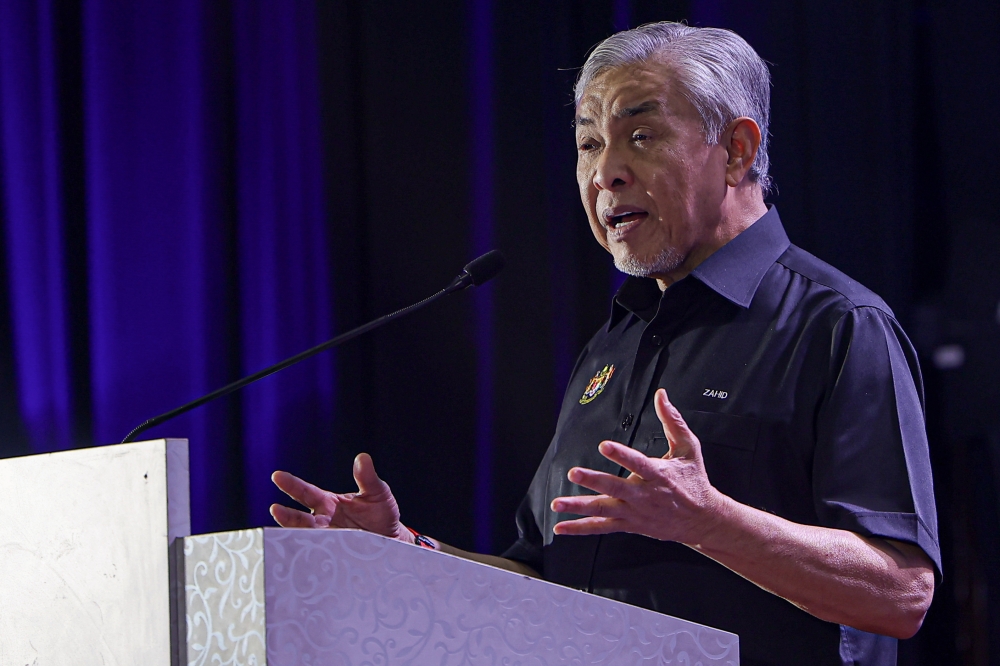
Deputy Prime Minister Datuk Seri Ahmad Zahid Hamidi has alleged that ministry officials experienced pressure to participate in Barisan Nasional-linked activities during the recent wave of state elections, sparking renewed concerns about the boundary between political campaigns and government administration in Malaysia.
Speaking in Putrajaya on August 6, Zahid indicated that certain civil service personnel encountered inducements or implicit expectations to show up at coalition-related events while state polling campaigns were underway. The allegation, while not naming specific ministries or detailing the precise mechanisms of pressure, touches upon a sensitive area of Malaysian governance: the relationship between the ruling political apparatus and the neutral civil service framework that is supposed to serve all administrations impartially.
The timing of Zahid's statement is significant, coming as Malaysia navigates a competitive political landscape where electoral contests in individual states have grown increasingly intense. State elections have become proving grounds for national political movements, with parties deploying extensive organisational machinery and grassroots mobilisation. The involvement of ministry staff in campaign-related activities, whether voluntary or coerced, represents a departure from the professional standards expected within the public sector.
Malaysia's civil service operates under constitutional and legal guidelines designed to ensure political neutrality. Government employees are theoretically barred from engaging in partisan political activities during working hours or in ways that compromise their official duties. However, the practical enforcement of these rules has long been contested, with periodic allegations emerging from various quarters about the blending of state resources and personnel into electoral machinery.
The allegation by Zahid, himself a senior BN figure and an influential voice within the coalition, carries particular weight because it suggests even leadership within the ruling alliance recognises problems in how political boundaries are being managed. His decision to publicly raise the matter indicates either that irregularities were sufficiently widespread to warrant intervention, or that intra-coalition tensions may be surfacing regarding campaign conduct. The statement does not clarify whether Zahid is criticising the pressure tactics themselves or the parties applying such pressure.
For Southeast Asia's largest civil service, operating across federal and state governments with hundreds of thousands of employees, the stakes are considerable. Professional standards deteriorate gradually, often through accumulated small violations. If ministry staff routinely attend political events under implicit or explicit compulsion, the cumulative effect corrodes institutional independence. Staff morale suffers when public servants feel caught between political loyalty and professional duty, and public trust in government neutrality weakens.
The state elections referenced by Zahid have likely included contests in Peninsular Malaysian states where BN remains influential, though specific timing and which states are unclear from his comments. Each election cycle generates similar allegations from opposition parties and civil society observers, creating a pattern of concern that remains largely unresolved through formal mechanisms.
The question of administrative resource allocation during campaigns also merits examination. When government officers attend political events, questions naturally arise about whether they do so on government time, using government transport, or with government-funded materials. These practical dimensions determine whether alleged pressure represents merely an inconvenience or a genuine misappropriation of public resources for partisan purposes.
Malaysian civil service regulations exist in writing, overseen nominally by the Public Services Commission and the Prime Minister's Office. Yet enforcement mechanisms appear weak or inconsistently applied. Politicians rarely face consequences for pressuring public servants, and few officers file formal complaints, fearing professional repercussions. This institutional asymmetry means regulations become theoretical rather than operational.
Zahid's statement opens space for broader discussion about civil service reform and electoral conduct. Regional democracies in Southeast Asia face comparable challenges: Indonesia, Thailand, and the Philippines have all grappled with questions about whether public employees can maintain genuine political neutrality while serving governments that are themselves political entities. Malaysia's particular federal structure, where state governments may belong to different coalitions than federal leadership, creates especially complex pressures on civil servants who operate across multiple political jurisdictions.
The substantive remedy for such problems typically requires multi-layered intervention: clearer written guidelines, stronger whistleblower protections for civil servants, independent oversight mechanisms with real enforcement powers, and leadership commitment from within political parties to cease pressure tactics. Whether Malaysian policymakers will pursue such reforms following Zahid's comments remains to be seen.
Meanwhile, the allegation serves as a reminder that questions about governance quality and institutional integrity remain prominent in Malaysian political discourse. As state elections continue and federal elections approach, the conduct of both political actors and civil servants will remain under scrutiny, particularly regarding whether public administration can maintain appropriate distance from partisan competition.

