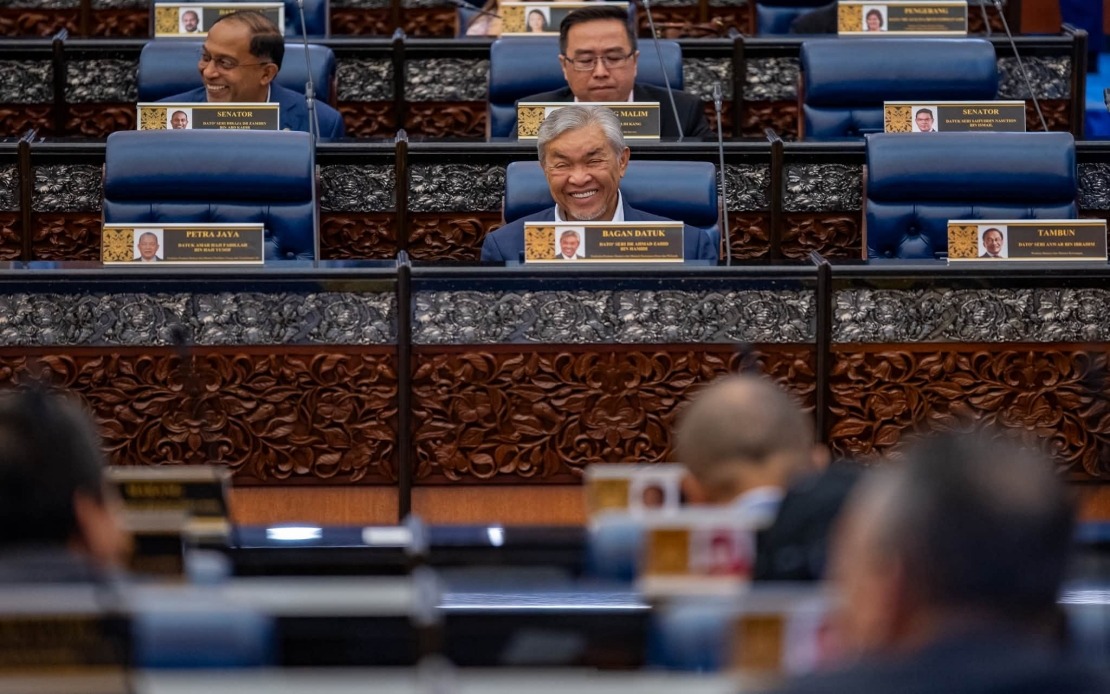
Deputy Prime Minister Datuk Seri Dr Ahmad Zahid Hamidi has emphasised that criticism of Lembaga Tabung Haji must be matched with decisive corrective action to preserve confidence in the major Islamic institution and prevent it from becoming mired in perpetual controversy. Speaking after a special parliamentary sitting dedicated to examining the royal commission's inquiry into the fund, Zahid underscored the importance of translating debate into substantive reforms rather than allowing disputes to fester without resolution.
The special Dewan Rakyat sitting on August 11 was convened following the government's decision in late July to release the Royal Commission of Inquiry report on Tabung Haji to the public. This move opened the findings to parliamentary scrutiny and allowed elected representatives to discuss and interrogate the recommendations contained within the document. Zahid, who also serves as Rural and Regional Development Minister, framed the parliamentary session as an opportunity for thorough examination and clarification of outstanding matters affecting the institution.
The RCI report, which examined Tabung Haji's stewardship between 2014 and 2020, documented numerous operational and governance deficiencies within the fund. The inquiry produced 25 specific recommendations aimed at strengthening management practices and institutional oversight. As of the end of July, Tabung Haji had already implemented three-quarters of these recommendations, demonstrating some movement toward addressing the commission's concerns, though substantial work remains to be done.
Zahid's call for responsible action alongside criticism reflects growing pressure to move beyond the investigative phase and into meaningful implementation. The Tabung Haji institution, which manages savings for Malaysian pilgrims intending to perform the Hajj, represents a crucial financial instrument for hundreds of thousands of Malaysians. Its integrity is therefore not merely an administrative concern but a matter touching the religious and financial welfare of the Muslim community nationwide.
In his Facebook statement, Zahid expressed hope that the parliamentary debate would mark a turning point, after which stakeholders would refrain from making unsubstantiated claims or fostering misleading perceptions about the institution. This appeal suggests an underlying frustration with the prolonged public controversy surrounding Tabung Haji, which has been buffeted by repeated scandals and governance questions that have eroded public confidence. The deputy prime minister appears intent on establishing a more constructive phase of dialogue, one focused on solutions rather than recrimination.
The timing of the parliamentary sitting reflects a broader governance strategy to demonstrate responsiveness to public concerns while also drawing a line under the investigative process. By enabling MPs from all parties to examine and debate the RCI findings simultaneously, the government sought to provide a forum for comprehensive discussion while establishing shared ownership of the reform agenda. This approach contrasts with more secretive or restricted handling of institutional crises, signalling a commitment to transparency albeit within a structured parliamentary framework.
For Malaysian readers and policymakers, the Tabung Haji situation carries broader implications for institutional reform and public accountability across the government sector. The fund's travails highlight the consequences of governance lapses and the importance of robust oversight mechanisms in organisations entrusted with public resources. The implementation rate of the RCI's 25 recommendations will serve as a barometer of institutional commitment to genuine reform versus superficial compliance.
Zahid's emphasis on sincerity and wisdom in addressing the matter also points to the moral and religious dimensions of the reform process. As an Islamic institution managing funds designated for a pillar of the Muslim faith, Tabung Haji carries significance beyond conventional financial management. The deputy prime minister's invocation of blessing for all parties suggests recognition that restoring trust in the institution requires not only procedural reforms but also a commitment to ethical governance aligned with Islamic principles.
The public release of the RCI report represents a significant departure from historical patterns in Malaysia, where sensitive institutional inquiries have sometimes remained confidential. This transparency enables civil society, media, and interested stakeholders to scrutinise the findings independently, rather than relying solely on government statements about the report's contents and implications. Such openness can serve either to validate or to challenge official narratives surrounding the institution's problems and their proposed solutions.
Moving forward, the credibility of Tabung Haji's recovery will depend on measurable progress in the remaining quarter of unimplemented recommendations and on demonstrable improvements in operational performance and governance. Parliamentary debate alone, without follow-through, would merely perpetuate the pattern of concern and inaction that has characterised recent years. Zahid's call for responsible action thus functions as both a rallying cry and a warning that the institution's stakeholders—particularly its millions of contributors—will expect tangible results rather than empty promises.
The intersection of institutional reform, religious trust, and public accountability makes the Tabung Haji situation a closely watched case within Malaysia's governance landscape. Success in revitalising the fund would demonstrate that systemic problems can be identified, investigated transparently, and remedied through coordinated governmental action. Conversely, failure to implement the commission's recommendations would signal that procedural scrutiny has limited utility without commensurate institutional will to change. For Malaysians planning their Hajj journeys and for the broader Southeast Asian Muslim community observing how Malaysia manages this critical institution, the coming months will prove decisive.

