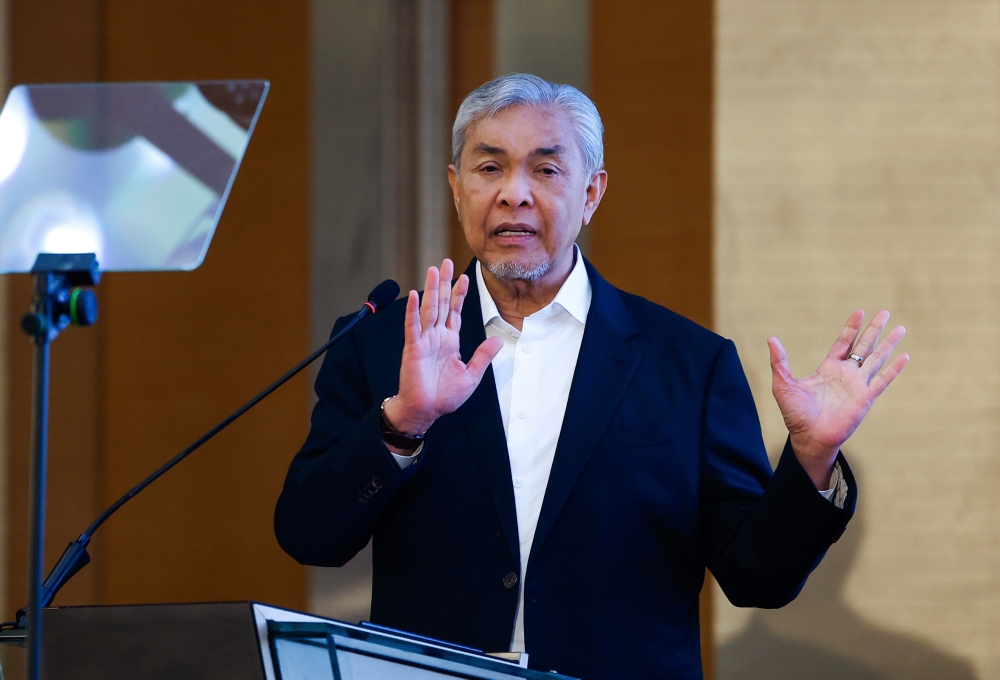
Deputy Prime Minister Zahid Hamidi has proposed that Malaysia's impending Royal Commission of Inquiry into Tabung Haji should cast a wider net than initially planned, encompassing not only the investigation phase but also the fund's subsequent recovery period. Speaking in Seremban on July 30, Zahid indicated that the Cabinet had endorsed this expanded approach, signalling a shift towards more comprehensive oversight of the troubled pilgrimage institution.
Tabung Haji, the pilgrimage fund that manages the religious and financial affairs of Muslim Malaysians preparing for the hajj, has faced significant challenges in recent years. The institution's difficulties have prompted calls for thorough examination of what went wrong and how the recovery should be managed. By proposing that the RCI examine both the problematic period and the subsequent reconstruction efforts, Zahid appears to be responding to broader public concerns about accountability and the proper restoration of the fund's financial health.
The suggestion reflects a recognition that investigating past failures alone may prove insufficient for rebuilding public confidence in Tabung Haji. Including the recovery phase within the RCI's mandate would allow for scrutiny of the remedial measures being implemented, ensuring they are adequate, transparent, and genuinely protective of the interests of the millions of Malaysians who depend on the fund for their hajj arrangements. This approach represents a more holistic understanding of institutional reform.
For Malaysian pilgrims, the implications are substantial. Tabung Haji serves as the primary vehicle through which ordinary Malaysians save for and organise their hajj journey, making it a deeply important institution within the Islamic and social fabric of the nation. Any investigation that fails to address how the fund recovers and restores its services risks leaving uncertainty about the quality of support available to future pilgrims. Zahid's proposal appears designed to address this concern directly.
The expansion of the RCI's scope also reflects international best practices in institutional recovery. Many countries conducting inquiries into financial or administrative failures have found that investigating only the problem period without examining the solution period provides an incomplete and potentially counterproductive picture. A comprehensive review can identify not only how issues arose but whether the corrective mechanisms being employed are appropriately designed and adequately resourced.
From a regional perspective, Malaysia's handling of this matter carries implications for how other Southeast Asian nations approach governance questions in sensitive religious and financial institutions. The decision to employ an RCI with an extended mandate demonstrates a commitment to accountability that could influence how comparable institutions across the region are evaluated and reformed. It also signals to Malaysian Muslims and to the international community that the government takes seriously its custodial responsibilities.
The Cabinet's endorsement of Zahid's proposal suggests internal consensus on the need for a more expansive inquiry framework. This unanimity, if genuine, may facilitate smoother cooperation from government agencies and institutions in providing information and documentation to the RCI. However, the effectiveness of such an extended inquiry will ultimately depend on the RCI's independence, adequate resourcing, and clear terms of reference that distinguish between investigatory findings and forward-looking recommendations.
For Tabung Haji management, the extended RCI mandate creates both opportunity and pressure. An inquiry that examines recovery efforts provides an opportunity to demonstrate commitment to reform and to explain the rationale behind specific remedial actions. Conversely, it presents a risk if the recovery strategies prove inadequate or if recommended improvements are found to conflict with actions already undertaken. The fund's leadership will need to ensure that recovery initiatives are defensible and aligned with the eventual findings and recommendations of the commission.
The timing of Zahid's announcement also merits attention. As Malaysia continues to navigate economic challenges and inflationary pressures, the public's trust in major financial institutions becomes increasingly important. Demonstrating that Tabung Haji, a fund holding significant assets on behalf of millions of Malaysians, is subject to rigorous and comprehensive examination helps reassure the broader public about institutional governance standards throughout the country.
Expanding the RCI's scope does raise questions about timeline and resource requirements. An inquiry covering both investigatory and recovery phases will necessarily be more complex and potentially longer than a narrower investigation. The government and the RCI will need to balance thoroughness with timeliness, ensuring that the extended mandate does not delay accountability findings or indefinitely postpone necessary reforms.
Looking ahead, the success of this expanded RCI approach will likely influence how Malaysia handles other institutional investigations. If the Tabung Haji inquiry, despite its broader scope, manages to produce clear findings and actionable recommendations within a reasonable timeframe, it could establish a model for examining other significant national institutions. Conversely, if the extended mandate leads to protracted proceedings without commensurate benefit to reform efforts, future inquiries may revert to narrower parameters.
The proposal ultimately represents a deliberate choice to prioritise comprehensive accountability over expedient investigation. For the millions of Malaysians whose hajj aspirations depend on Tabung Haji's stability and trustworthiness, such an approach may provide greater assurance that the fund's future is being reconstructed on a solid foundation of transparent review and institutional learning.

