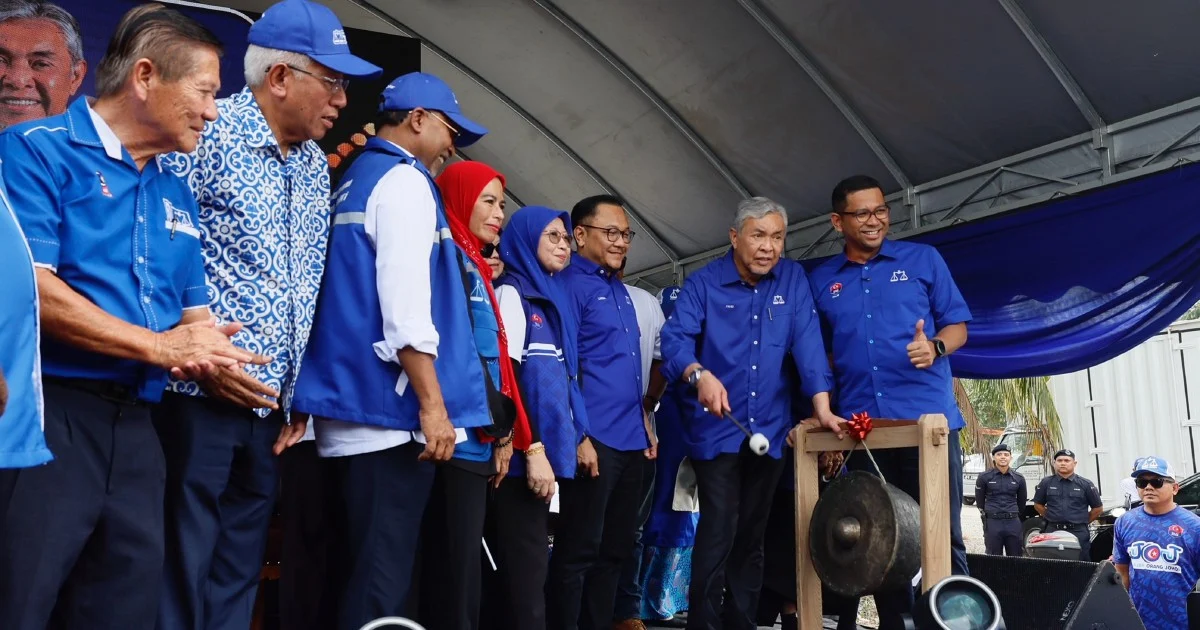
Deputy Prime Minister Ahmad Zahid Hamidi has delivered a pointed challenge to Pas, warning that the Islamist party must convert its rhetoric of backing Barisan Nasional into concrete electoral action during the Johor state election campaign. Speaking in Batu Pahat, Zahid questioned whether Pas's declarations of support for BN candidates actually reflected genuine commitment or remained merely symbolic gestures ahead of polling day.
The commentary underscores deepening tensions within Malaysia's ruling coalition despite the formal political alliance between BN and Pas that emerged following the 2022 general election. While both parties have maintained a workable partnership in Parliament, state-level politics continues to present complications, particularly in Johor where traditional party loyalties and regional power dynamics create distinct dynamics separate from federal-level cooperation.
Zahid's remarks reflect BN's strategic concern that Pas rhetoric supporting coalition candidates might not automatically translate into party machinery mobilization or loyal voter turnout. In Malaysian electoral mathematics, word-of-mouth endorsement from party leadership carries limited weight compared to grassroots-level canvassing efforts, resource allocation, and volunteer deployment. The Deputy Prime Minister appears to be signalling that BN expects Pas to invest genuine organizational effort rather than merely avoiding public criticism of coalition partners.
The Johor election assumes particular significance for BN as the state represents one of the coalition's traditional strongholds. Johor's large Malay-Muslim population and historical alignment with BN makes it critical territory for demonstrating the coalition's continued electoral viability. Any perception that Pas has failed to deliver meaningful support would complicate narratives about effective government and could embolden opposition movements claiming the BN-Pas partnership serves only elite interests.
Pas faces its own strategic calculus in state-level contests. While the party benefits from the stability and legitimacy of formal coalition membership at the federal level, grassroots supporters sometimes view state elections as opportunities to assert independence and contest local power structures. The tension between institutional discipline and factional pressures within Pas creates genuine uncertainty about whether party leaders can guarantee the kind of disciplined electoral support that Zahid demands.
Historically, Malaysian state elections have proven unpredictable precisely because they allow voters and regional factions to express preferences divergent from federal electoral outcomes. Johor's particular political culture emphasizes traditional patronage networks and family-based political structures that can resist centralized coalition discipline. Zahid's comments implicitly acknowledge this reality by calling out the gap between declarations and delivery.
The broader context includes growing competition between BN and opposition coalitions to demonstrate superior governance and electoral appeal. Any fracture in the BN-Pas partnership, visible through differential campaign efforts or competing electoral messages, would signal weakness to opposition movements. Conversely, unified and coordinated action would strengthen claims that the federal government has secured genuine stability and multi-party consensus.
Zahid's challenge also reflects calculations about resource allocation. Pas possesses substantial grassroots networks, particularly among Malay-Muslim voters in rural constituencies where such organizational strength proves decisive. Without active mobilization by Pas workers and machinery, BN candidates in mixed constituencies might struggle to achieve winning margins. Zahid's remarks constitute an implicit reminder that coalition success depends on contributions from all partners, not merely BN's organizational capacity.
The timing of Zahid's public criticism suggests frustration with perceived insufficient Pas engagement during campaign preparations. Coalition partners typically coordinate campaign messaging, schedule joint events, and coordinate endorsement activities. If Pas has been less visible or enthusiastic than BN expects, Zahid's intervention serves to escalate pressure internally while also signalling to coalition supporters that BN remains the driving force within the partnership.
Regional analysis of BN-Pas dynamics must account for underlying structural factors. Pas has emerged as Malaysia's principal opposition force at state level in northern states, creating tension with its federal coalition role. The party's supporters sometimes view federal cooperation with BN as a pragmatic accommodation rather than ideological alignment. This ambivalence can translate into less energetic campaign efforts during state elections.
Zahid's statement also positions him prominently within BN's leadership hierarchy during a period when coalition internal politics remain contested. By publicly holding coalition partners accountable, Zahid enhances his profile as a decisive leader willing to demand performance standards. This positioning carries implications beyond the Johor election into broader calculations about BN's future direction and leadership preferences.
The effectiveness of Zahid's challenge ultimately depends on whether Pas responds through measurable campaign intensification or whether the party continues at current effort levels. Either response will provide data about the depth of coalition commitment and whether federal-level partnership translates into state-level collaborative action. For Malaysian voters, Zahid's criticism highlights the complex political dynamics shaping coalition partnerships and the distinction between formal alliance structures and actual electoral coordination.

