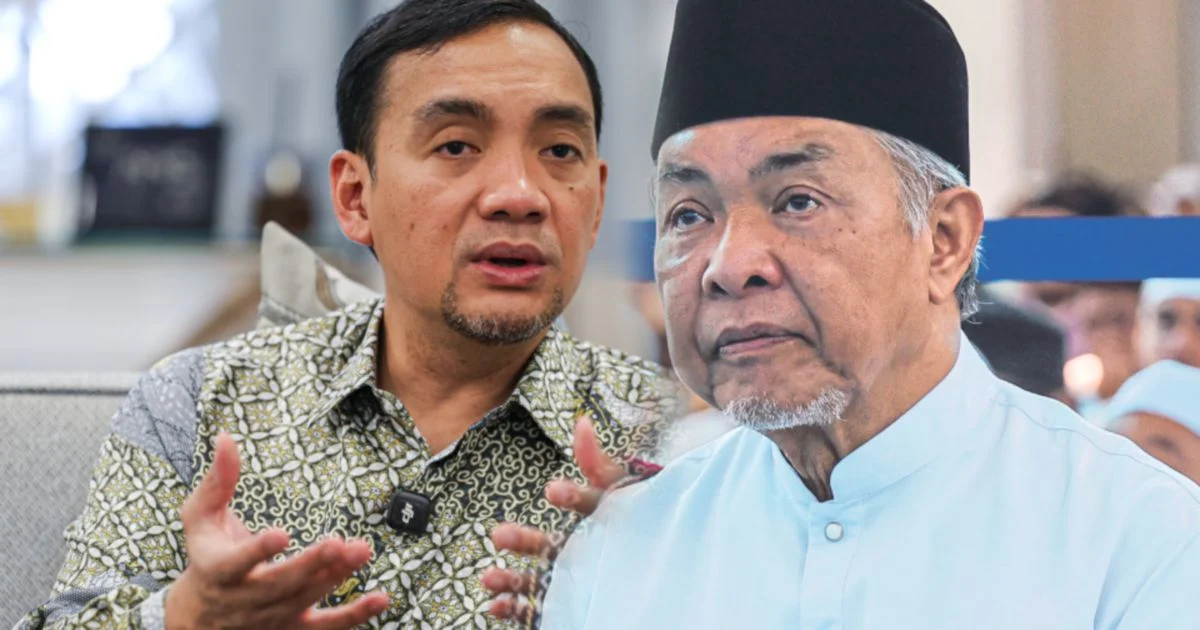
Deputy Prime Minister Datuk Seri Zahid Hamidi has moved to dispel mounting speculation about restrictions on the caretaker Johor Menteri Besar's movements, asserting that no formal instructions have been given to prevent Datuk Onn Hafiz Ghazi from accessing Federal Land Development Authority settlements across the state.
Zahid's clarification arrives amid heightened political tension in Johor as the state approaches crucial elections. The denial appears designed to quell rumours circulating within political circles that may have created friction between the caretaker administration and Felda stakeholders. Felda settlements represent a strategically important constituency base, with tens of thousands of settlers wielding considerable electoral influence in peninsular Malaysia. Any perception of political interference in these communities could trigger broader political complications across multiple parliamentary constituencies.
The caretaker Menteri Besar holds a critical position during the election campaign period, when constitutional conventions and political neutrality become especially important. Onn Hafiz, representing UMNO, carries significant visibility in Johor politics and continues to perform his administrative duties while the state campaign unfolds. His ability to move freely throughout the state, particularly in agriculturally dependent communities like Felda areas, remains essential to maintaining governmental continuity and delivering services to residents.
Felda has historically served as a cornerstone of rural development in Malaysia, settling landless farmers and their families on designated agricultural tracts. These communities remain predominantly composed of Malay and Bumiputera populations, making them pivotal in UMNO-led political strategies. The 2023 settlements encompassed hundreds of thousands of settler families across multiple schemes, representing not only an economic constituency but also a culturally significant segment of the electorate with deep historical connections to the party.
Zahid's explicit denial carries weight given his position as Deputy Prime Minister and his influence within the coalition government. His statement functions to reassure both Onn Hafiz and Felda leadership that no backroom manoeuvrings or factional disputes are compromising the caretaker's legitimate functions. By publicly addressing the rumour, the Deputy Prime Minister effectively attempts to insulate the administration from accusations of internal sabotage or political manoeuvring during the sensitive pre-election period.
The clarification also reflects broader sensitivities within UMNO regarding perceptions of unity and coherent governance. With multiple power centres within the party and coalition, explicit denials of such restrictions serve to project an image of organisational discipline and aligned messaging. This becomes particularly important when caretaker administrations face intense scrutiny, as both opposition and internal critics scrutinise any perceived irregularities in how governmental functions are performed.
Onn Hafiz's position as caretaker Menteri Besar requires him to maintain administrative normalcy across all state territories. Restricting his access to any significant region would fundamentally compromise his ability to oversee development projects, address community concerns, and ensure that governmental services reach all Johorians equitably. Felda settlements, spanning multiple districts, represent substantial populations requiring ongoing attention to agriculture, infrastructure, healthcare, and education services that fall under the state administration's purview.
The rumours themselves, regardless of their veracity, could have damaged confidence in Felda leadership and created unnecessary divisions between the caretaker government and settler communities. Such discord might have been exploited by opposition parties seeking to undermine UMNO's historical advantage among Felda voters. By moving swiftly to issue Zahid's denial, the coalition appears intent on controlling the narrative and preventing further speculation that might erode its position in agricultural constituencies crucial to electoral success.
Malaysia's electoral cycle demands careful management of inter-party and inter-factional relations, particularly when caretaker periods overlap with election campaigns. State administrations must demonstrate continued functionality while coalition partners manage their internal competitive dynamics. Zahid's statement appears calibrated to reassure multiple audiences simultaneously: the caretaker administration itself, Felda stakeholders, the broader UMNO membership, and potentially the general public watching for signs of governmental instability or political infighting.
The Johor elections remain significant for the coalition's broader political fortunes. The state has traditionally provided substantial parliamentary representation to UMNO and its partners. Maintaining unity, preventing rumours of internal restrictions on key administrators, and ensuring that governmental services flow normally to all communities—particularly Felda settlements with their historical ties to the ruling party—all contribute to the coalition's electoral strategy heading into the campaign's final phases.

