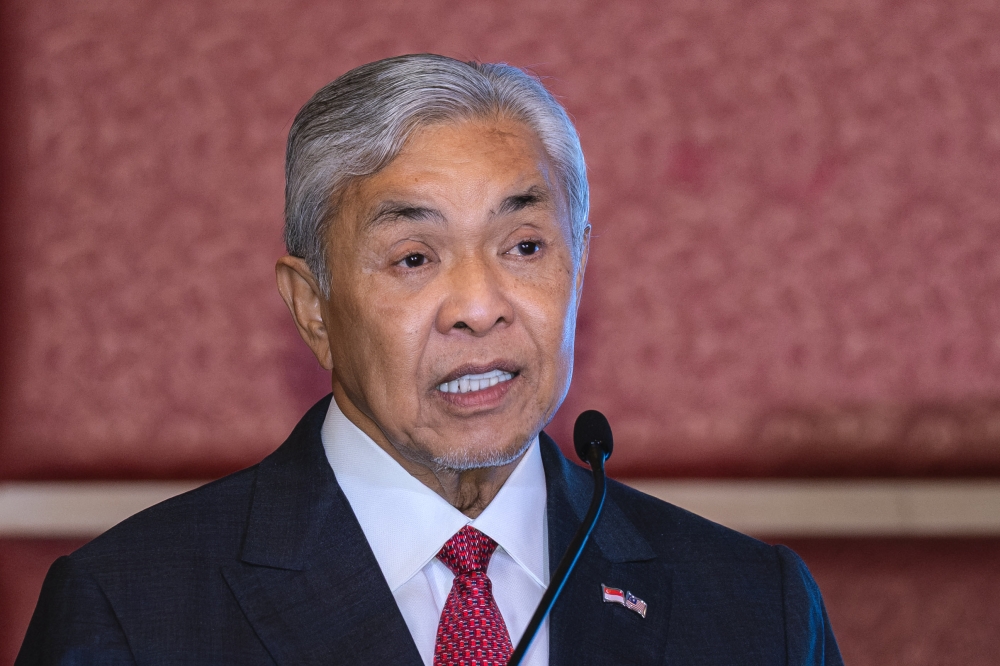
Umno president Datuk Seri Dr Ahmad Zahid Hamidi has emphatically rejected claims that his party has entered into any formal understanding with PAS concerning the formation or administration of the Negeri Sembilan state government. Speaking in Kuala Lumpur, Zahid underscored that no binding arrangement currently exists between the two Islamic-oriented parties, addressing persistent speculation about their political relationship in the peninsular state.
The denial comes amid ongoing discussions about coalition dynamics in Negeri Sembilan, where both Umno and PAS wield considerable political influence. Zahid's statement reflects the delicate balancing act required in Malaysian coalition politics, where parties must manage both formal agreements and informal understandings while maintaining their individual organisational autonomy and electoral appeal. His remarks suggest that any future cooperation remains contingent on circumstances rather than predetermined arrangements.
Zahid issued a pointed caveat regarding the fluidity of political conditions, emphasising that circumstances can fundamentally alter within relatively short timeframes. His warning that "goalposts can change anytime" underscores the inherent unpredictability of Malaysia's political landscape, where coalition arithmetic frequently shifts in response to internal party dynamics, electoral pressures, and broader national political developments. This acknowledgement reflects the reality that formal commitments often carry less weight than the practical necessities of maintaining legislative majorities.
The Umno leader's comments reveal an apparent reluctance to commit to public declarations about PAS cooperation that might constrain his party's tactical flexibility. By maintaining ambiguity about any agreement, Umno preserves its capacity to respond to changing political circumstances without suffering the reputational costs of breaking explicit commitments. This approach allows both parties to collaborate informally without the constraints imposed by public treaties or formal coalition frameworks.
For Malaysian observers, Zahid's position illustrates how Islamic Malay-based parties navigate relationships characterised by both ideological affinity and competitive rivalry. Umno and PAS share significant overlapping voter bases and broader communal interests, yet they remain fundamentally competing entities seeking to represent the same demographic constituencies. Their cooperation, when it materialises, typically reflects pragmatic calculations about electoral outcomes and legislative necessity rather than deep institutional integration.
The Negeri Sembilan situation carries particular significance given the state's strategic position in peninsular Malaysian politics. As a relatively smaller state government, Negeri Sembilan's administration involves considerably lower stakes than control of major states or federal parliament, potentially making it a testing ground for Umno-PAS collaboration without requiring either party to sacrifice significant political autonomy. However, any arrangement also carries risks if perceived as advantaging one party over another in terms of ministerial positions or developmental allocation.
Zahid's insistence on denying formal arrangements also reflects broader Umno strategic concerns. The party has historically cultivated a multiethnic coalition image centring on the Barisan Nasional framework, an identity that could be complicated by overtly close formal alignment with PAS, which maintains a more explicitly Islamic identity. By emphasising the absence of formal pacts, Zahid permits Umno to maintain its broader coalition narrative while cooperating pragmatically with PAS when mutually advantageous.
The volatility Zahid referenced reflects Malaysia's contemporary political environment, characterised by thin legislative majorities, shifting alliances, and frequent unexpected developments. The emergence of new personalities, internal party conflicts, or altered electoral dynamics can rapidly transform political calculations. Zahid's acknowledgement of this unpredictability represents a sophisticated understanding that public declarations often constrain rather than facilitate effective political management in such circumstances.
For Negeri Sembilan's political future, Zahid's statements suggest that any governance arrangements involving Umno and PAS will likely remain flexible and informal, susceptible to rapid revision as circumstances evolve. This approach permits both parties to claim independence while achieving practical cooperation, though it potentially creates governance uncertainty for state stakeholders requiring predictable policy frameworks. The state's residents and business community may find policymaking complicated by the underlying fluidity of administrative arrangements.
The broader implications extend beyond Negeri Sembilan to Malaysian coalition politics generally. Zahid's comments exemplify how major parties manage relationships characterised by simultaneous cooperation and competition, utilising strategic ambiguity to maximise flexibility while minimising public accountability. This approach enables rapid political recalibration but potentially destabilises expectations around governance stability and democratic accountability. Malaysia's political system appears increasingly reliant on such tactical manoeuvring rather than institutionalised frameworks defining party relationships with precision and clarity.
Moving forward, the Umno president's statements suggest that observers should anticipate continued fluid arrangements in Negeri Sembilan rather than stable formal coalitions. The practical effect means that governance configurations may shift more readily in response to changing circumstances, requiring state stakeholders to maintain vigilance regarding potential administrative transitions. For coalition partners, such flexibility permits opportunism but requires sophisticated political management to avoid perceptions of betrayal or opportunism that might damage broader party credibility.

