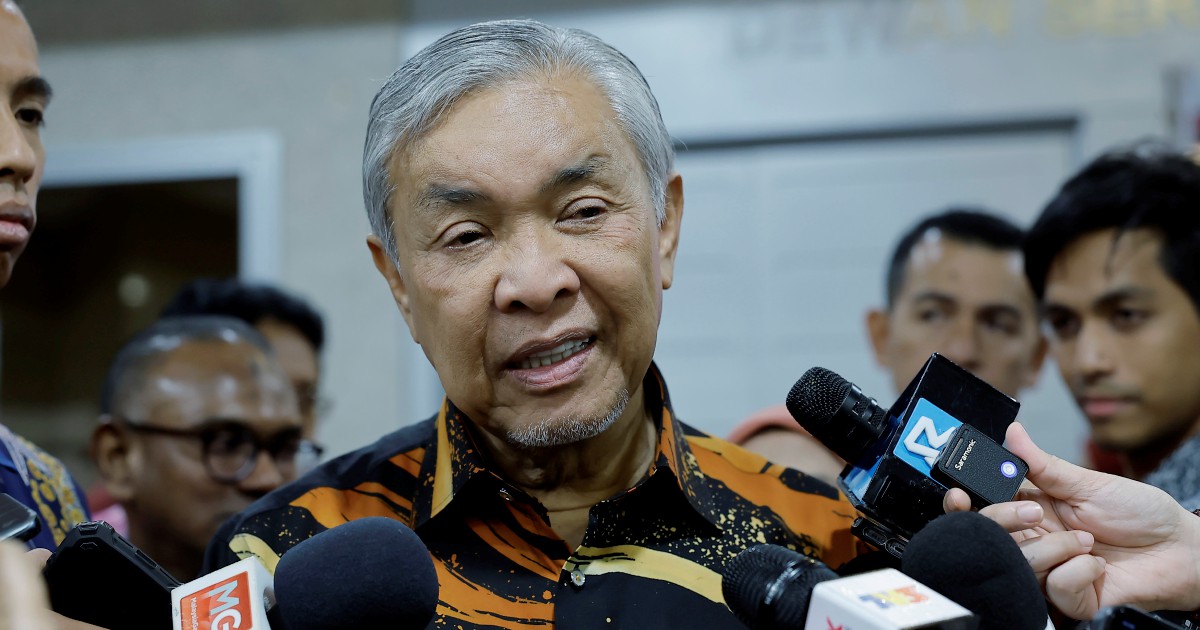
Datuk Seri Dr Ahmad Zahid Hamidi, the chairman of Barisan Nasional, has firmly rejected suggestions that external forces played a role in determining who became Negri Sembilan's Menteri Besar, dismissing such concerns as naive observations from those unfamiliar with how Malaysia's political machinery actually functions.
The BN leader's comments, made in Putrajaya, came amid ongoing scrutiny regarding the selection process for the state's top executive position. Zahid's characterisation of the criticism as "the ramblings of someone who does not understand political realities" reflects a broader tension within Malaysian politics between procedural transparency and behind-the-scenes negotiations that characterise state-level leadership transitions.
The appointment of a Menteri Besar remains one of the most closely watched processes in Malaysian politics, particularly when changes occur in state administrations. In Negri Sembilan, a state that has traditionally leaned towards Barisan Nasional's influence, any shift in leadership carries implications not just for the state but for the broader coalition's stability and credibility. The allegations of external interference suggest that certain quarters question whether the appointment reflected genuine grassroots consensus or was orchestrated by higher political authorities.
Zahid's defensive posture indicates that the controversy may have struck a nerve within BN's leadership. Rather than providing detailed explanations of the selection mechanism, the veteran politician chose to discredit critics by questioning their understanding of political processes. This rhetorical approach is common in Malaysian politics when officials face uncomfortable questions about decision-making that lacks public visibility.
The incident highlights a persistent challenge facing Malaysian political institutions: balancing the formal rules of governance with the informal networks and power dynamics that often determine outcomes. In this context, Zahid's remarks suggest he views questions about the appointment process as fundamentally misguided, implying that those raising concerns simply lack the sophistication to comprehend how such decisions are made at the highest levels of the coalition.
For observers across Southeast Asia, Malaysia's state-level politics demonstrate how coalition governance can create opacity around key appointments. The BN, as a multi-party alliance representing various ethnic and regional interests, must negotiate consensus among its components when critical positions become vacant. These negotiations rarely unfold in public, making criticism difficult to evaluate fairly and creating space for speculation about undue influence.
The Negri Sembilan situation also underscores the importance of state-level politics in Malaysia's broader political economy. While national politics dominate headlines, state administrations control significant resources and patronage networks. The Menteri Besar position, in particular, wields considerable influence over development contracts, land distribution, and resource allocation, making it a prize worth competing for within coalition politics.
Zahid's remarks can be understood partly as an attempt to reassert BN's authority over its own internal processes. By suggesting that criticism stems from misunderstanding, he implicitly argues that the party coalition possesses the legitimacy and competence to manage its own affairs without external judgment. This defensive stance may resonate with BN stalwarts but could reinforce perceptions among the broader public that the coalition prioritises internal consensus over transparent processes.
The controversy also reflects wider patterns in Malaysian politics where state-level transitions often generate questions about procedural integrity. Whether such concerns are warranted in this particular case remains unclear, but the willingness of critics to voice them suggests growing expectations for greater transparency in how senior political positions are filled.
For Malaysian readers and policymakers, Zahid's comments serve as a reminder that coalition politics at the state level remains largely opaque, governed by informal agreements and internal power balances rather than publicly visible criteria. This reality, while perhaps understood by seasoned political observers, increasingly sits uncomfortably with modern expectations of accountability and openness in public institutions.

