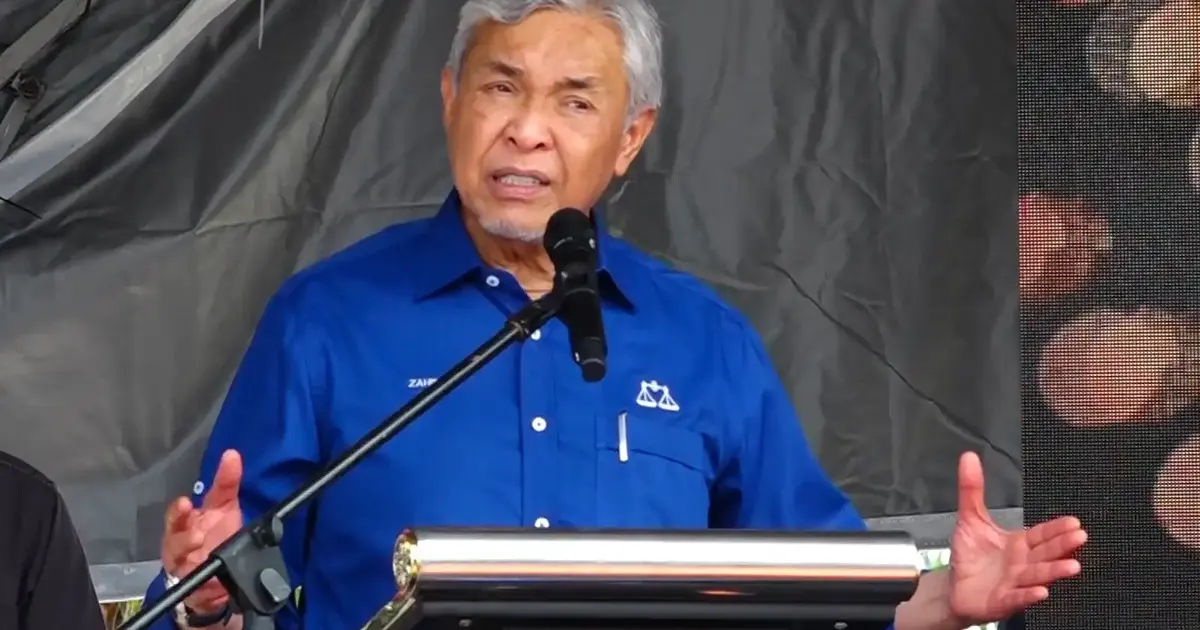
Ahmad Zahid Hamidi, the president of Barisan Nasional, has moved swiftly to quash reports circulating within political circles suggesting high-level talks between Malaysia's major political coalitions. The veteran politician stated categorically that he has no awareness of any meeting involving BN, Perikatan Nasional, GPS, and Gabungan Rakyat Sabah, effectively dismissing what would have represented a significant realignment in the nation's political landscape.
The denial comes at a particularly sensitive moment in Malaysian politics, where coalition dynamics remain fluid and subject to intense speculation. Such unconfirmed reports of inter-coalition dialogue typically trigger concerns among political observers about potential shifts in parliamentary arithmetic and government stability. By moving to publicly repudiate the claims, Zahid appears intent on controlling the narrative and preventing damaging rumours from gaining traction among party members and the broader electorate.
Zahid's statement carries particular weight given his position as BN president and his influence within the coalition machinery. The Umno leader emphasised that Barisan Nasional maintains unwavering commitment to supporting the Anwar Ibrahim-led Madani government, a position that has defined the coalition's political stance since the federal government's formation. This reiteration serves multiple purposes: it reassures coalition partners of BN's stability, signals consistency to potential investors monitoring political risk, and reinforces the narrative that major institutional disruptions to the government are not imminent.
The broader significance of such denials in Malaysian politics cannot be understated. Previous coalition configurations have undergone dramatic transformations with minimal public warning, making political observers perpetually alert to early indicators of shifting alliances. When multiple coalitions engage in simultaneous negotiations, the mathematical possibilities for government formation expand considerably, creating uncertainty about which arrangement might ultimately prevail. By denying these talks exist at all, Zahid attempts to eliminate this uncertainty from the political consciousness.
BN's position within the current government structure remains distinctive. Unlike coalition partners directly embedded in the cabinet, BN functions as an external supporter—a configuration that grants certain strategic flexibility but also occasional instability. The party leadership has been careful to maintain this arrangement while simultaneously projecting reliability to the government, walking a delicate political tightrope that requires constant reassurance from the top echelons of party leadership.
The grouping mentioned in the unconfirmed reports represents an intriguing combination of political forces. Perikatan Nasional, led by Muhyiddin Yassin, represents an alternative Malay-Muslim coalition offering a contrasting political vision. GPS, as Sarawak's dominant political force, brings significant parliamentary influence from East Malaysia, while GRS commands considerable representation from Sabah. Any combination involving these players alongside BN would theoretically reconfigure parliamentary mathematics substantially, making such speculation noteworthy enough to warrant immediate clarification.
Zahid's explicit commitment to backing the Madani government through the next general election, expected around 2027 if the current term runs its full course, represents a forward-looking strategic declaration. This timeframe provides a clear endpoint for BN's current arrangement, allowing the coalition to maintain its present course while implicitly acknowledging that recalibrations may occur following the electoral cycle. Such declarations serve important functions in managing expectations and reducing short-term political turbulence.
The political landscape facing BN reflects broader regional trends affecting ruling coalitions across Southeast Asia. Coalition stability, particularly when ruling coalitions consist of ideologically diverse partners, remains perpetually challenged by internal tensions and opportunistic realignments. BN's experience navigating these dynamics—having governed Malaysia for decades before being temporarily displaced in 2018—positions the coalition with institutional memory about both coalition maintenance and the dangers of complacency.
Internal BN dynamics have themselves undergone considerable evolution. Umno's relationship with MIC and MCA has transformed significantly over recent decades, reflecting broader demographic and political shifts within the Malaysian electorate. The coalition's current positioning as a supporting force rather than a leading coalition member represents an adjustment to new political realities, requiring careful messaging to maintain member confidence and cohesion.
Looking ahead, Zahid's statements appear designed to project stability and predictability at a moment when Malaysian politics might otherwise generate anxiety. By firmly denying destabilising speculation and reiterating concrete commitments to the present government arrangement, BN's leadership seeks to establish a credible political baseline. This approach acknowledges that while political realignments remain perpetual possibilities in Malaysia's fluid landscape, any such recalibration would require explicit announcements rather than quietly emerging from behind-the-scenes talks. For now, the official position remains steadfast: BN remains committed to its current course.

