Political realignment in Malaysia's Islamic-conservative bloc appears imminent, with indications that Umno and PAS are moving towards reconstructing their alliance despite years of acrimony. Umno Vice-President Puad Zarkashi has publicly suggested that both parties possess sufficient common ground and near-term political incentives to overcome the historical tensions that have defined their relationship since their separation in the late 1990s. The potential rapprochement signals a significant shift in the country's political dynamics, with implications for the federal government's stability and future coalition-building.
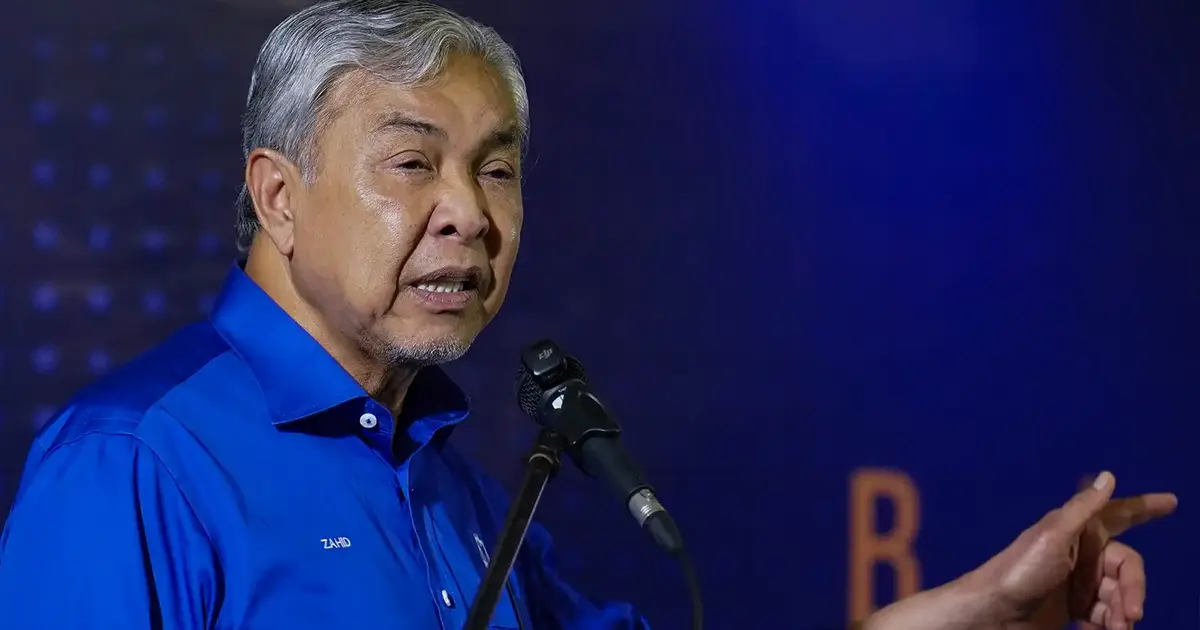
At the heart of the emerging discussion sits Zahid Hamidi, Umno's president, who is reportedly positioning himself as a principal candidate for the prime ministerial office should a fresh partnership materialise. This ambition reflects broader calculations within Umno's leadership regarding the party's electoral prospects and the distribution of ministerial portfolios in any reconstructed coalition. Zahid's pursuit of the premiership represents a strategic move to consolidate support within Umno's fractious membership while simultaneously demonstrating to PAS that Umno remains a credible and attractive partner for future government formation.
Puad's characterisation of both parties' objectives as "short-term goals" is particularly instructive in understanding the pragmatic rather than ideological drivers of this potential alignment. Rather than suggesting a principled merger based on shared policy visions or religious governance frameworks, the indication points towards tactical calculations focused on the next electoral cycle and immediate access to executive power. For Umno, facing declining electoral fortunes in recent years, a coalition with PAS—which has demonstrated substantial grassroots mobilisation capability—could prove electorally advantageous. For PAS, which has been outside federal government structures following the collapse of the Pakatan Harapan administration in 2020, a return to cabinet positions and federal resource distribution remains an overriding priority.
The historic fracture between Umno and PAS originated from fundamental disagreements over Islamic governance, the role of Islamic courts, and the trajectory of Islamic law implementation in Malaysia. Their divergence created parallel organisational structures and competing claims to represent Muslim-majority Malaysia's interests. The breakdown that Puad references reflects not merely electoral rivalry but theological and institutional disputes that have proven remarkably durable across more than two decades. That these organisations are contemplating renewed cooperation despite such profound historical differences underscores how thoroughly electoral mathematics and distributional incentives can override ideological positioning in Malaysian politics.
For Malaysian voters and regional observers, the potential reconstruction of an Umno-PAS axis carries substantial consequences. Such an alignment would reshape parliamentary arithmetic, potentially providing a stable coalition foundation for federal governance while simultaneously concentrating executive authority within Islamist and conservative party formations. The implications for non-Muslim communities, secular policy advocacy, and Malaysia's multicultural consensus merit serious consideration. Additionally, the trajectory of this potential partnership will influence how other political formations—particularly Pakatan Rakyat components and other Bumiputera-focused parties—position themselves in anticipation of the next general election.
Zahid's elevation to the prime ministerial office through such a mechanism would also carry personal and institutional significance. His previous tenure as Home Minister and current role as Umno president have been marked by considerable controversy, including ongoing legal proceedings. His ascension to the premiership would represent a dramatic reversal of political fortune and would signal Umno's confidence in his leadership credentials despite these challenges. Within the broader context of Malaysian politics, where ministerial appointments frequently precede or follow legal disputes, Zahid's potential appointment would continue patterns of executive-judicial dynamics that characterise the contemporary political landscape.
The timing of these signals is noteworthy, arriving at a juncture when the current federal coalition—comprising Pakatan Rakyat and Barisan Nasional elements—faces internal strains and questions regarding its long-term viability. By publicly articulating the possibility of an Umno-PAS partnership now, Puad and associated Umno figures are simultaneously signalling to their respective party memberships that alternative governmental configurations remain available and that current coalition arrangements should not be regarded as permanent. This messaging functions as both reassurance to Umno's base and a reminder to PAS that meaningful power-sharing opportunities exist outside their current political isolation.
The question of whether such a partnership can materialise remains substantively open. Past attempts at Umno-PAS coordination have foundered on issues of seat allocation, ministerial distribution, and fundamental disagreements over implementation of Islamic governance principles. PAS has periodically advocated for more expansive Islamic law provisions that Umno has resisted, particularly regarding enforcement mechanisms and the scope of Sharia court jurisdiction. Whether these underlying tensions can be subordinated to short-term governmental ambitions remains uncertain, though Puad's remarks suggest at minimum that exploratory discussions are underway within respective party leadership circles.
Regionally, such a reconfiguration would carry implications for Malaysia's position within Southeast Asia. An Umno-PAS coalition might pursue more assertively Islamic-inflected foreign policy positions, potentially affecting Malaysia's relationships with non-Muslim-majority neighbours and regional organisations. These considerations extend beyond domestic electoral calculations to encompass Malaysia's strategic positioning, trade relationships, and cultural diplomacy within an increasingly diverse and secular-trending region.
For Malaysian businesses, investors, and international observers monitoring political stability, the emergence of credible possibilities for substantial coalition realignment introduces further uncertainty into long-term governance projections. Stability calculations that currently assume continuity of existing coalition arrangements would require revision should an Umno-PAS partnership move from speculation to implementation. The investment community's response to such developments will reflect assessments regarding policy consistency, regulatory predictability, and executive continuity under new leadership configurations.

