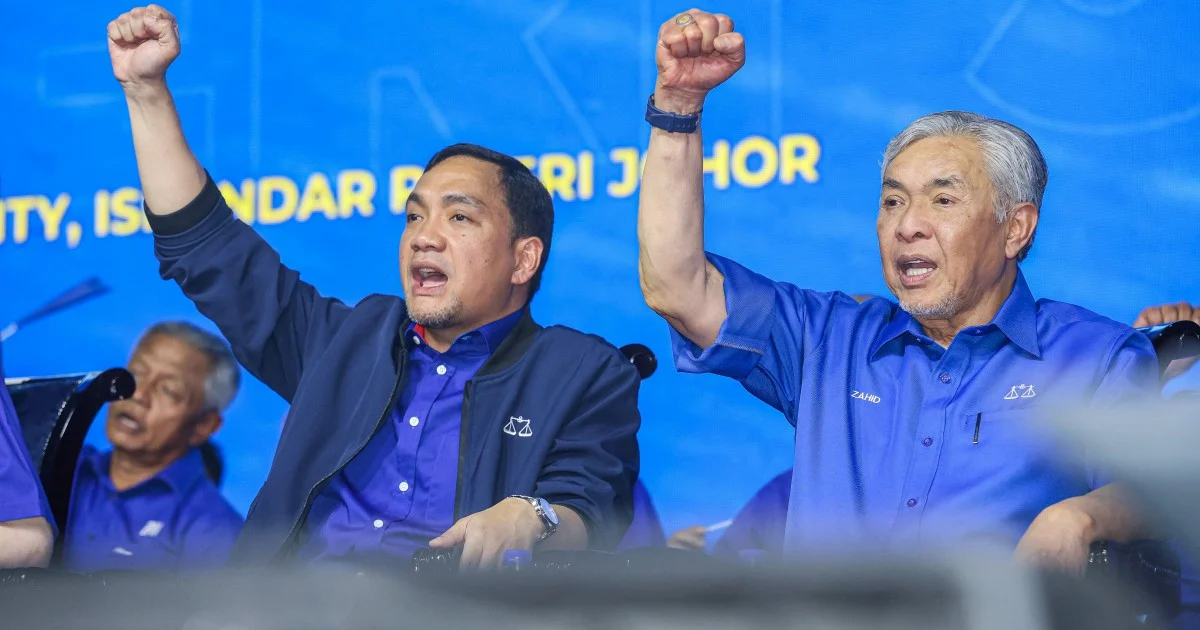
Barisan Nasional's leadership has signalled a pragmatic approach to coalition-building ahead of the Johor state election, with party chairman Datuk Seri Dr Ahmad Zahid Hamidi leaving space for informal dialogue with potential partners. Speaking in Simpang Renggam, Zahid indicated that backdoor discussions between lower-ranking officials from BN, PAS, and Parti Wawasan Negara could proceed without triggering formal negotiations or commitments at the top level. This carefully calibrated stance reflects the delicate political calculations facing Malaysia's premier coalition as it seeks to consolidate support in a state where political realignments have become routine.
The signal from Zahid represents a shift in rhetorical positioning for BN, which has historically maintained strict boundaries around coalition partnerships. Rather than issuing an outright rejection of engagement with PAS and Wawasan, the BN chief has created interpretive flexibility that allows party operatives at branch and divisional levels to gauge compatibility and explore common ground. This stratified approach to political negotiation serves a dual purpose: it enables informal intelligence-gathering without committing the coalition to public partnerships that might alienate existing supporters or create internal friction.
Johor's political landscape has undergone considerable transformation over recent election cycles, with voter preferences shifting across demographic lines and local governance concerns taking precedence over national political narratives. The state has emerged as a crucial testing ground for coalition mathematics in Malaysian politics, where no single bloc commands overwhelming dominance. BN's traditional strength in Johor, built on decades of incumbency and organisational depth, has faced mounting pressure from DAP's urban consolidation and PAS's appeal to religious and rural constituencies. The potential involvement of Wawasan Negara, a relative newcomer attempting to carve out political space, adds another variable to an already complex equation.
PAS has evolved into a formidable political force in Johor, particularly among Malay-Muslim voters in smaller towns and rural areas. The Islamic party's grass-roots organisation and appeal to religious identity have created electoral dynamics that BN cannot dismiss. However, direct cooperation between BN and PAS at the state level has historically generated controversy, with both parties facing criticism from their respective support bases for perceived ideological compromises. Lower-level talks circumvent these sensitivities by allowing technical discussions on seat allocations, campaign coordination, or policy areas of mutual interest without requiring public endorsement from party leadership.
Wawasan Negara's emergence as a potential coalition partner reflects the increasing fragmentation of Malaysia's political landscape. The relatively nascent party has attempted to position itself as an alternative to both UMNO-led conservatism and PAS-led Islamism, though its electoral footprint remains limited. Its inclusion in Zahid's remarks suggests BN strategists are casting a wide net, evaluating partnerships based on pragmatic electoral calculus rather than ideological consistency. The party's potential value lies less in delivering substantial vote banks than in denying votes to competitors or capturing specific demographic niches.
The timing of Zahid's statement carries significance, arriving at a juncture when political parties typically intensify preparations for state-level contests. Johor's next state election, while not imminent, looms large in the political calendar and commands attention from federal leadership and party strategists nationwide. By opening channels for exploratory talks now, BN positions itself as an adaptable force capable of seizing electoral opportunities while maintaining flexibility. This approach contrasts with more rigid coalition models that commit parties to predetermined arrangements regardless of shifting ground-level dynamics.
For DAP and Pakatan Harapan, Zahid's willingness to engage with PAS and Wawasan presents both complications and potential opportunities. Any fragmentation within opposition ranks could benefit the ruling coalition, particularly if PAS decides to contest independently or in partnership with BN rather than maintaining solidarity with DAP. Conversely, if such talks translate into formal cooperation, it could consolidate the anti-opposition vote and create a formidable political challenge in Johor. The fluidity of these calculations underscores how Malaysian electoral politics have become increasingly transactional and district-specific rather than nationally unified.
Grass-roots BN operatives in Johor have reportedly indicated interest in understanding PAS's strategic intentions and potential overlaps in electoral interests. Such informal conversations, whether conducted through party machinery or personal networks, provide valuable intelligence without exposing senior leaders to accusations of political opportunism. This decentralised approach to coalition exploration has become standard practice in Malaysian politics, allowing parties to maintain public distance while enabling practical cooperation. The distinction between formal and informal arrangements has become crucial in managing political perceptions.
Economic and governance concerns dominate Johor voter priorities, a reality that shapes how political parties frame potential alliances. BN can emphasise continuity and development track records, PAS can highlight religious governance and social welfare priorities, while Wawasan might stress clean administration and meritocratic governance. Lower-level discussions permit exploration of how these distinct platforms might coexist or complement each other without requiring full ideological alignment. Such pragmatism has become essential in winning over swing voters who prioritise outcomes over partisan loyalty.
Zahid's measured language reflects BN's understanding that overtures towards PAS and Wawasan, if executed clumsily, could alienate moderate voters or trigger internal party tensions. By emphasising that discussions would occur at lower organisational levels, he creates space for manoeuvre while maintaining deniability about the coalition's true intentions. This political choreography, while perhaps opaque to casual observers, operates according to well-established protocols within Malaysian party politics. What matters ultimately is whether such talks yield tangible electoral benefits or remain mere exploratory exercises.
The broader implications for Malaysian federalism and democratic practice warrant consideration. Coalition-building based on seat-by-seat calculations and informal understandings, while potentially reflective of electoral realities, can obscure genuine policy differences from voters. As parties become increasingly fluid in their partnerships and less bound by ideological consistency, voters face growing difficulty assessing long-term governance directions. Zahid's openness to lower-level talks with PAS and Wawasan exemplifies these dynamics, demonstrating both the flexibility and the opacity that characterise contemporary Malaysian electoral politics in an era of coalition fragmentation.

