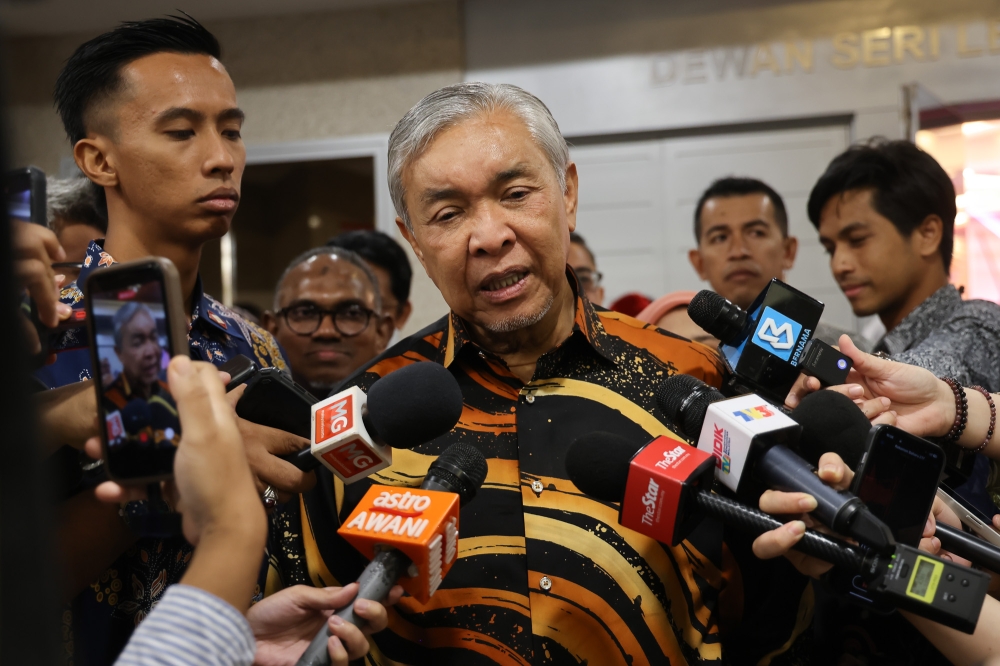
Deputy Prime Minister Ahmad Zahid Hamidi has drawn a firm line on governance standards within Malaysia's Islamic pilgrimage fund, declaring that those responsible for mismanagement at Tabung Haji will face the full consequences of their actions. Speaking in Putrajaya on August 6, Zahid underscored that both Barisan Nasional and Umno maintain an uncompromising stance toward fiduciary breaches, signalling the ruling coalition's commitment to restoring institutional credibility after years of scrutiny surrounding the fund's operations.
Tabung Haji, formally known as Lembaga Tabung Haji, holds particular significance within Malaysia's financial and social landscape as the nation's premier savings mechanism for Muslims intending to perform the Hajj pilgrimage. The fund manages billions of ringgit in deposits from nearly three million account holders, making its governance a matter of profound public importance. Beyond its religious dimension, Tabung Haji represents a critical savings vehicle for millions of middle and lower-income Malaysians, particularly in rural areas where the fund often serves as the primary conduit for long-term financial planning.
Zahid's statement arrives against a backdrop of mounting public concern regarding institutional oversight and accountability within government-linked entities. The Deputy Prime Minister's emphasis on consequences reflects broader political pressure to demonstrate competent stewardship of public assets, particularly following successive years in which governance lapses at major institutions have dominated domestic discourse. By articulating clear expectations for accountability, Zahid appears to be positioning Umno and BN as guardians of institutional integrity, a rhetorical posture aimed at rebuilding voter confidence after periods of financial mismanagement controversies.
The pledge to pursue wrongdoers carries implications extending beyond Tabung Haji itself. Malaysia's institutional landscape includes numerous government-linked companies and funds where accountability mechanisms have historically lacked transparency or enforcement rigour. Zahid's statement potentially signals a willingness to subject even major entities to scrutiny, though observers note that translating such declarations into sustained action has proven challenging across Malaysian governance structures. The credibility of such pronouncements depends significantly on subsequent investigative and legal processes that demonstrate genuine consequences for identified culprits.
For individual depositors and the broader Muslim population relying on Tabung Haji for pilgrimage planning, assurances of accountability hold tangible personal implications. Concerns about institutional mismanagement directly affect confidence in the fund's ability to protect deposits and deliver promised returns. Any erosion of public trust translates into reduced new contributions and potential withdrawal pressures, ultimately constraining the fund's operational capacity. Zahid's assertion thus addresses legitimate public anxieties about the safety and proper management of their accumulated savings.
The timing of this statement within Malaysia's political cycle merits consideration. With electoral competition between coalition partners remaining active and public scrutiny of governance continuing, senior leaders periodically reaffirm commitments to accountability as a means of demonstrating responsive governance. However, cynical observers note that declarations of zero tolerance frequently precede periods of selective enforcement or political compromise, particularly when higher-ranking individuals face potential exposure. The actual trajectory of any investigation into Tabung Haji management will ultimately determine whether Zahid's words translate into substantive institutional reform.
Regionally, Malaysia's approach to governance accountability within Islamic financial institutions carries significance for neighbouring countries managing similar pilgrimage funds and Islamic banking entities. Malaysia's regulatory framework for Tabung Haji, including oversight mechanisms under the Ministry of Finance and Suruhanjaya Sekuriti, theoretically provides checks against mismanagement. Whether these mechanisms function effectively depends partly on political will and resource allocation, factors that Zahid's statement implicitly addresses by emphasizing BN and Umno's determination to prioritize accountability.
The distinction between rhetorical commitment and institutional implementation remains critical. Previous episodes in Malaysian governance have witnessed pronounced statements regarding accountability followed by inconclusive investigations or outcomes perceived as insufficiently rigorous. Building genuine public confidence requires not merely declarations of principle but visible, transparent processes culminating in proportionate consequences applied consistently regardless of individuals' political connections or seniority. The Tabung Haji situation thus represents a test case for whether contemporary Malaysian governance can sustain accountability commitments across the entire institutional hierarchy.
Moving forward, the substantive challenge lies in identifying specific instances of mismanagement, establishing clear causal chains linking decisions to outcomes, and determining appropriate remedial or punitive measures. Tabung Haji's complexity as a financial institution managing millions of individual accounts and substantial investment portfolios creates inherent vulnerabilities to both inadvertent errors and deliberate misconduct. Distinguishing between categories of failure and applying appropriately calibrated responses demands sophisticated institutional capacity and sustained investigative commitment.
Zahid's statement ultimately reflects contemporary Malaysian political discourse wherein governance credibility has become a central electoral commodity. Both ruling and opposition coalitions regularly invoke accountability as a organizing principle, yet genuine institutional reform requires moving beyond verbal affirmations toward structural changes, transparent enforcement mechanisms, and demonstrated consequences. For Malaysian depositors in Tabung Haji and citizens concerned with institutional probity more broadly, the weeks and months following such pronouncements will prove determinative in establishing whether this latest accountability pledge represents genuine commitment or simply another iteration of familiar political rhetoric.

