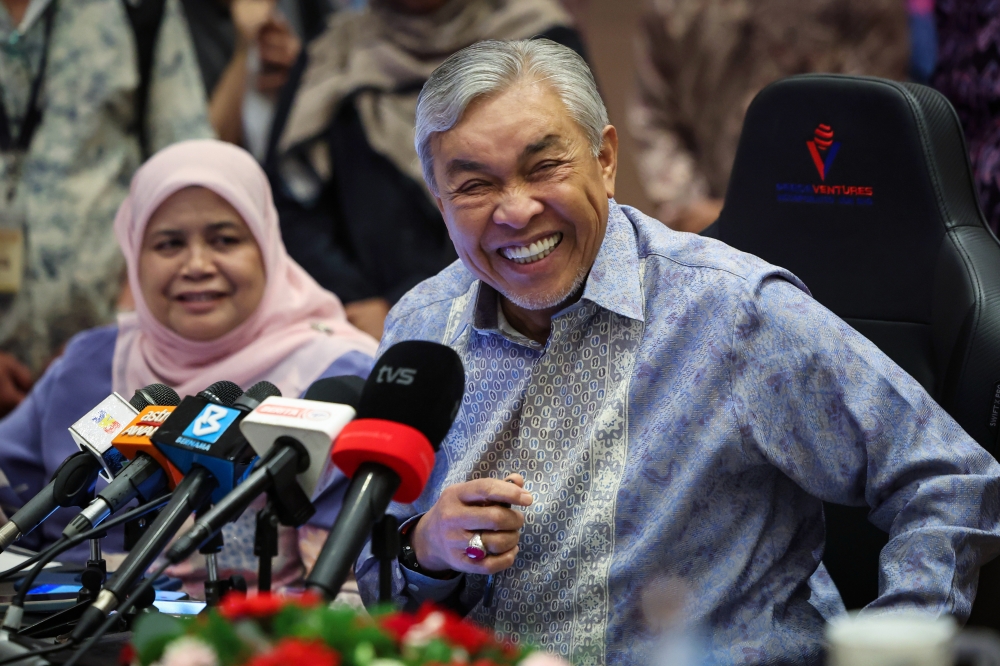
Deputy Prime Minister Zahid Hamidi has moved to quash persistent speculation about Barisan Nasional's future by declaring the coalition's unwavering commitment to the Unity Government framework through the conclusion of the current parliamentary session. Speaking in George Town, Zahid employed colourful language to underscore the finality of BN's position, stating there would be no sudden shifts in political allegiances or manoeuvres reminiscent of regional power plays. His remarks carry particular weight given ongoing chatter within Malaysia's political circles about potential realignments following the 2022 formation of the Unity Government.
The pronouncement addresses mounting conjecture that has periodically surfaced regarding BN's intentions, particularly as the coalition weighs its strategic options heading towards the next general election. Such rumours have occasionally pointed towards hypothetical scenarios involving alternative coalitions or political arrangements, prompting the need for explicit clarification from senior leadership. Zahid's intervention signals that BN intends to maintain its current course without deviation, providing reassurance to coalition partners and investors concerned about political stability.
Barisan Nasional's participation in the Unity Government has represented a significant recalibration of Malaysian politics since 2022. The coalition, historically the dominant political force and government for decades, accepted a supporting role following electoral setbacks in recent years. This shift required substantial adjustment for an organisation accustomed to leading administrations. By anchoring BN's commitment through the end of the current 15th Parliament, Zahid seeks to establish predictability in an otherwise fluid political environment.
The timing of Zahid's statement reflects broader concerns about governance continuity. Malaysia's economic recovery and international standing have benefited from political stability, a commodity in short supply historically. Investors and trading partners have expressed appreciation for the relative calm in recent years, and sudden political disruptions could undermine confidence in the nation's institutions. Zahid's declaration offers assurance that Malaysia's political leadership recognises the value of maintaining arrangements that have facilitated developmental progress.
Within the broader Southeast Asian context, Malaysia's unity government model has attracted international attention as a potential template for managing highly fragmented political landscapes. The arrangement, bringing together ideologically diverse parties under a single administration, requires constant negotiation and compromise. Several other regional nations grappling with similar polarisation have observed Malaysia's experience. Zahid's firm commitment thus carries implications extending beyond domestic boundaries, signalling that the model can deliver stability despite its inherent complexities.
The reference to avoiding "Bangkok Move" and "Dubai Move" appears designed to preempt any speculation about emergency constitutional measures or extraparliamentary manoeuvres. These oblique allusions suggest awareness within BN leadership of alternative scenarios that might theoretically present themselves, while simultaneously foreclosing any possibility of pursuing such paths. The categorical language employed leaves minimal room for reinterpretation or future backtracking.
For the constituent parties within the Unity Government, Zahid's statement provides institutional anchoring for planning and resource allocation through the remainder of the parliamentary term. Such clarity enables component coalitions to develop coherent legislative agendas and campaign strategies without constant anxiety about potential collapse. Political uncertainty, while sometimes advantageous tactically, ultimately diminishes governmental effectiveness and institutional development.
BN's position within the coalition has afforded the party considerable leverage in portfolio distribution and policy influence despite its status as a supporting rather than leading partner. The coalition structure has enabled BN to maintain relevance and credibility following electoral declines. Zahid's reaffirmation suggests leadership confidence that this arrangement, while perhaps not ideal in historical terms, offers BN sustainable pathways to rebuild organisational strength and electoral competitiveness.
Looking ahead to eventual parliamentary dissolution and subsequent elections, Zahid's commitment through the current term provides a defined timeline for coalition partners to prepare their respective strategies. Unlike situations where political alliances remain perpetually uncertain, this creates space for deliberate planning. Parties can assess their positions, consolidate support bases, and develop electoral narratives without constant distraction from coalition-stability concerns.
The emphasis on unity government stability also reflects recognition that Malaysia's development agenda requires sustained governmental focus. Infrastructure projects, economic reforms, and institutional strengthening all benefit from uninterrupted policy implementation. Premature coalition collapse would inevitably redirect attention and resources toward political management rather than substantive governance. Zahid's declaration thus frames political stability not merely as tactical advantage but as prerequisite for national development.
Regional observers will likely interpret Zahid's statement as confirmation that Malaysia's political establishment, despite historical propensities for dramatic shifts, has consciously chosen continuity as preferable to volatility. This represents noteworthy evolution in Malaysian political culture, even if driven partly by pragmatic recognition that fractious environments serve no party's long-term interests. Whether such commitments survive contact with unforeseen political events remains uncertain, but the deputy premier's categorical pronouncement establishes clear expectations and benchmarks for assessing governmental performance going forward.

