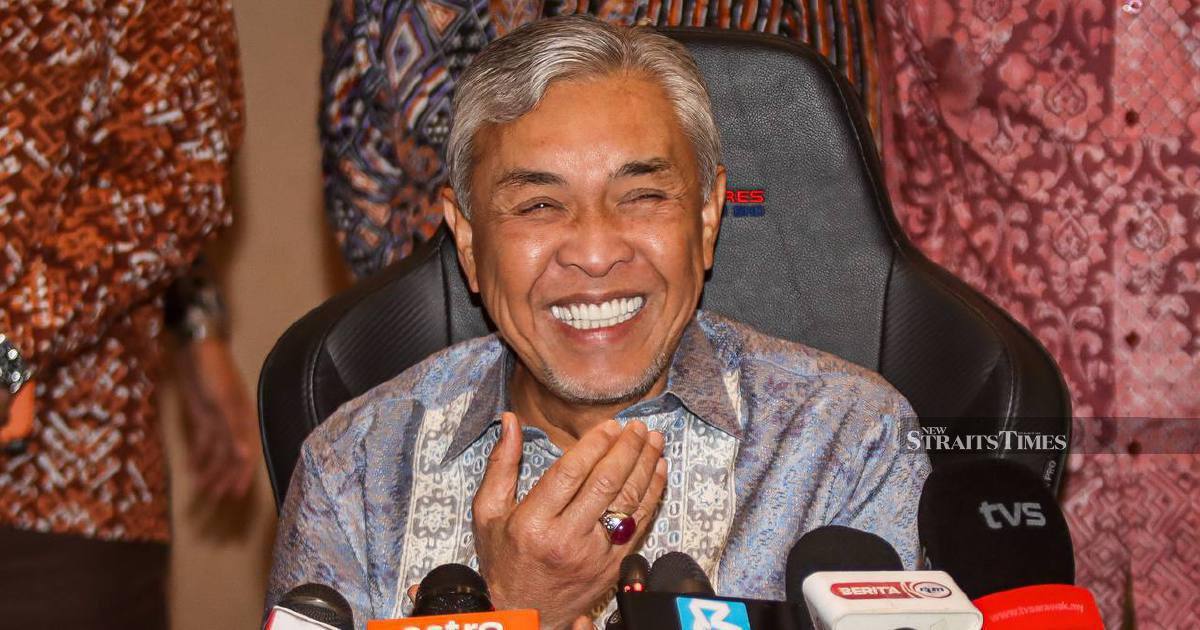
Malaysia's top two leaders engaged in an exchange of traditional Malay poetry on Wednesday, with Deputy Prime Minister Datuk Seri Dr Ahmad Zahid Hamidi composing a four-line pantun in response to Prime Minister Datuk Seri Anwar Ibrahim's recent verse in George Town. The public poetic dialogue underscores the continued prominence of classical Malay literary forms in contemporary political discourse, a practice with deep roots in the nation's cultural and diplomatic traditions.
The pantun, a distinctly Malay verse form requiring specific rhyme schemes and a pithy final couplet conveying wisdom or commentary, has historically served as a medium for political figures to communicate nuanced messages on governance and national affairs. Zahid's composition, centred on themes of shelter and adversity—specifically referencing a roof and storm—appears crafted to address broader questions about leadership resilience during challenging times. This choice of imagery suggests a subtle engagement with the substance of Anwar's original message rather than a merely ceremonial response.
The exchange represents more than mere cultural formality. By selecting pantun as the vehicle for leadership communication, both officials acknowledge and reinforce the legitimacy of traditional Malay-Muslim intellectual frameworks in statecraft. This carries particular resonance in Malaysia's multicultural context, where such cultural displays often carry political weight and meaning, signalling commitment to Malay-Muslim heritage while simultaneously projecting sophistication and erudition to domestic and international audiences.
Anwar's initial venture into poetic diplomacy, with its emphasis on unity, speaks to the Prime Minister's broader governance agenda centred on inclusive nation-building. His choice to initiate this exchange set the rhetorical tone, positioning unity as a cornerstone principle. Zahid's response, by pivoting toward themes of durability and weathering storms, may be interpreted as either supportive reinforcement or a subtle redirection toward considerations of institutional strength and capable governance. The metaphorical landscape of the pantun—houses standing firm against tempests—carries implications about how the current administration navigates challenges.
For Malaysian observers, such exchanges illuminate the communication styles favoured by the country's executive. Rather than relying solely on press conferences or formal statements, pantun exchanges allow leaders to address constituencies through culturally resonant channels. This approach proves particularly effective in reaching older demographics and those deeply embedded in traditional Malay cultural frameworks, a significant electoral consideration in Malaysian politics.
The public nature of this dialogue also serves diplomatic functions. By demonstrating ease and familiarity with classical Malay forms, both leaders signal cultural confidence and connection to Malaysia's Islamic heritage, considerations important for the composition of their political coalitions. In an era where Malaysian politics frequently involves complicated negotiations between different ethnic and religious communities, such symbolic gestures carry weight in maintaining coalition stability and popular legitimacy.
Historically, pantun has functioned as a vehicle for leaders to communicate on matters both serious and ceremonial. The form's requirements—the seemingly frivolous opening couplets that set up the meaningful concluding pair—create a structure allowing political messages to be embedded within cultural performance. This duality permits leaders to address multiple audiences simultaneously, from cultural traditionalists to political analysts parsing deeper meaning from word choice and metaphorical selection.
The George Town setting carries additional significance. The historic Penang city, with its strong associations with Malaysian literary and cultural traditions, provides an appropriate backdrop for such exchanges. The location may also reflect constituency-specific considerations, given Penang's political importance and the need for both leaders to maintain strong standing in key electoral regions.
For Southeast Asian and international observers watching Malaysia, these poetic exchanges offer insight into how the nation's leadership manages communication and cultural representation. The choice to engage publicly through traditional forms rather than pursuing private diplomacy reflects confidence in the government's stability and in the palatability of the administration's messaging within mainstream Malay discourse.
The continuity of such exchanges also indicates broader patterns in Malaysian political culture. Despite modernisation and globalisation, classical forms retain ceremonial and communicative value at the highest levels of government. This persistence suggests that Malaysian leaders view engagement with traditional intellectual and artistic frameworks as essential to their legitimacy and effectiveness in office.
Looking forward, these poetic exchanges may represent the opening moves in a series of cultural and symbolic dialogues that shape the public perception of the Zahid-Anwar partnership. Such interactions, while seemingly light-hearted or ceremonial on the surface, operate as meaningful political text, encoding messages about unity, resilience, and governance philosophy for careful observers of Malaysian affairs. The pantun tradition thus endures not merely as heritage preservation, but as active political communication suited to the Malaysian context.

