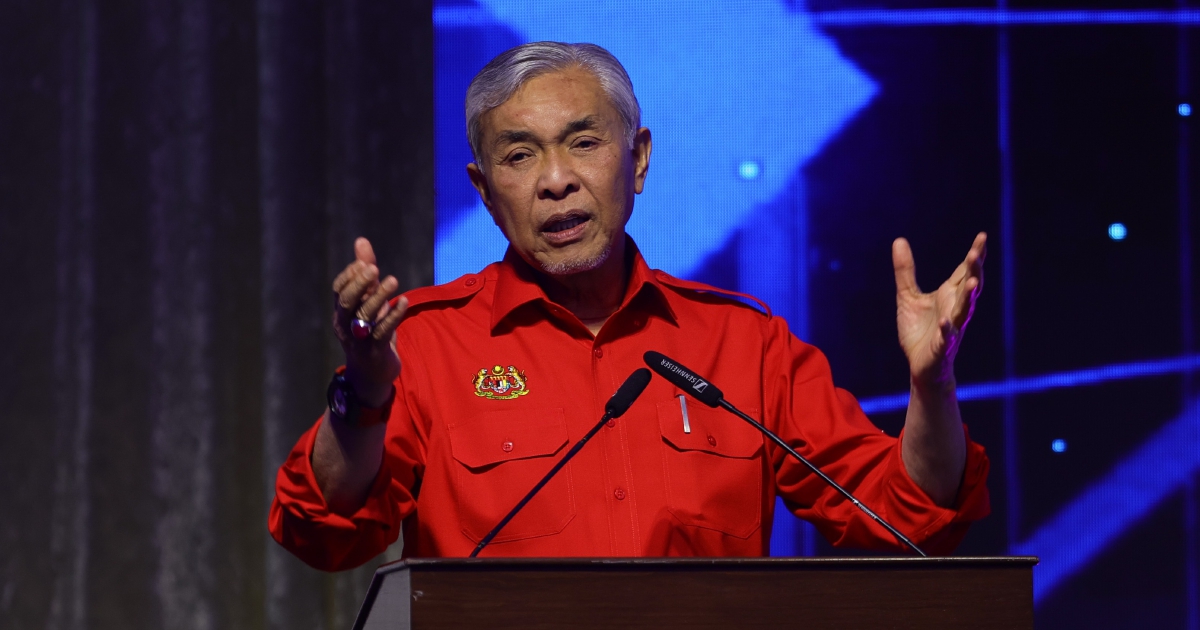
Barisan Nasional chairman Datuk Seri Dr Ahmad Zahid Hamidi has publicly affirmed that Prime Minister Datuk Seri Anwar Ibrahim holds the prerogative to dismiss ministers from the coalition if their performance falls short of expectations, signalling a willingness within the BN leadership to accept executive accountability mechanisms within the ruling government.
The statement, made during remarks in Seremban, reflects a nuanced approach to coalition dynamics at a time when cabinet stability and ministerial effectiveness have become increasingly central to public discourse about the administration's capacity to deliver on its reform agenda. Zahid's pronouncement essentially endorses the Prime Minister's constitutional authority to reshape his cabinet portfolio as circumstances demand, without requiring formal consultation or approval from the BN party apparatus.
This public acknowledgment holds significance beyond mere procedural clarification. In Malaysian coalition politics, where power-sharing arrangements between component parties often create tension between loyalty to individual party interests and government-wide efficiency, explicit statements affirming the PM's dismissal authority help establish clearer lines of accountability. The BN, as the largest coalition partner in the current ruling framework, has taken a position that prioritises government performance over protecting any individual minister's tenure based solely on factional or party-political considerations.
The timing of such remarks carries particular weight given the evolving nature of Malaysia's political landscape since the 2022 general election. Coalition governments require careful calibration between maintaining party representation and ensuring that ministerial positions go to individuals capable of executing their portfolios effectively. Zahid's statement suggests that the BN leadership recognises the electoral risks associated with ineffective governance—public frustration with ministerial underperformance can translate into electoral losses for all coalition partners, regardless of which party a minister represents.
The authority vested in a Prime Minister to remove ministers constitutes a fundamental dimension of executive governance. In Malaysia's Westminster-influenced system, the PM's ability to reshuffle his cabinet remains a critical tool for maintaining government efficiency, responding to changing policy priorities, and demonstrating responsiveness to public concerns. When major coalition parties publicly affirm rather than contest this authority, it strengthens the PM's hand in implementing such decisions should the necessity arise.
BN's position also reflects pragmatic coalition management. The party has substantial ministerial representation across multiple portfolios, and explicitly endorsing performance-based accountability serves to protect that representation by establishing transparent criteria for tenure. Ministers who perform well face no threat; those who underdeliver become vulnerable. This framework theoretically encourages better performance across the board while simultaneously demonstrating to voters that the coalition takes governance seriously.
The statement arrives amid broader discussions about government effectiveness and the delivery of electoral promises made during the 2022 campaign. Malaysians have repeatedly expressed concerns about ministerial competence, project implementation speed, and the tangible delivery of development initiatives. When coalition leadership publicly embraces outcome-based accountability, it signals an effort to respond to these public expectations and to differentiate the current administration from previous governments criticised for protecting underperforming ministers for political reasons.
For Southeast Asian context, Malaysia's approach reflects a broader regional trend where coalition governments increasingly face scrutiny regarding ministerial performance. The region's voters have grown more discerning about governance quality, and political parties across Southeast Asia recognise that protecting ineffective administrators proves electorally costly. Zahid's statement aligns with emerging governance norms that prioritise technocratic capability over traditional patronage-based protection of political allies.
The BN's public stance also carries implications for internal party dynamics. By endorsing the PM's dismissal authority, the party effectively establishes that individual members or party interests cannot serve as shields against performance-based removal. This potentially encourages greater professionalism among ministers and reduces incentives for using ministerial positions primarily as patronage rewards rather than as positions demanding substantive competence.
Looking ahead, such statements establish baseline expectations for how the coalition approaches cabinet management. Should the PM subsequently exercise his authority to remove a BN minister, Zahid's remarks have already provided ideological and institutional justification for such action. Conversely, if no removals materialise despite performance concerns, the coalition risks accusations of failing to live up to its own stated standards, potentially undermining public confidence in government accountability mechanisms.
The statement ultimately reflects the maturation of Malaysia's coalition governance, where publicly-stated principles about ministerial accountability help structure political behaviour and establish clearer expectations. Whether these principles translate into sustained practice will significantly influence voter perceptions of whether the current administration genuinely prioritises competence and good governance over purely partisan considerations.

