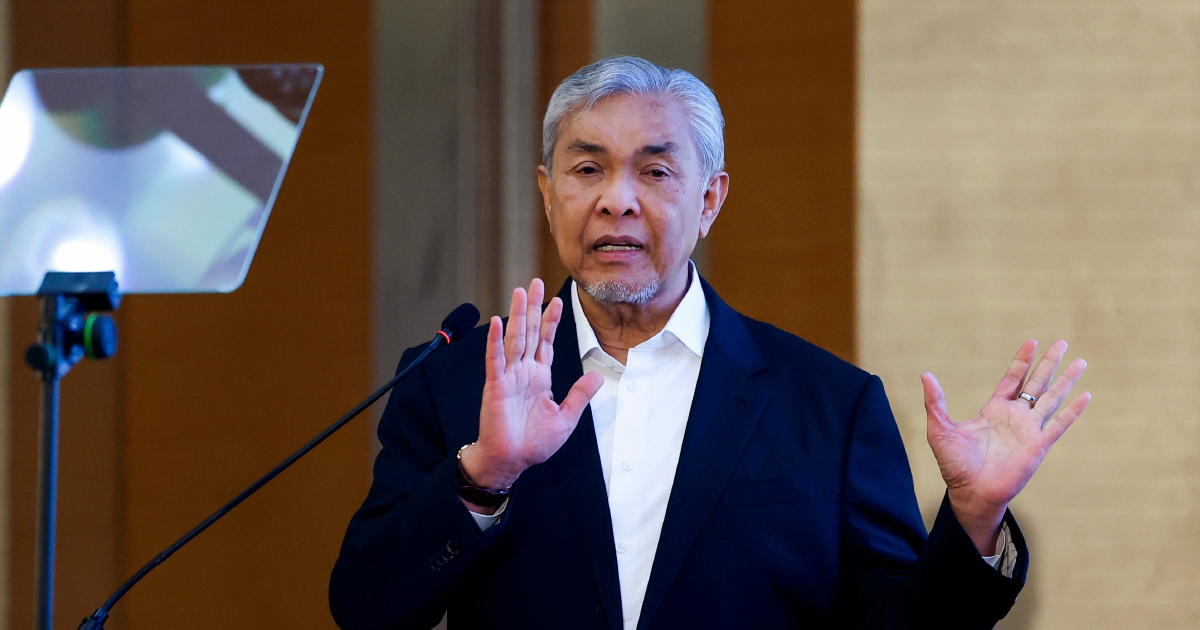
Barisan Nasional chairman Datuk Seri Dr Ahmad Zahid Hamidi has reminded all political parties to steer clear of contentious issues involving race, religion and royalty during the Negri Sembilan election campaign, in deference to guidance issued by the state palace.
The appeal represents a broader effort by the ruling coalition to establish boundaries around campaign rhetoric ahead of a significant electoral contest. By invoking the palace's position, Zahid sought to frame the restriction not merely as a partisan preference but as a matter of institutional respect and constitutional propriety. The Negri Sembilan palace, like all royal institutions in Malaysia's constitutional monarchy, carries substantial symbolic authority that carries weight in public discourse and political conduct.
The three categories Zahid referenced—race, religion and royalty—form what Malaysian political observers term the 3R framework, a sensitive terrain that has long generated heated debate and occasionally sparked communal tensions. These subjects remain institutionally protected in Malaysia's legal framework, with specific provisions in the Constitution restricting certain forms of commentary. The palace's preliminary warning underscores concern that election campaigns, by their nature intensely competitive and emotionally charged, risk inadvertent or deliberate transgression of these boundaries.
Negri Sembilan holds particular significance within Malaysia's political landscape. As a state with a Dewan Negara component and substantial Malay-Muslim demographics alongside significant non-Muslim communities, the political contest there carries implications extending beyond its borders. The state has traditionally been viewed as a barometer for broader national political sentiment, and campaign conduct there invariably attracts scrutiny from observers monitoring Malaysia's social cohesion.
Zahid's statement serves multiple purposes within the BN's strategic framework. For the coalition, which has historically anchored its appeal to Malay-Muslim constituencies while maintaining multi-ethnic partnerships, maintaining harmonious campaign language protects its broader political architecture. Any escalation involving 3R matters risks fracturing the delicate alliance structures that sustain BN's governance, particularly given the coalition's diverse component parties with sometimes divergent constituencies and priorities.
The palace's intervention itself warrants attention. Royal reminders regarding campaign conduct reflect institutional concern about maintaining social stability during electoral periods. Malaysian palaces have periodically issued guidance on political matters, and such interventions, though framed diplomatically, carry implicit authority that political actors typically acknowledge and respect. For the palace to issue such guidance ahead of Negri Sembilan's election demonstrates institutional anticipation of potential tensions.
Opposition parties received equal emphasis in Zahid's exhortation, suggesting BN's acknowledgment that campaign restraint must operate symmetrically to be credible. Political competition by definition generates sharp rhetoric, yet Malaysia's constitutional framework and social composition demand that certain boundaries remain inviolable across party lines. When one coalition member or opposition figure crosses into 3R territory, it creates pressure on others to respond, potentially triggering escalatory cycles that damage communal relations.
The timing of Zahid's reminder carries significance. As campaign temperatures inevitably rise closer to polling day, political operators face mounting pressure to differentiate their positions sharply and energise their bases. Such pressures historically have induced some actors to invoke sensitive themes that resonate emotionally with their supporters. By making an early, prominent statement, Zahid attempted to establish a clear baseline expectation that would make subsequent violations harder to excuse as inadvertent or contextually defensible.
For Malaysian businesses and civil society organisations, campaign conduct focusing on divisive matters creates operational challenges. Companies worry about consumer response to political associations, whilst civil society groups concerned with nation-building prefer campaigns emphasising shared citizenship and common development goals. A campaign environment dominated by 3R discussions would undermine efforts to build cross-communal consensus on economic development, education, healthcare and infrastructure—matters typically occupying more space in elections elsewhere but often marginalised in Malaysian campaigns through displacement by identity-based contests.
The broader regional context adds weight to Malaysia's institutional concern with maintaining political decorum. Throughout Southeast Asia, elections have occasionally sparked communal violence or persistent social fractures when political actors weaponised identity issues. Malaysia's relatively stable post-independence record partly reflects deliberate institutional choices to contain such rhetoric, encoded in constitutional provisions and expressed through palace guidance and coalition discipline.
Yet Zahid's statement also highlights an ongoing tension within Malaysian democracy. Free political speech and robust electoral competition sit in perpetual tension with restrictions on certain categories of discourse. Political actors, particularly those seeking to challenge incumbent coalitions, may perceive restriction of 3R discussions as protecting incumbent advantages or constraining their ability to articulate genuine grievances their constituencies hold. Drawing that line remains contestable even as institutional actors attempt to maintain it.
The Negri Sembilan campaign will serve as a test of whether Zahid's appeal finds traction across the political spectrum. Success would demonstrate Malaysia's capacity to maintain institutional boundaries around sensitive matters even during competitive elections. Violations would suggest those boundaries face increasing pressure, requiring enhanced enforcement mechanisms or broader political consensus on their necessity. Either outcome carries implications extending beyond this particular state election to broader questions about Malaysia's democratic maturity and social stability.

