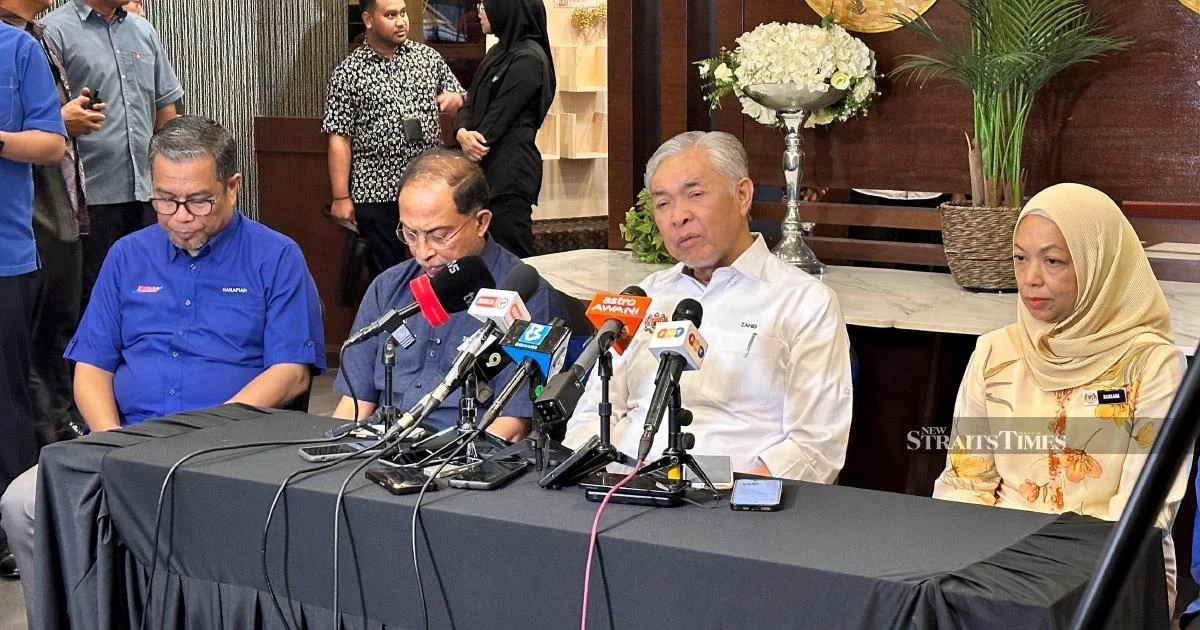
Barisan Nasional chairman Datuk Seri Dr Ahmad Zahid Hamidi has signalled displeasure at fellow members of the unity government coalition over their invocation of politically sensitive figures in the ongoing Johor state election campaign, according to remarks made during a visit to Kluang. The rebuke, though diplomatically phrased, points to lingering tensions within the governing alliance over how to manage controversial personalities and past controversies that remain potent electoral liabilities in certain constituencies.
The intervention from Malaysia's top BN official reflects a strategic calculation that focusing on divisive personalities and historical grievances could undermine the coalition's ability to present a unified message to Johor voters. Rather than allowing campaign narratives to be shaped by contentious figures associated with past administrations, BN leadership appears determined to steer discussions toward contemporary policy priorities and developmental promises. This represents a departure from the combative political environment of previous election cycles, where attacks and counter-attacks involving prominent former leaders regularly dominated campaign discourse.
Datin Seri Rosmah Mansor, wife of former Prime Minister Datuk Seri Najib Razak, remains a deeply polarising figure in Malaysian politics following the 1Malaysia Development Berhad scandal and subsequent legal proceedings. The controversy surrounding her and her husband continues to generate strong reactions among voters across demographic and regional divides. Her appearance in campaign materials, whether intentional or tangential, immediately becomes a focal point for media scrutiny and voter discussion, potentially overshadowing substantive policy debates that the BN coalition seeks to emphasise.
The tension between BN and its unity government partners reflects broader challenges inherent in managing a coalition that spans ideologically distinct political organisations with divergent bases and historical grievances. Umno, the backbone of BN, carries a particular burden regarding the Najib era, having been substantially damaged by the Global Kleptocracy Perceptions Index and subsequent electoral losses in 2018. The party's rehabilitation strategy depends significantly on demonstrating that it has moved beyond the governance failures and ethical lapses that defined the preceding two decades.
Johor, as one of Malaysia's most strategically important states and a traditional BN stronghold, carries outsized significance for the coalition's overall political fortunes. Losing ground in Johor would represent a catastrophic reversal for BN's national standing and provide momentum to opposition forces nationwide. Consequently, the coalition cannot afford internecine disputes or messaging mishaps that could fragment voter support or suppress turnout among core constituencies. Zahid's intervention, therefore, serves as a necessary course correction to keep the campaign focused and disciplined.
The broader context involves the complex relationships within the unity government framework that replaced the Perikatan Nasional administration following the 2022 general election. PKR, DAP, and other Pakatan Harapan components have uneasy partnerships with BN and other smaller coalition members, united primarily by opposition to Perikatan rather than by shared ideological vision. This precarious equilibrium means that any party cannot risk appearing to sabotage another partner's campaign without potentially triggering a collapse of the entire arrangement, particularly in strategically valuable states like Johor.
For Malaysian voters, the emphasis on forward-looking governance rather than backward-gazing recrimination offers modest encouragement that elections could focus on substantive policy proposals. However, the persistence of references to controversial figures suggests that deeper reconciliation within the political establishment remains incomplete. The public continues to harbour concerns about accountability for alleged wrongdoings during the Najib administration, concerns that campaign silence does not address.
The Johor election campaign also reflects evolving generational dynamics in Malaysian electoral politics. Younger voters, having come of age during or after the 1MDB scandal, may view renewed invocations of these issues as either necessary accountability measures or as tiresome repetition of settled disputes, depending on their political orientation. Meanwhile, older voters retain visceral reactions to these controversies based on personal economic losses or moral conviction regarding governance standards. Managing these divergent voter sentiments requires careful calibration that simple directives to coalition partners cannot fully accomplish.
Zahid's implicit warning to coalition allies suggests that BN intends to campaign primarily on developmental achievements and future plans rather than engaging in reactive exchanges over past administrations. This strategy assumes that Johor voters care most about immediate concerns—employment, infrastructure development, service delivery, and economic opportunities—rather than prosecuting settled political battles. Whether this assumption holds true will become evident as campaign messaging crystallises over the coming weeks and as opposition parties inevitably test this apparent consensus.
The episode also underscores Zahid's role as chief disciplinarian within the BN framework, tasked with maintaining coalition cohesion and enforcing messaging discipline across constituent parties. His willingness to publicly rebuke partners signals that BN leadership views campaign coherence as non-negotiable, even when such rebukes risk antagonising powerful component parties. This assertiveness contrasts with the factional rivalries and leadership disputes that plagued Umno's internal dynamics during the latter Najib years.
Looking ahead, observers should monitor whether coalition partners heed Zahid's implicit guidance or whether campaign references to controversial figures persist despite the warning. Continued invocations would suggest either defiance of BN leadership or deeper fissures within the unity government that extend beyond Johor. Either scenario would carry significant implications for the coalition's performance not only in the state election but in the broader trajectory of Malaysian national politics through the next general election cycle.

