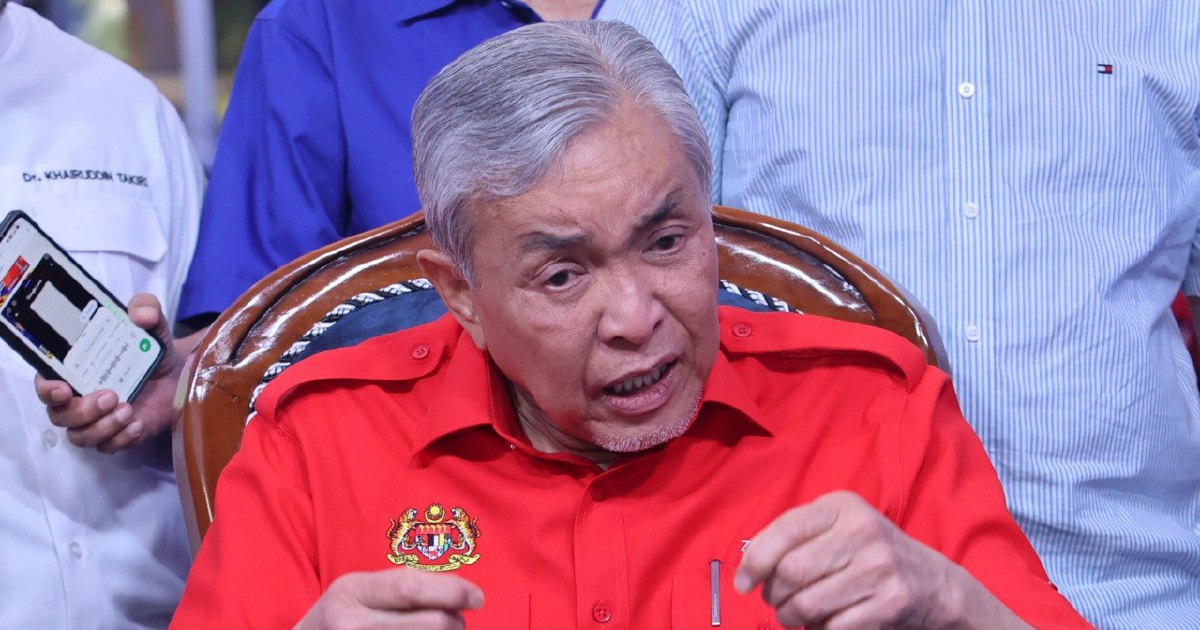
Barisan Nasional chairman Datuk Seri Dr Ahmad Zahid Hamidi has issued a candid assessment of the coalition's electoral prospects in Negri Sembilan, urging party members to significantly intensify their ground operations ahead of the state election. Speaking in Seremban, Zahid acknowledged that BN faces an uphill struggle in the contest and cannot afford complacency as it grapples with a competitive political landscape in the state.
The frank admission of underdog status reflects the shifting dynamics in Malaysian politics, where Barisan Nasional's traditional dominance has been challenged in recent years. Negri Sembilan presents a crucial test for the coalition's ability to rebuild support and demonstrate renewed electoral appeal. The state's political composition has become increasingly fragmented, with multiple factions competing for voter attention and support across the state's urban and rural constituencies.
Zahid's intervention signals heightened concern within BN's top leadership about campaign execution and party discipline. The coalition has previously struggled with coordination between component parties and maintaining unified messaging in state-level contests. Effective campaigning requires not merely rallying supporters but strategically addressing voter concerns about governance, economic opportunities, and development priorities that resonate with Negri Sembilan residents specifically.
Negri Sembilan occupies a strategically important position within Malaysia's political economy. As a state that serves as a buffer between the federal capital region and southern Peninsular Malaysia, electoral outcomes here can signal broader regional sentiment and indicate whether BN's recent efforts to stabilize support have gained traction among working-class and rural voters. The state's economy depends substantially on manufacturing, palm oil, and tourism, sectors that remain sensitive to national policy shifts.
The coalition's underdog positioning likely stems from several interconnected factors. Previous state elections have demonstrated growing voter willingness to explore alternatives to BN at the state level, even among constituencies with historical ties to the coalition. Additionally, opposition parties have invested significant organizational resources in Negri Sembilan, establishing deeper networks and attempting to penetrate BN strongholds. Local issues such as development disparities between state constituencies and perceived governance challenges may have eroded traditional support bases.
Zahid's call for intensified campaigning necessarily extends beyond conventional canvassing and public gatherings. Modern electoral contests increasingly involve sophisticated digital outreach, targeted messaging through social media platforms, and strategic positioning on issues that dominate public discourse. For BN to overcome its underdog status, component parties must demonstrate coherence on policy platforms while addressing how they will deliver tangible benefits to different voter demographics.
The timing of Zahid's remarks carries additional significance within the broader context of Malaysian politics. Barisan Nasional's performance in Negri Sembilan will likely influence perceptions about the coalition's viability as a national force and its capacity to reclaim electoral momentum lost in previous contests. Poor results could embolden opposition narratives about declining BN relevance, while strong performance might suggest the coalition has successfully consolidated support among key voter segments.
Component parties within BN must recognize that state elections serve as laboratories for testing campaign strategies and identifying which messaging resonates with voters. Negri Sembilan's diverse constituencies offer opportunities to pilot approaches that might subsequently be deployed nationally. This requires flexibility and willingness to adapt campaign themes to address local concerns rather than simply replicating successful tactics from other states with different political economies and demographic profiles.
Zahid's acknowledgment of underdog status, rather than projecting inevitability of victory, demonstrates pragmatism about political realities. This rhetoric can serve multiple functions: it may rally BN activists by clarifying the genuine challenge ahead while simultaneously calibrating expectations for supporters. Such framing can also subtly encourage higher voter turnout among BN-leaning constituents who might otherwise assume victory is assured.
The coalition faces pressure to demonstrate that it remains responsive to voter priorities and capable of delivering effective governance. In Negri Sembilan specifically, this demands engaging substantively with state-level issues ranging from healthcare infrastructure and educational facilities to job creation and agricultural support. Generic campaign messaging emphasizing BN's historical role or national development achievements carries diminishing returns if disconnected from solutions addressing immediate voter concerns.
As the campaign progresses, monitoring coalition unity will prove crucial. Previous elections have revealed fissures between BN component parties over seat allocations and campaign priorities. Whether UMNO, MCA, MIC, and other coalition members maintain synchronized messaging and coordinated ground operations will significantly influence whether intensified campaigning produces electoral gains. Internal divisions transmit signals to voters that discourage confidence in BN's coherence and governance capacity.
Zahid's intervention underscores that Malaysian politics has fundamentally shifted from an era when electoral outcomes were largely predetermined. Contemporary electoral contests require demonstrable commitment to campaigning and compelling engagement with voters. For Barisan Nasional, accepting underdog status in Negri Sembilan paradoxically opens possibilities for narrative repositioning as a coalition fighting to earn voter confidence rather than claiming entitlement to power based on historical dominance.

