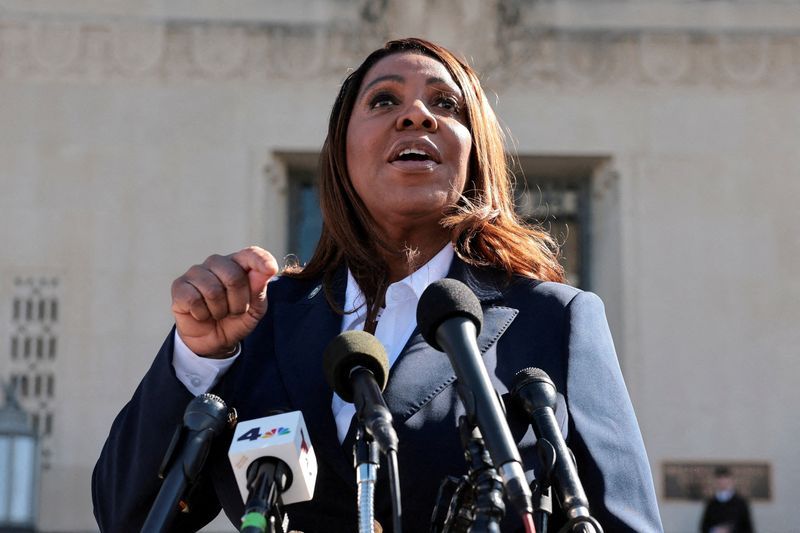
A Manhattan court has dealt a significant blow to Zelle's legal strategy, with a New York state judge refusing to dismiss allegations that the electronic payment platform knowingly sacrificed consumer protections to accelerate its market expansion. Justice Phaedra Perry-Bond's Tuesday ruling found that New York Attorney General Letitia James presented sufficient evidence that Zelle's parent company, Early Warning Services, prioritized rapid growth and accessibility over fundamental safety measures, despite explicit concerns raised by its banking partners.
The lawsuit centers on how Zelle rushed to market while deliberately ignoring warnings about fraud vulnerabilities. Early Warning Services is controlled by seven major United States banks—Bank of America, Capital One, JPMorgan Chase, PNC, Truist, US Bank, and Wells Fargo—making this case particularly significant for the American banking establishment. The judge's decision indicates that James has made a credible case that these institutions, through their ownership stake, were aware of safety gaps yet prioritized consumer adoption and market dominance over implementing protective features that were technically available.
One particularly damaging finding for the platform involves its ongoing financial relationship with fraudulent transactions. Justice Perry-Bond highlighted that Zelle continues collecting and retaining fees generated from scams, raising questions about whether the company has tacitly endorsed or benefited from fraudulent activity. This dimension transforms the case from merely negligent oversight into potential complicity, suggesting the platform may have financial incentives to permit fraud rather than eliminate it.
The marketing claims at issue reveal how aggressively Zelle promoted itself to consumers despite internal knowledge of safety shortcomings. Advertisements depicted the platform as offering "peace-of-mind" and emphasized that it was "backed by the banks, so you know it's secure." Such messaging is particularly problematic given that James documented how Zelle did not implement basic safeguards that had been internally proposed four years earlier. The disconnect between reassuring marketing language and actual security measures forms a central pillar of the attorney general's deceptive practices allegation.
Zelle's defence strategy attempted to shield the company by arguing that advertising security features constitutes permissible commercial speech and that the platform bears no responsibility for what it characterized as "passive nonfeasance" in creating conditions conducive to fraud. The company argued it simply failed to prevent fraud rather than actively enabling it. However, the judge's rejection of this logic suggests courts may find this distinction meaningless when a company knows about specific vulnerabilities yet deliberately delays remediation to maintain market competitiveness.
Since its 2017 launch, Zelle has emerged as a primary competitor to PayPal's Venmo and Block's Cash App in the peer-to-peer payment space. The platform's rapid growth and bank backing gave it significant advantages in consumer trust and adoption, yet this same success appears intertwined with the alleged safety compromises. For Malaysian consumers and businesses increasingly exploring digital payment solutions, this case offers important lessons about how established financial institutions may prioritize expansion over protection.
The fraud patterns documented by James reveal sophisticated criminal tactics exploiting Zelle's limited protections. Criminals have targeted users through account compromises, social engineering schemes involving fake goods and services, and elaborate impersonation campaigns mimicking banks, government agencies, and utility companies. These methods are not unique to Zelle but have proliferated on the platform precisely because of delayed security implementation. The total losses exceeding $1 billion underscore the scale at which inadequate protections translate into consumer harm.
A critical timeline element strengthens James' position considerably. Zelle did not adopt what the attorney general characterizes as "basic" safeguards until 2023, four years after internally proposing these measures. The delay coincided with mounting pressure from the U.S. Consumer Financial Protection Bureau and congressional investigations, suggesting regulatory pressure rather than market competition or consumer demand drove belated improvements. This pattern demonstrates how companies may calculate that delayed compliance costs less than immediate implementation if the likelihood of meaningful enforcement remains uncertain.
The legal landscape surrounding Zelle shifted dramatically following the CFPB's decision to drop its similar case in March 2025, shortly after President Donald Trump commenced his second term. That agency's cessation of most enforcement activities created a regulatory vacuum that James' New York action now fills. The attorney general's lawsuit represents state-level persistence where federal enforcement has faltered, highlighting the critical role state attorneys general play in protecting consumers when federal regulators disengage.
For Malaysia's financial regulatory community and consumers, this case underscores fundamental principles about fintech accountability. As digital payment platforms proliferate across Southeast Asia, regulators must establish clear expectations that growth cannot justify compromising safety. Early Warning Services' structure—with seven major banks as ownership partners—should theoretically provide strong internal incentives for safety, yet the lawsuit suggests this did not occur. Malaysian authorities overseeing financial innovation should consider whether similar structural safeguards in local payment platforms require explicit regulatory reinforcement.
The judge's decision that the case may proceed means substantial discovery will now occur, likely revealing internal communications, risk assessments, and deliberations within Early Warning Services about fraud management. These documents could expose whether senior banking executives knowingly approved safety trade-offs or whether decisions were made at operational levels without full awareness of consequences. Such revelations would have profound implications for regulatory confidence in bank-operated fintech platforms globally.
Zelle's immediate public response rejected the allegations as politically motivated, claiming fraud reports have "always been exceptionally low" and attacking the attorney general for pursuing what it characterizes as recycled claims previously rejected elsewhere. However, the court's decision contradicts this characterization by finding James' allegations sufficiently detailed and supported. The litigation trajectory now favors plaintiffs pursuing similar claims, as the judge has essentially validated the core legal theories underlying the New York case.
This decision marks an inflection point in how regulators and courts evaluate fintech companies' responsibilities toward consumer protection. Rather than accepting rapid innovation as justifying delayed safety measures, courts appear increasingly willing to scrutinize whether companies made conscious choices subordinating safety to growth. For consumers across Malaysia and Southeast Asia using digital payment platforms, this outcome signals that established financial institutions cannot indefinitely shelter behind claims of technological inevitability or rapid development timelines when confronted with evidence of known vulnerabilities they chose not to address.

