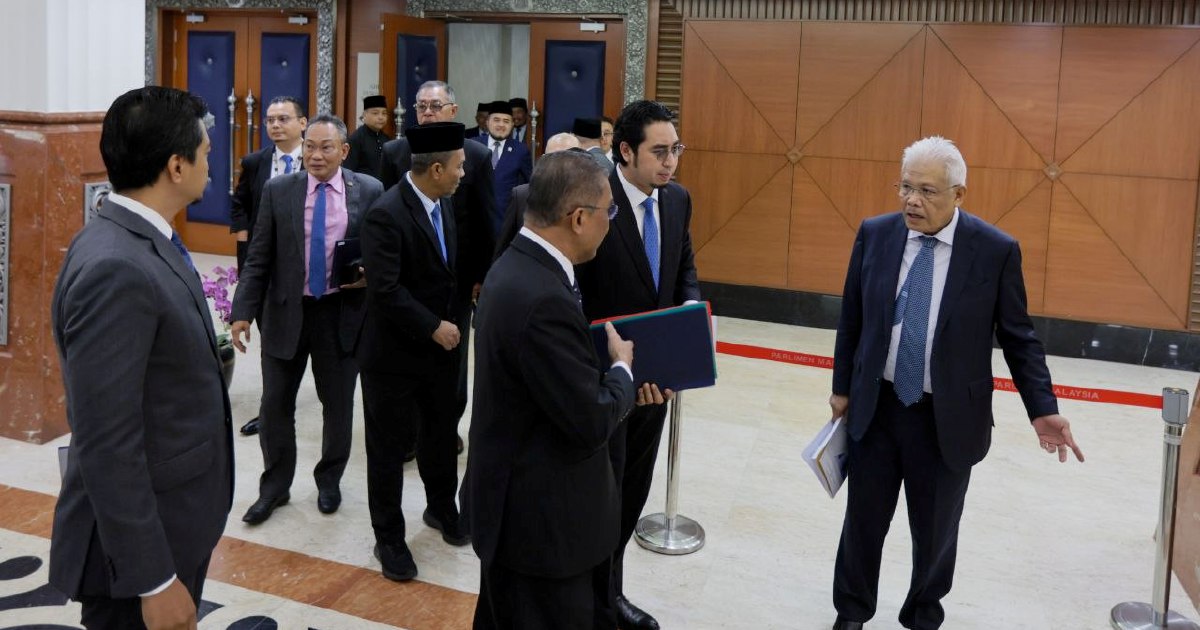
Dr Zulkifli Hasan, the Minister in the Prime Minister's Department with responsibility for Religious Affairs, has extended an invitation to opposition parliamentarians to resume their participation in the Dewan Rakyat and engage in meaningful discussion of the Royal Commission of Inquiry (RCI) findings concerning Tabung Haji. The appeal signals an attempt to broaden political engagement around the institutional review of one of Malaysia's most significant Islamic financial bodies.
Tabung Haji, formally known as Lembaga Tabung Haji, occupies a unique position within Malaysia's financial ecosystem as the dedicated savings institution serving Muslim Malaysians preparing for the Hajj pilgrimage. The establishment manages billions in deposits and has long been subject to intense public scrutiny, given both its religious significance and the substantial sums entrusted to it by ordinary Malaysians. The Royal Commission of Inquiry was established to examine governance, operational, and financial matters affecting the institution, reflecting widespread concern about its institutional health.
The timing of Dr Zulkifli's overture occurs within a broader pattern of parliamentary boycotts and withdrawal from proceedings that has periodically marked Malaysian legislative debates on contentious or institutional matters. Opposition MPs have at times absented themselves from such discussions, whether as protest, tactical positioning, or to signal disagreement with the government's handling of specific issues. The minister's call represents an explicit request for opposition parties to reverse this stance regarding the Tabung Haji discussion specifically.
For Malaysian citizens with deposits in Tabung Haji—a constituency numbering in the millions—the parliamentary debate holds substantial personal significance. The RCI report likely contains recommendations affecting deposit security, governance structures, returns on investments, and the institution's long-term viability. Public confidence in the organisation directly influences the financial security of ordinary Malaysians, particularly lower-income households for whom Tabung Haji represents a critical savings mechanism. Opposition participation in parliamentary scrutiny could strengthen the legitimacy of any subsequent policy responses.
The Tabung Haji situation exemplifies a broader tension in Malaysian governance between institutional transparency and political competition. Religious institutions in Malaysia often occupy a space where secular parliamentary processes intersect with religious governance frameworks, creating unique challenges. An RCI report on such an institution carries implications extending beyond standard financial oversight into matters of Islamic trust and community welfare. This complexity arguably warrants robust cross-party examination rather than partisan division.
Opposition engagement in this particular debate could serve multiple functions within Malaysian democracy. It would ensure that the RCI findings face critical scrutiny from multiple political perspectives, potentially identifying implementation challenges or unintended consequences that a single-party discussion might overlook. Additionally, demonstrable bipartisan concern about Tabung Haji's governance could strengthen the government's hand in implementing potentially unpopular but necessary reforms, by distributing political responsibility across parties rather than concentrating it within one coalition.
The religious affairs portfolio carries specific sensitivities within Malaysian politics, given the constitutional arrangements governing Islam within the federation. Ministers in this department navigate a particularly complex landscape where parliamentary debates intersect with Islamic institutional governance and community expectations. Dr Zulkifli's appeal may also reflect recognition that opposition parties possess significant constituencies among Tabung Haji depositors, lending their input practical weight beyond mere partisan consideration.
From a Southeast Asian perspective, Malaysia's handling of institutional transparency within religious financial bodies offers instructive lessons. Other Muslim-majority nations grapple with similar questions regarding governance oversight of Hajj-related institutions and Islamic financial bodies. Parliamentary debates in Kuala Lumpur on this subject generate precedents and approaches that ripple through regional discourse on balancing institutional autonomy with democratic accountability in religious contexts.
The substance of the RCI report itself remains crucial to assessing the minister's invitation. If the findings point to significant governance failures, financial irregularities, or management shortcomings, opposition participation becomes essential for establishing public confidence in remedial measures. Conversely, if the report largely exonerates the institution, opposition scrutiny remains valuable in testing those conclusions and addressing lingering public concerns. Either way, the depth and quality of parliamentary debate depends substantially on opposition participation.
Dr Zulkifli's outreach also reflects pragmatic parliamentary mathematics. The current legislative balance and coalition dynamics mean that substantial legislative or policy adjustments to Tabung Haji may require broader consensus than a single coalition can guarantee. By inviting opposition engagement now, the government may be positioning itself to build sustained support for potentially contentious recommendations emerging from the RCI process.
The success of this initiative remains uncertain. Opposition parties weigh parliamentary participation against other strategic considerations, including resource allocation, messaging priorities, and calculation of political benefit. However, the subject matter—a financial institution central to millions of Malaysian families' savings—presents a compelling case for transcending ordinary partisan calculus. The religious and financial dimensions of Tabung Haji arguably situate it beyond narrow party political interest.

