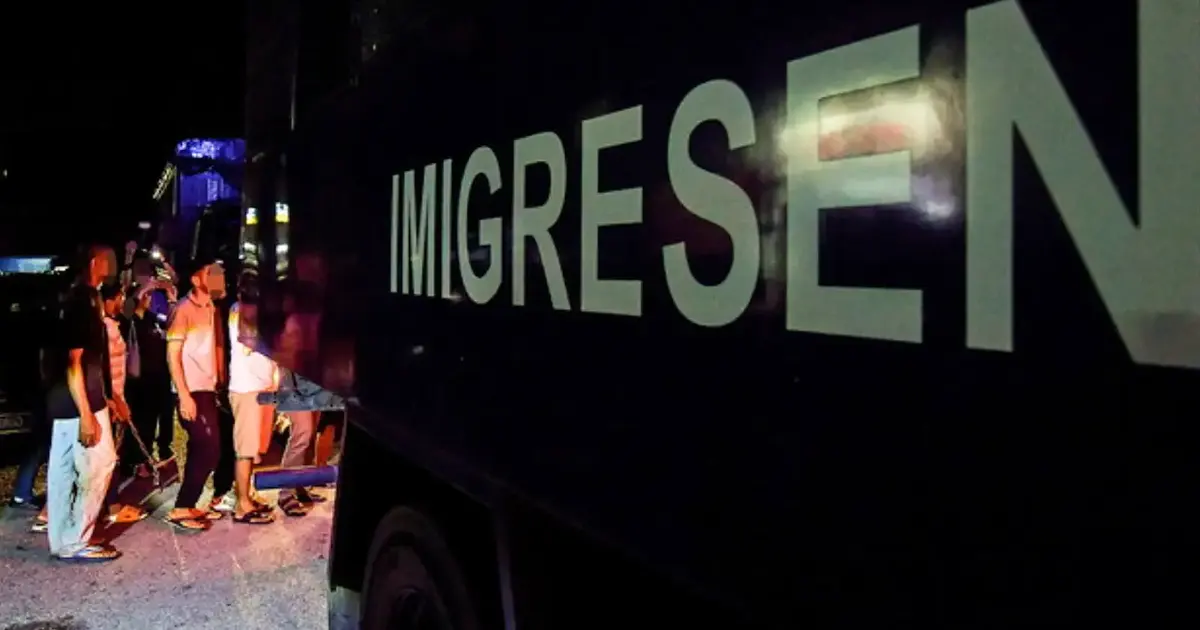
A coordinated immigration enforcement operation conducted during late-night hours in the Pudu area resulted in the detention of 186 individuals suspected of residing unlawfully in Malaysia. The raid, executed by immigration authorities, focused on apprehending foreign nationals believed to have exceeded the duration of their authorised stay or to be present in the country without proper travel credentials.
The detainees face charges relating to violations of Malaysia's immigration statutes, specifically for suspected offences involving overstaying beyond their approved entry permits and the absence of valid travel documentation. These infractions constitute serious breaches under the Immigration Act, with implications for both the individuals and the enforcement operations tasked with monitoring compliance with entry and residence requirements.
Midnight and early-morning raids remain a standard enforcement tactic employed by Malaysian immigration authorities to maximise apprehension rates. Operating during these hours increases the likelihood of locating targeted individuals at their residential locations, reducing the possibility of evasion and ensuring more efficient mobilisation of detainees for processing and documentation. The Pudu operation reflects the ongoing intensity of immigration enforcement across the Klang Valley.
The detention of such large numbers during single operations underscores the scale of undocumented migration affecting Malaysia. The country continues to grapple with unauthorised entry and prolonged overstaying, driven by economic pull factors and the region's labour market dynamics. Many undocumented migrants seek employment opportunities in construction, manufacturing, domestic work, and informal sectors where enforcement gaps persist.
These enforcement sweeps carry significant implications for Malaysia's immigration management strategy. While demonstrating visible commitment to border and internal migration control, large-scale detentions also reveal ongoing challenges in preventing irregular migration patterns. The frequency and scale of such operations suggest that detection and enforcement alone may not fully address root drivers of undocumented residence.
For the detainees, the consequences extend beyond immediate detention. Processing through Malaysia's immigration courts typically results in deportation orders, with individuals bearing costs associated with removal procedures. Many will face entry bans ranging from one to ten years, effectively restricting their future capacity to return through official channels and potentially reinforcing cycles of irregular migration.
The operation also highlights the resource allocation within Malaysia's immigration service. Conducting large-scale midnight raids requires coordination between multiple agencies, deployment of substantial personnel numbers, and logistical support for processing and detention. Such concentrated efforts indicate prioritisation of visible enforcement activities, though questions persist regarding the sustainability and long-term effectiveness of this approach in reducing undocumented populations.
The detection and apprehension of such numbers during a single operation raises questions about prior intelligence gathering and community reporting mechanisms. Immigration authorities typically act on tip-offs from public complaints, workplace investigations, or building inspections. The concentration of 186 individuals in the Pudu area suggests either a specific location of concentrated occupancy or coordinated intelligence regarding particular premises or networks.
Malaysia's approach to immigration enforcement sits within a broader Southeast Asian context where irregular migration remains prevalent. The region experiences substantial cross-border movement driven by significant income disparities, labour shortages in specific sectors, and limited regular migration pathways. Countries including Malaysia, Thailand, and Singapore conduct similar enforcement operations, though with varying intensity and resource allocation.
The detention figures also underscore demographic patterns within Malaysia's undocumented population. Irregular migrants predominantly originate from Bangladesh, Indonesia, Myanmar, and Cambodia, with concentrations in urban centres and industrial zones. These individuals typically occupy informal housing, work without contracts, and exist largely outside formal social safety nets, rendering them vulnerable to exploitation and creating parallel informal economies.
For Malaysian policymakers, such operations present a dilemma between enforcement intensity and pragmatic management of labour market realities. Construction, plantation agriculture, and domestic service sectors demonstrably depend on migrant labour, much of which operates outside official employment schemes. Large-scale detentions periodically disrupt labour supply in these sectors, occasionally triggering project delays or service interruptions.
Moving forward, immigration authorities face persistent challenges in balancing enforcement objectives with resource constraints and operational effectiveness. While midnight raids generate impressive detention numbers and media attention, sustainability of such operations remains questionable given the continuous flow of new irregular migrants. Integration of technology, enhanced intelligence mechanisms, and employer accountability may offer complementary strategies to traditional enforcement operations, potentially creating more durable solutions to undocumented migration management within Malaysia.
%22%2F%3E%3C%2Fpattern%3E%3C%2Fdefs%3E%3Crect%20width%3D%22100%25%22%20height%3D%22100%25%22%20fill%3D%22url(%23phgr1kg)%22%2F%3E%3Crect%20width%3D%22100%25%22%20height%3D%22100%25%22%20fill%3D%22url(%23phgr1kp)%22%2F%3E%3Ctext%20x%3D%2250%25%22%20y%3D%2250%25%22%20text-anchor%3D%22middle%22%20dominant-baseline%3D%22central%22%20fill%3D%22rgba(255%2C255%2C255%2C0.95)%22%20font-family%3D%22Georgia%2C%20'Times%20New%20Roman'%2C%20serif%22%20font-weight%3D%22700%22%20font-size%3D%22226%22%20letter-spacing%3D%22-0.02em%22%3EHamzah%3C%2Ftext%3E%3C%2Fsvg%3E)
%22%2F%3E%3C%2Fpattern%3E%3C%2Fdefs%3E%3Crect%20width%3D%22100%25%22%20height%3D%22100%25%22%20fill%3D%22url(%23phk1hng)%22%2F%3E%3Crect%20width%3D%22100%25%22%20height%3D%22100%25%22%20fill%3D%22url(%23phk1hnp)%22%2F%3E%3Ctext%20x%3D%2250%25%22%20y%3D%2250%25%22%20text-anchor%3D%22middle%22%20dominant-baseline%3D%22central%22%20fill%3D%22rgba(255%2C255%2C255%2C0.95)%22%20font-family%3D%22Georgia%2C%20'Times%20New%20Roman'%2C%20serif%22%20font-weight%3D%22700%22%20font-size%3D%22194%22%20letter-spacing%3D%22-0.02em%22%3ESarawak%3C%2Ftext%3E%3C%2Fsvg%3E)