%22%2F%3E%3C%2Fpattern%3E%3C%2Fdefs%3E%3Crect%20width%3D%22100%25%22%20height%3D%22100%25%22%20fill%3D%22url(%23phgr1kg)%22%2F%3E%3Crect%20width%3D%22100%25%22%20height%3D%22100%25%22%20fill%3D%22url(%23phgr1kp)%22%2F%3E%3Ctext%20x%3D%2250%25%22%20y%3D%2250%25%22%20text-anchor%3D%22middle%22%20dominant-baseline%3D%22central%22%20fill%3D%22rgba(255%2C255%2C255%2C0.95)%22%20font-family%3D%22Georgia%2C%20'Times%20New%20Roman'%2C%20serif%22%20font-weight%3D%22700%22%20font-size%3D%22226%22%20letter-spacing%3D%22-0.02em%22%3EHamzah%3C%2Ftext%3E%3C%2Fsvg%3E)
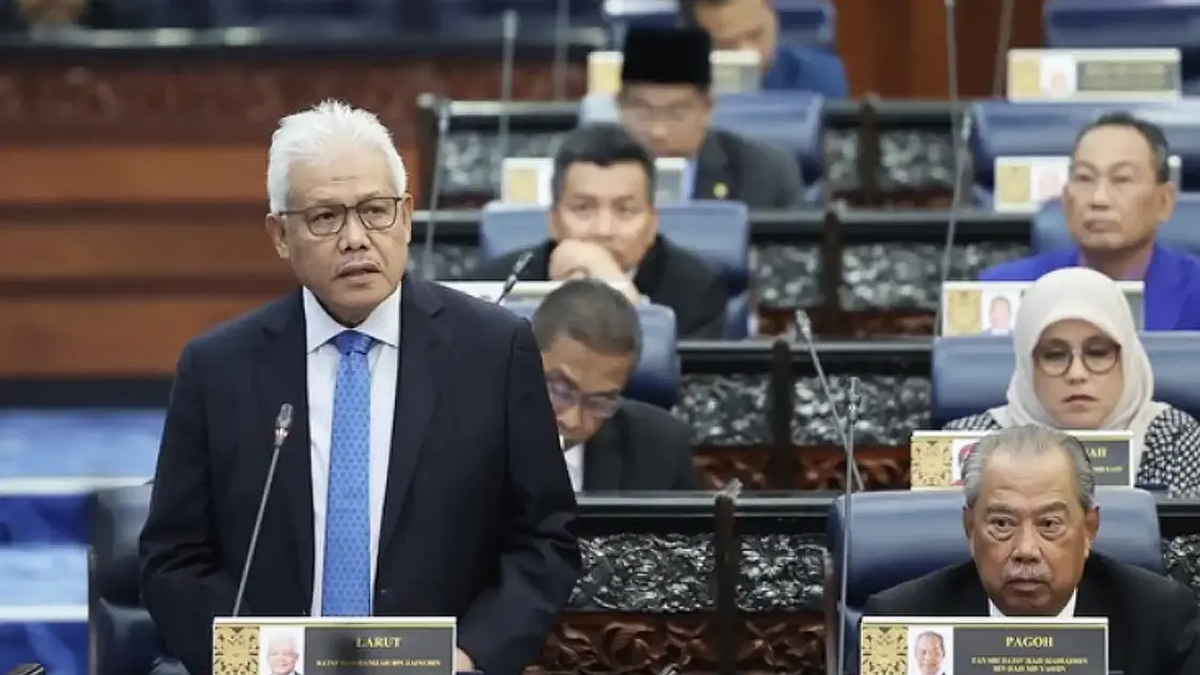
Dewan Rakyat Speaker Tan Sri Johari Abdul has formally acknowledged the government's notification designating Hamzah Zainudin as the Opposition Leader, marking an official shift in parliamentary leadership dynamics. The announcement, made on June 21, represents a constitutional confirmation of the position that carries significant procedural and representational weight within the chamber. This development follows the established protocol whereby the executive branch informs the Speaker of any changes to the official Opposition leadership role, a position that comes with defined rights and responsibilities in parliamentary proceedings.
Hamzah Zainudin's assumption of the Opposition Leader role signals a reconfiguration within opposition politics at a time when parliamentary alignments remain fluid and subject to periodic realignment. The position itself carries considerable symbolic importance beyond its formal functions, as the Opposition Leader traditionally serves as the principal voice critiquing government policy, steering parliamentary debate on key issues, and articulating alternative policy directions. The formal confirmation by Speaker Johari Abdul provides the official imprimatur necessary for Hamzah to exercise the full prerogatives attached to this role, including enhanced speaking time, access to government information through parliamentary mechanisms, and the authority to table motions and direct opposition business.
Simultaneously, former Prime Minister Muhyiddin Yassin has been reassigned to a different seat within the parliamentary chamber, a change that reflects broader repositioning among government and opposition ranks. Seat assignments in the Dewan Rakyat carry both practical and symbolic significance, with proximity to government benches, positioning relative to the Speaker, and proximity to one's parliamentary faction influencing the dynamics of floor engagement. Muhyiddin's relocation suggests administrative reorganisation within parliamentary groupings, potentially reflecting changed relationships or altered parliamentary strategy following recent political developments.
The timing of these changes merits contextual examination within Malaysia's evolving political landscape. The past several years have witnessed significant flux in parliamentary coalitions and inter-party dynamics, with shifting alliances affecting the composition of government and opposition blocs. These structural changes in parliamentary composition and leadership often presage broader political movement or reflect efforts by existing leadership to consolidate position and reorganise political forces. The confirmation of Hamzah's role and Muhyiddin's relocation should be understood as part of this continuous process of political recalibration.
Hamzah Zainudin brings considerable parliamentary experience to the Opposition Leader position. His background in government and extensive parliamentary tenure provide him with institutional knowledge and credibility essential for effectively executing the role's responsibilities. As Opposition Leader, he will bear responsibility for coordinating opposition members, formulating coherent critiques of government policy, and ensuring that opposition voices remain effectively organised and heard within parliamentary proceedings. The role demands balancing tactical flexibility with principled opposition, particularly in a parliament where coalition mathematics remain significant.
The Opposition Leader position exists within Malaysia's broader constitutional framework, which delineates the rights and duties of both government and opposition. The speaker's formal confirmation ensures that parliamentary procedures appropriately reflect this designation, affecting matters ranging from debate scheduling to access to parliamentary committees and information. Opposition Leaders have historically used the position to raise issues of national importance, cross-examine government ministers, and provide oversight of executive functions—responsibilities that shape parliamentary governance and democratic accountability.
Muhyiddin Yassin's parliamentary seat reassignment warrants particular attention given his previous tenure as Prime Minister. His relocation may reflect various strategic considerations within his parliamentary faction, whether consolidating support among particular groupings, adjusting to changed circumstances following recent political events, or optimising his parliamentary positioning relative to government or other opposition elements. Former Prime Ministers remaining in parliament often occupy positions of continued influence and significance, and their physical positioning within the chamber can reflect both internal party dynamics and broader parliamentary alignments.
These parliamentary administrative changes occur against the backdrop of Malaysia's competitive political environment, where parliament remains the principal arena for articulating diverse viewpoints and testing government policy through debate and scrutiny. The formal structures governing opposition leadership and parliamentary seating arrangements, while ostensibly procedural, reflect deeper questions about parliamentary power distribution, representation, and the institutional mechanisms through which different political forces exercise influence. Speaker Johari Abdul's confirmation of these changes ensures that parliament's operations continue functioning according to established constitutional and procedural frameworks.
For Malaysian observers and Southeast Asian political analysts, these developments underscore the importance of parliament as the central institution mediating political competition and distributing governance authority. The formal confirmation of opposition leadership and reassignment of parliamentary seats, though administrative in character, carry implications for how effectively different political voices will be heard during the legislative process. The Opposition Leader position remains critical for ensuring government accountability and maintaining parliamentary oversight—functions essential to Malaysia's constitutional democratic system. How Hamzah Zainudin exercises the responsibilities of this role over coming months will shape parliamentary dynamics and the broader tenor of political discourse within the chamber.