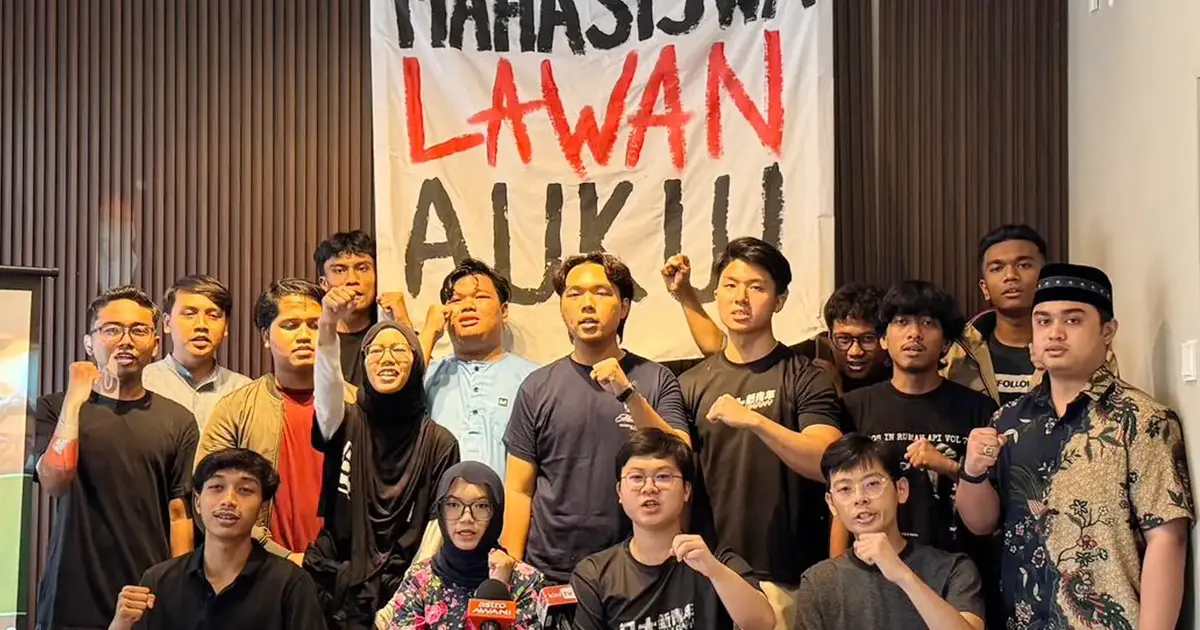
Prime Minister Anwar Ibrahim has committed to resisting any new legislative measures that would specifically curtail student freedoms, marking a significant departure from decades of restrictive campus governance following the repeal of the Universities and University Colleges Act (AUKU) provision that previously banned student political activity.
The government's stance represents a fundamental shift in how Putrajaya intends to manage student activism and campus politics. The AUKU ordinance had long served as the primary legal instrument restricting university students from engaging in political organisations, rallies, and public demonstrations—provisions that civil society groups and education advocates had criticised as overly paternalistic and incompatible with democratic principles. By signalling an unwillingness to replace these restrictions with equivalent new legislation, Anwar appears to be embracing a philosophy that trusts students with greater agency in their own political expression.
This commitment carries substantial implications for Malaysian higher education institutions, which have traditionally operated under tight administrative controls over student political expression. For nearly five decades, the AUKU restrictions created a regulatory framework that many believed stifled campus discourse and prevented students from developing civic engagement skills within institutional settings. Universities in Malaysia consequently lagged behind their regional counterparts in fostering robust student debate and democratic participation on campus.
The announcement also suggests that the government has concluded that student activism need not pose an existential threat to institutional order. This reflects a growing international consensus that democratic societies benefit when young people can engage in political expression within appropriate boundaries, rather than through prohibition that often drives activism underground. By avoiding new restrictive legislation, Anwar's administration is placing faith in existing administrative mechanisms and institutional governance to manage campus affairs without resorting to blanket prohibitions.
However, the absence of new restrictive laws does not mean students will operate in a completely unregulated environment. Universities retain considerable autonomy under their individual charters to establish codes of conduct and disciplinary procedures that can constrain disruptive behaviour. Institutional mechanisms, rather than primary legislation, will likely become the mechanism through which universities maintain order while permitting greater political expression. This distinction between statutory restriction and institutional regulation proves crucial for understanding the practical implications of Anwar's promise.
The timing of this commitment reflects the government's broader reform agenda and its efforts to project an image of progressive governance. The administration has faced international criticism regarding democratic freedoms and press autonomy, and scaling back student restrictions serves as a tangible demonstration of commitment to liberalisation. For Anwar personally, the policy aligns with his historical advocacy for reformasi and democratic expansion, creating rhetorical consistency with his longstanding political messaging.
Education experts suggest that removing statutory prohibitions could catalyse meaningful changes in campus culture. Students who previously risked disciplinary action for organising political forums or advocacy groups may now establish clubs and societies addressing contentious issues. This evolution could strengthen democratic discourse within universities while providing students practical experience in political organising, negotiation, and debate—skills that benefit democratic societies broadly.
The policy shift also acknowledges practical enforcement challenges that the AUKU restrictions created. University administrators previously bore responsibility for policing student political activity, creating friction between educational missions and political surveillance. Removing this burden could allow institutions to focus resources on academic quality and student welfare rather than monitoring political expression. Furthermore, enforcement of AUKU restrictions had proven inconsistent across institutions, creating perceptions of arbitrary and selective punishment that undermined institutional legitimacy.
Malaysia's approach contrasts with student freedom frameworks in several neighbouring democracies. Thailand has experienced recent cycles of expansive student activism followed by restrictive government crackdowns, suggesting that statutory prohibitions alone prove insufficient without sustained political commitment to democratic principles. Singapore's tighter regulatory environment demonstrates an alternative model, though one frequently cited as contributing to lower civic engagement. By moving away from statutory restriction while preserving institutional oversight, Malaysia positions itself as seeking a middle path.
The implications for regional higher education are noteworthy. Malaysia has historically struggled to attract top international talent and students partly because of perceived restrictions on intellectual freedom and campus autonomy. A more permissive environment regarding student political expression could enhance the country's competitiveness as an education destination. Regional universities increasingly market themselves on the basis of academic freedom and open discourse, factors that attract academically ambitious students and accomplished scholars.
Stakeholders will scrutinise how this commitment translates into practice. While Anwar's assurance against new legislation carries political weight, implementation depends on institutional choices by university leaders, government agencies, and potentially judicial interpretation of existing laws. Some observers question whether informal pressure mechanisms might replace formal legal restrictions—a concern worth monitoring as the policy unfolds across Malaysia's diverse university sector.
The abolition of AUKU restrictions, coupled with the government's stated commitment against replacement legislation, represents a watershed moment for Malaysian student governance. Whether this signals genuine, sustained commitment to expanded student freedoms or constitutes temporary policy positioning remains to be determined through implementation and institutional practice in coming years. The success of this approach ultimately depends on whether all stakeholders—government, universities, and students themselves—embrace expanded freedoms responsibly.

