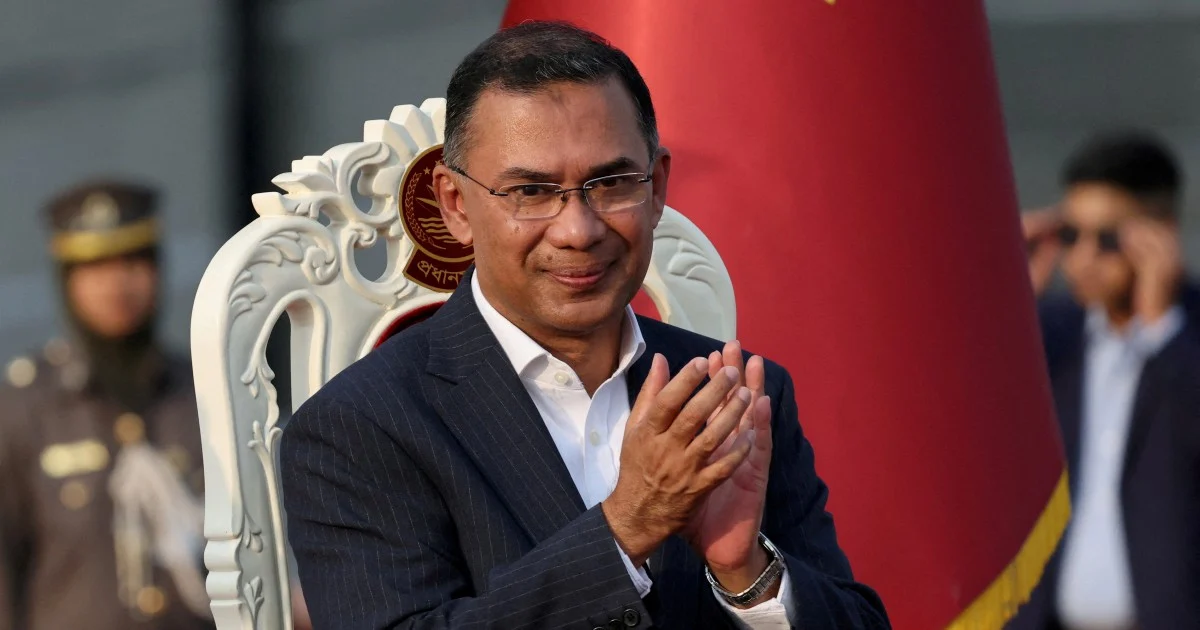
Bangladesh Prime Minister Tarique Rahman touched down at Kuala Lumpur International Airport in Sepang today, marking the beginning of a significant diplomatic engagement that reflects deepening ties between the two nations. The visit signals renewed momentum in the relationship between Dhaka and Kuala Lumpur, coming at a time when both countries are recalibrating their regional strategies and seeking to expand partnerships beyond traditional frameworks.
The Prime Minister's itinerary encompasses high-level meetings with Malaysian government officials and business leaders, underscoring the multi-dimensional nature of the engagement. Such official visits at the prime ministerial level typically involve substantive discussions on trade, investment, defence cooperation, and cultural exchange—areas where Malaysia and Bangladesh have demonstrated growing complementarity. The visit also provides an opportunity to review the implementation of existing bilateral agreements and to identify new initiatives that could benefit both nations.
Bangladesh and Malaysia have long-standing historical ties rooted in shared Islamic heritage and membership in regional organisations. However, the relationship has evolved considerably, with economic factors increasingly driving the bilateral agenda. Bangladesh, as a significant garment manufacturing hub and emerging economy, offers substantial investment opportunities for Malaysian firms seeking to diversify supply chains. Conversely, Malaysia's advanced financial sector and technological capabilities present attractive prospects for Bangladesh's economic development trajectory.
From a regional perspective, this visit takes on added significance given the shifting geopolitical dynamics across South Asia and Southeast Asia. Both nations are navigating complex relationships with major powers and seeking to maintain strategic autonomy while pursuing pragmatic economic partnerships. Bangladesh's growing role as a transit hub for regional trade and its emerging technology sector have elevated its profile in Southeast Asian calculations, making bilateral engagement increasingly valuable for Malaysia.
The economic dimension of this visit cannot be overstated. Bangladesh's apparel industry generates substantial export revenues and employs millions, creating natural synergies with Malaysian retailers and logistics companies. Additionally, Bangladesh's middle class has expanded significantly in recent years, creating new consumer markets that Malaysian service providers and manufacturers could potentially serve. Discussions may well centre on facilitating easier business registration, enhancing banking relationships, and streamlining customs procedures to enable greater commercial flow.
Investment cooperation represents another critical area likely to feature prominently in official talks. Malaysian sovereign wealth funds and private enterprises have expressed interest in Bangladesh's infrastructure development projects, particularly in renewable energy and telecommunications. Simultaneously, Bangladeshi entrepreneurs have increasingly looked to Malaysia as a model for digital transformation and financial innovation, suggesting reciprocal opportunities for knowledge transfer and technical collaboration.
Cultural and educational exchanges form the softer dimension of bilateral relations that underpins long-term goodwill. Hundreds of Bangladeshi students pursue tertiary education in Malaysia annually, creating networks of future leaders who understand and appreciate Malaysian society. These diaspora connections, while often understated in official discourse, generate sustained people-to-people engagement that proves invaluable during periods of diplomatic complexity.
The timing of this visit also merits consideration within broader Southeast Asian contexts. Malaysia chairs various regional mechanisms and maintains influence within ASEAN deliberations, while Bangladesh participates actively in the Bay of Bengal Initiative and other South Asian frameworks. A strengthened bilateral relationship could facilitate coordination on issues ranging from maritime security to climate change adaptation, where both nations share common vulnerabilities and interests.
Defence and security cooperation, though less publicised, typically features in high-level bilateral engagements. Both nations operate in maritime environments and confront transnational challenges including human trafficking and cybercrime. Exploring joint training initiatives, intelligence sharing protocols, and naval coordination mechanisms could yield tangible benefits for regional stability and security architecture.
Malaysia's role as a gateway to ASEAN and its position as a developed Muslim-majority nation make it an attractive model for Bangladesh as it pursues inclusive economic growth. The Prime Minister's visit provides opportunities to discuss governance practices, regulatory frameworks, and institutional development strategies that have contributed to Malaysia's relative prosperity. Such exchanges, rooted in pragmatism rather than ideology, often prove more productive than formal technical assistance arrangements.
Looking forward, this visit should be understood as part of a broader recalibration of South Asian and Southeast Asian relationships. As global supply chains undergo restructuring in response to geopolitical tensions and climate imperatives, bilateral partnerships like that between Bangladesh and Malaysia assume heightened importance. Both nations are well-positioned to benefit from strategic cooperation that leverages their respective comparative advantages while contributing to regional stability and prosperity.
The outcomes of this official visit—whether reflected in signed memoranda of understanding, trade agreements, or simply in renewed political commitment—will likely reverberate across business circles and government agencies in both capitals. Such high-level engagement serves as a signal to investors, entrepreneurs, and citizens that sustained cooperation between Dhaka and Kuala Lumpur remains a strategic priority, laying groundwork for collaborative initiatives that could shape regional development patterns in coming years.

%22%2F%3E%3C%2Fpattern%3E%3C%2Fdefs%3E%3Crect%20width%3D%22100%25%22%20height%3D%22100%25%22%20fill%3D%22url(%23phbnsqg)%22%2F%3E%3Crect%20width%3D%22100%25%22%20height%3D%22100%25%22%20fill%3D%22url(%23phbnsqp)%22%2F%3E%3Ctext%20x%3D%2250%25%22%20y%3D%2250%25%22%20text-anchor%3D%22middle%22%20dominant-baseline%3D%22central%22%20fill%3D%22rgba(255%2C255%2C255%2C0.95)%22%20font-family%3D%22Georgia%2C%20'Times%20New%20Roman'%2C%20serif%22%20font-weight%3D%22700%22%20font-size%3D%22320%22%20letter-spacing%3D%22-0.02em%22%3EMUDA%3C%2Ftext%3E%3C%2Fsvg%3E)