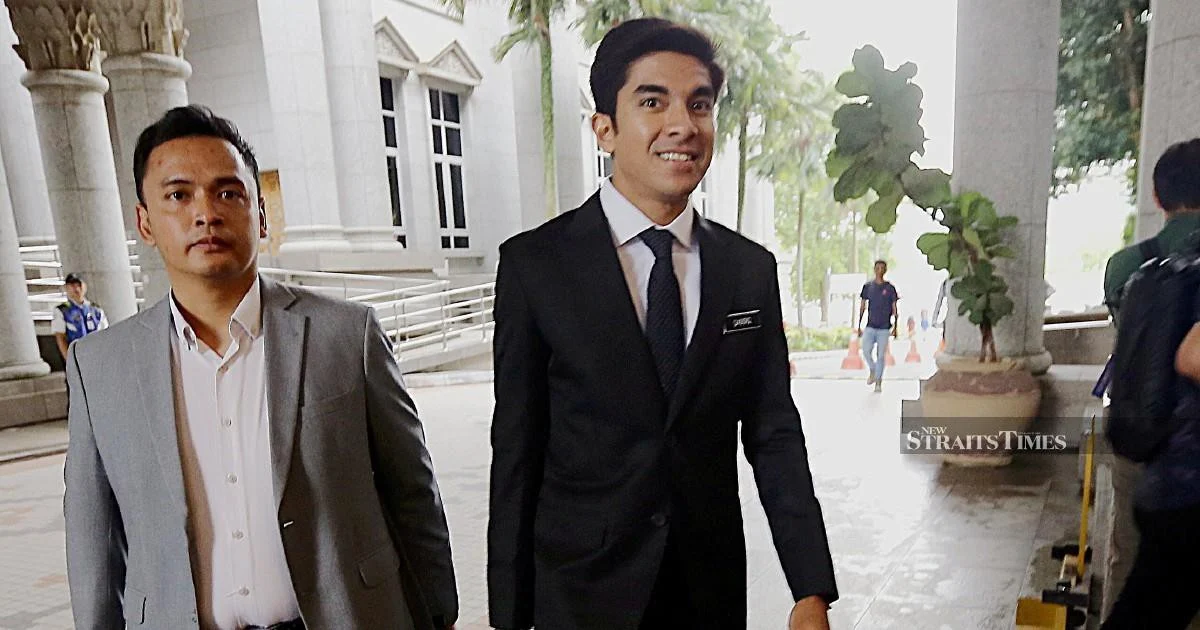
Amir Fiqri, known commonly as Amir Jack, will represent Muda in the Maharani constituency during the forthcoming Johor state election. The candidate serves as a special officer to Syed Saddiq Syed Abdul Rahman, the Muar member of parliament and a prominent political figure in Malaysia's younger generation of leaders. This appointment underscores Muda's strategy of fielding candidates with existing political connections and administrative experience as the party seeks to expand its footprint in Johor's electoral landscape.
Muda's decision to field four candidates across constituencies in Johor reflects the party's growing ambitions in the state, where it aims to establish itself as a serious electoral contender. The selection of Amir Jack for the Maharani seat signals the party's confidence in candidates who have demonstrated their commitment to public service through roles within parliamentary offices. Such appointments are increasingly common in Malaysian politics, where experience in legislative support structures often provides a pathway to elected office.
The Maharani constituency has historically been competitive, with dynamics that require candidates capable of understanding both traditional constituency concerns and the emerging political consciousness among younger voters. Amir Jack's background working directly with a federal legislator suggests familiarity with constituent services, policy advocacy, and the mechanics of parliamentary representation—skills potentially valuable in state-level campaigning and governance.
Syed Saddiq's prominence as Muar MP and his role within the broader opposition coalition has made him an influential mentor figure for younger politicians seeking entry into electoral politics. His aide's candidacy represents a common pattern in Malaysian politics where established politicians groom and promote talented individuals from their offices into independent electoral contests. This relationship between mentor and protégé often carries implicit endorsements that can translate into campaign momentum among core supporters.
Muda's position in the Johor electoral arena has evolved significantly over recent years. Originally positioning itself as a centrist party appealing to younger, urban professionals, the party has navigated complex coalition dynamics while attempting to maintain its distinct political identity. Fielding four candidates indicates a deliberate investment in Johor despite the state's traditional strongholds being dominated by more established political parties. The strategy appears focused on capturing reform-minded voters and constituencies where the party's message of younger leadership and progressive policies might resonate.
The timing of candidate announcements in Malaysian state elections often carries political significance beyond the immediate electoral cycle. By announcing Amir Jack's candidacy, Muda simultaneously signals its organizational readiness, extends its campaign narrative about fresh leadership, and tests voter receptivity to its proposed slate. Early announcements also serve to consolidate support networks and allow candidates additional months for grassroots engagement before polling day.
For Amir Jack personally, contesting Maharani represents a significant career transition from behind-the-scenes legislative work to public-facing electoral politics. Parliamentary special officers typically manage constituent inquiries, coordinate with government agencies, and serve as intermediaries between voters and elected representatives. While this experience provides valuable institutional knowledge, transitioning to candidacy requires developing a personal political profile distinct from that of the supervising MP. Successful candidates in such situations must convince voters that their connection to an established politician strengthens rather than limits their independent judgment.
The broader context of Johor's politics remains shaped by historical dominance and communal considerations. The state has traditionally been competitive between major parties, with specific constituencies demonstrating distinct demographic and political characteristics. Maharani's voters will evaluate Amir Jack not merely as Syed Saddiq's associate but through assessments of his individual capabilities, policy positions, and commitment to local development priorities. Muda's challenge lies in articulating how its candidates address state-specific challenges while maintaining the party's national reform agenda.
Muda's four-candidate slate also raises questions about the party's resource allocation and realistic electoral targets in Johor. Rather than pursuing comprehensive coverage across all constituencies, the focused approach suggests either capacity constraints or a deliberate strategy to concentrate resources where the party identifies genuine electoral opportunities. This calibrated approach reflects political maturity—recognizing that fielding candidates everywhere without organizational depth merely fragments limited campaign resources.
The appointment comes amid broader discussions about political renewal in Malaysian electoral politics. Younger political organizations like Muda depend substantially on attracting talented individuals willing to transition from behind-the-scenes roles into electoral contests. Amir Jack's candidacy exemplifies this talent pipeline, though his electoral success will ultimately depend on factors beyond his parliamentary office experience, including personal charisma, policy articulation, and his ability to connect with Maharani voters' specific concerns and aspirations.
%22%2F%3E%3C%2Fpattern%3E%3C%2Fdefs%3E%3Crect%20width%3D%22100%25%22%20height%3D%22100%25%22%20fill%3D%22url(%23ph3duqbg)%22%2F%3E%3Crect%20width%3D%22100%25%22%20height%3D%22100%25%22%20fill%3D%22url(%23ph3duqbp)%22%2F%3E%3Ctext%20x%3D%2250%25%22%20y%3D%2250%25%22%20text-anchor%3D%22middle%22%20dominant-baseline%3D%22central%22%20fill%3D%22rgba(255%2C255%2C255%2C0.95)%22%20font-family%3D%22Georgia%2C%20'Times%20New%20Roman'%2C%20serif%22%20font-weight%3D%22700%22%20font-size%3D%22320%22%20letter-spacing%3D%22-0.02em%22%3E300%3C%2Ftext%3E%3C%2Fsvg%3E)